

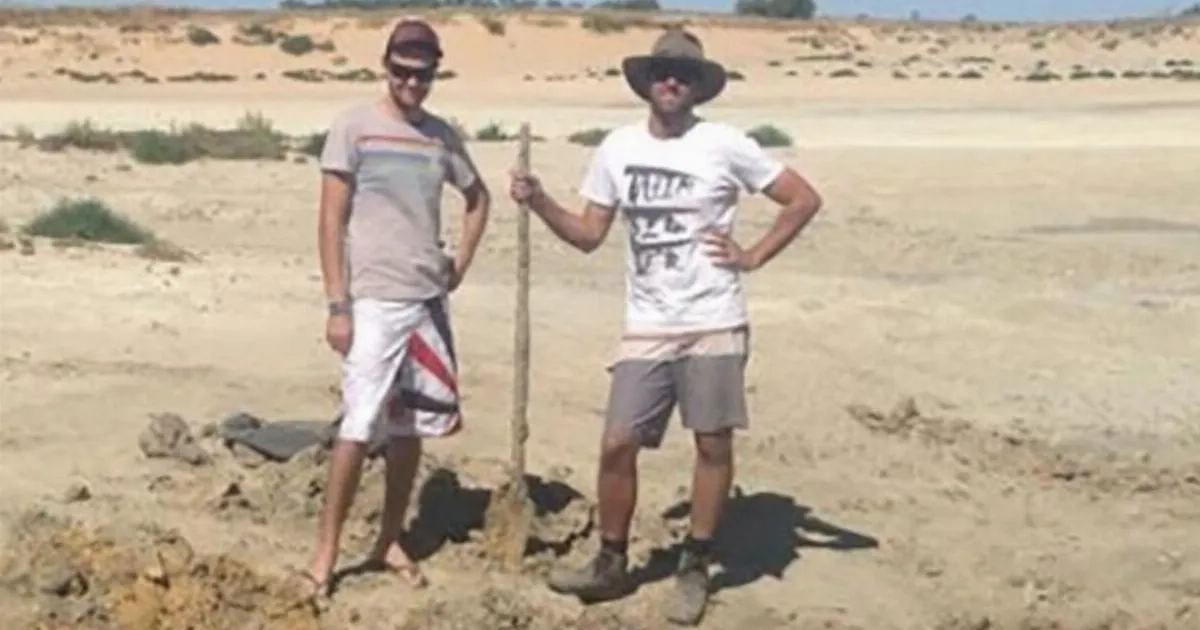
It started as the kind of weekend escape that sounds perfect in theory: a small group of friends, a rugged four-wheel-drive, and the vast, raw beauty of the Australian outback spread out before them. Brendan Cook, his partner Mel, and their friends Matt and another Mel had decided to drive the Birdsville Track, one of the most famously remote stretches of road on the continent. It crosses arid, unforgiving country where fuel stops are few and far between, where the earth is baked hard under a relentless sun, and where you can drive for days without seeing another soul. Their plan was simple: hike, camp, take in the dramatic landscape, and maybe spot feral camels, kangaroos, or cockatoos along the way. The outback in summer is not for the faint of heart, but they felt reasonably prepared, with food, water, and the kind of adventurous confidence that makes people believe nothing bad can really happen to them. On the way home, however, with the nearest town of Roxby Downs still about six hours away, they made a small but consequential decision. They turned off the main road onto a narrow track that led down to a creek, ignoring a rusty “road closed” sign that they assumed was old and no longer relevant. That sign, it turned out, was not a suggestion. It was a warning. And by ignoring it, they walked straight into a situation that would strip away all their comfort, test their endurance, and remind them how quickly ordinary plans can turn into a fight for survival.
The trouble began that night during what the group called a “spotlighting” mission, using the car’s headlights to scan the darkness for wildlife. The creek bed looked dry and harmless, but beneath its sun-baked crust lay thick, sticky silt with the consistency of wet cement. When the wheels started spinning, the car sank deeper and deeper, and the group made the reasonable decision to abandon it until morning, assuming daylight would make the problem easier to solve. It did not. When they returned, the car was buried up to its axles in muddy, saline sludge. Brendan later described that mud as deceptively hard on top but beneath the surface, thick, horribly salty, and foul-smelling, so sticky that every effort to free the car only made things worse. They spent the entire day in forty-five-degree heat, digging, pushing, and placing whatever they could find under the wheels, but the vehicle was hopelessly stuck. The flies were relentless, those tiny, biting flies that crawl into your eyes, nose, and ears, making every moment unbearable. The women trekked miles to a water tank, only to find it empty. They dug a hole in the ground, hoping for something drinkable, but the water that seeped in was so hypersaline that boiling it did little more than create a warm, undrinkable mess. By the second day, their clean water was gone. All that remained were a few apples and muesli bars. The mud caked onto their skin, and when they tried to wipe it off with towels, it pulled at their flesh, leaving raw, irritated patches. They were hot, thirsty, exhausted, and beginning to understand that this was no longer a camping mishap. This was an emergency.
As the hours stretched into days, the mood shifted from hopeful problem-solving to something sharper and quieter, a low hum of stress that never really left them. There was no mobile phone service, and with the main road about twelve miles away, the chances of a passing car were slim. They had hoped that someone would notice their absence when they failed to show up for work, but the outback is a place where people can disappear without a trace, and the thought that nobody might find them in time began to creep into their minds. They tried to stay calm, conserve energy, and make rational decisions, but the weight of the situation was undeniable. On the fourth night, they made the hardest call of all: they decided to leave the car and walk. This went against one of the most fundamental rules of outback survival, because search teams typically find stranded vehicles from the air, and people who wander away from their cars are rarely found alive. But waiting was no longer an option. They split up, with Matt and the other Mel staying with the vehicle while Brendan and his partner Mel, both experienced walkers, set out on foot at nightfall, hoping to reach the main road and flag down help. The darkness was alive with sound, dingoes howling somewhere nearby, their calls following the pair as they walked through the unknown. Brendan remembers the fear of that walk, the sense of moving through a stressful situation into an even more uncertain future, wondering whether they would make it. They tried to keep their spirits up by imagining the food and drink their rescuers might have waiting, but the isolation was overwhelming. After walking all night, they finally saw something miraculous: a car in the distance. Their hearts leaped. But as the vehicle approached, it slowed down, looked at them, and then sped away. They stood there in disbelief, not realizing how frightening they must have looked, two dirty, haggard, desperate people emerging from the bush.
Exhausted, dehydrated, and emotionally bruised, Brendan and Mel knew they had to do something drastic if they wanted to survive. They gathered tree branches and an old sign, built a clumsy barrier across the road, and waited. Hours later, another car appeared, driven by a couple from Sydney. This time, Brendan and Mel begged for help, but the couple initially refused, understandably wary of the grimy strangers on a deserted road. It took negotiation and persuasion to convince them that this was a genuine emergency. Eventually, the couple agreed to help, handing over bottles of water and heading off to find Matt and the other Mel at the bogged car. That wait must have been agonizing, not knowing whether the kind strangers would actually return or simply disappear over the horizon. But hours later, they heard the sound of two cars approaching. The Sydney couple had not only found their friends, they had helped pull the car out of the mud and were towing it back. The relief was overwhelming, a sudden rush of joy, gratitude, and disbelief. They sat by the roadside, sharing food and water, laughing and joking with people who, just a few hours earlier, had been complete strangers. Brendan says he will never forget their generosity. Without their willingness to stop, listen, and offer help, the outcome could have been very different. It was a powerful reminder that in the most remote and dangerous places, survival often depends not on what you know or how much gear you have, but on the kindness of other people, and whether someone else decides to stop and care.
Back in civilization, the four of them headed straight for the nearest bar, where they ate, drank, and told their story to a bemused bartender. It should have been the triumphant end to an incredible ordeal, but there was another revelation waiting for them, one that was almost harder to process. When they finally returned home, nobody had even realized they were missing. No phone calls, no search parties, no frantic messages from friends or family. As Brendan later reflected, that was a surprising and humbling moment. You tend to assume that if something goes wrong, someone will notice fairly quickly, that the world is watching out for you. But in remote environments, that safety net does not exist. The experience left him with a profound sense of how quickly circumstances can change, how fragile life becomes when the simplest things like clean water and shade are taken away, and how much we all rely on others, often without realizing it. There is a deep loneliness in realizing that you could disappear and the world would not immediately stop. But there is also a strange gift in that honesty. It strips away all the illusions of control and forces you to confront what really matters: people, connection, and the small, ordinary comforts we usually take for granted.
Today, Brendan and Mel are married and living in New Zealand, where Brendan works as the Chief Executive of Nelson Airport. They have two sons now, and when they go camping, they prepare very differently than they did in those carefree days. Extra food, reliable communication equipment, a much healthier respect for the power of the landscape. Brendan says the lesson from the desert has stayed with him ever since. He always leaves the house prepared, carrying a little more than he thinks he needs, making sure his phone and devices are charged, and never assuming that a sign warning of danger is just a relic of the past. But beyond the practical precautions, the experience changed something deeper in him. It taught him that survival is not about being fearless. It is about acknowledging fear, feeling it, and moving forward anyway. It is about staying calm when every instinct says to panic, trusting the people around you, and discovering that you are capable of enduring far more than you ever imagined. And it is about remembering that even in the loneliest places on Earth, the thread of human decency can still reach you, sometimes in the most unexpected ways. The outback nearly broke them, but it also gave them a new perspective, one that they have carried into the quieter, safer chapters of their lives, and one that continues to shape the way they see the world, and each other, every single day.