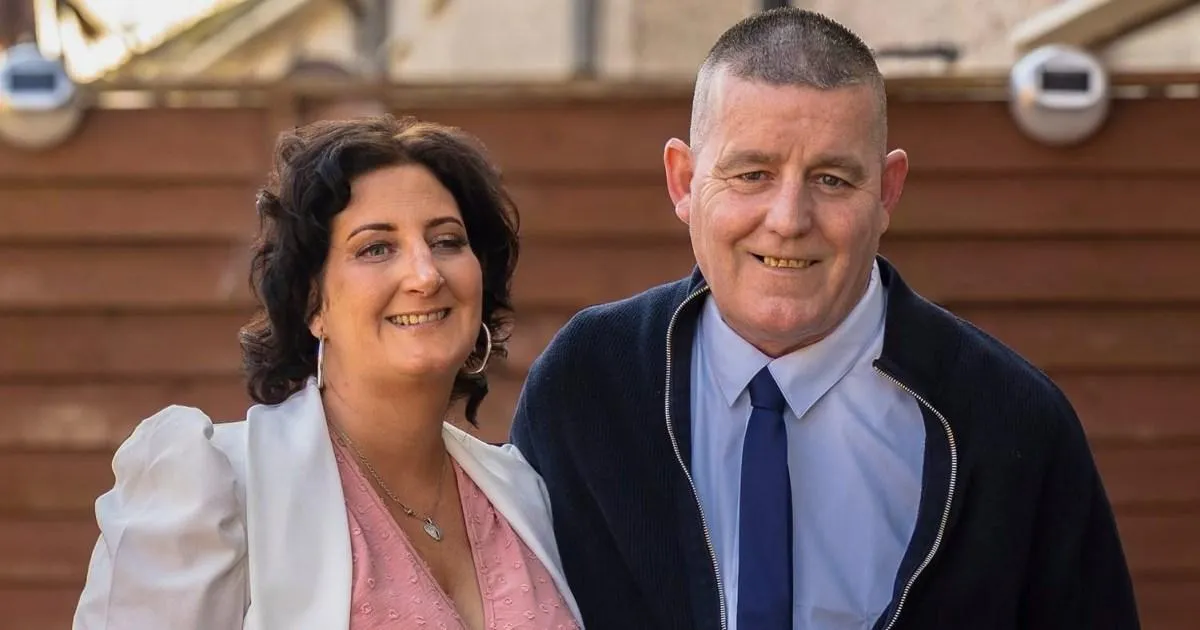
There are some tragedies so senseless that the mind refuses to accept them as real. In the Birchwood estate in Waterford, a family that had done nothing but live an ordinary life has been wiped out in a night of fire and smoke. Philip English and his wife Kim were killed alongside their two young sons, Callum, 12, and Jayden, nine, when flames engulfed their home. Two other children were critically injured and are now at the centre of a desperate fight for survival. Their names are not just names on a news report; they were people with routines, plans, and love for one another. Philip and Kim were parents who likely began that day as they began every day—making breakfast, packing schoolbags, urging children to hurry. Instead, that ordinary morning turned into an unspeakable loss. As the community reels, a motive has emerged that makes the tragedy even more agonising. Philip’s son from an earlier relationship, John James English, has told RTÉ that his father, stepmother and brothers were not involved in any drugs feud. He believes they were targeted because of someone else’s debt—€20,000, a sum that seems almost absurdly small compared with the value of the lives destroyed. “It’s a family, you know – 20 grand worth of a debt; is that worth nearly five lives?” he asked, his voice carrying the disbelief that has settled over everyone who heard the news. How can a stranger’s drug debt erase a family? How can a figure that is less than a used car be worth more than a child’s laugh, a mother’s hug, a father’s pride? These questions have no answers, but they are being asked in every home in Birchwood and beyond.
The pain is deepened by the knowledge that this family was not meant to be in the crossfire. John James English has said that the family had been targeted for some time, yet they were innocent. They were not part of the underworld, not involved in the drugs feud that has left a shadow over parts of Ireland. They were simply a family, and that should have been enough protection. In a world that makes sense, it would have been. But the fire that killed Philip, Kim, Callum and Jayden was no accident; it was allegedly a weapon of hate and intimidation, a device meant to inflict maximum terror. The people who lit it, according to the son’s claim, got the wrong people. That detail is perhaps the most unbearable of all. There are no “right” people for such a crime, but to know that the victims were collateral damage—caught in a war they never joined—makes the loss feel even more cruel. John James did not ask for pity; he asked for truth. His question about the €20,000 debt has become a moral indictment of a culture in which money, power and drugs are allowed to take precedence over human life. He described his father, stepmother and younger brothers as “innocent,” and the word has hung in the air ever since. Innocent children. Innocent parents. People who “never bothered anyone,” as Philip’s former wife later said. They were not hiding secrets or living on the edge; they were just living. And in the end, that was enough to make them targets—or victims of a terrible mistake that no apology can fix.
On the evening after the fire, the community came together in a vigil that was as much about love as it was about loss. Hundreds of people filled the space outside Sacred Heart Church in Birchwood, standing shoulder to shoulder in the cold, holding candles or just holding each other. Father Gerry Chestnutt, the parish priest, spoke directly to the hearts of the crowd. He told them to “wrap each other in love,” a phrase that seemed to acknowledge the only force strong enough to counter the hatred that had caused the fire. He also spoke of the normal life that had been stolen. “An innocent family preparing for a new day should have done what they did every day: parents preparing their children for school,” he said. These simple words brought the tragedy into sharp focus. It was not a blaze in the night that was the true horror; it was the certainty that Callum and Jayden would never again stumble sleepily into the kitchen, never again complain about homework, never again race out the door with their schoolbags. Father Chestnutt did not stop at comfort. He called on those responsible to “stand up, admit what you did and face the legal consequences.” It was a brave and direct appeal, made not in anger but in the hope that some shred of conscience remained in whoever had lit the match. The vigil was an attempt to push back against the darkness, to turn grief into solidarity. People sang, prayed and wept. Some stared at the sky, as if looking for answers. The message was clear: the English family would not be forgotten, and the community would not be silenced.
The family’s public grief has been raw, and the people closest to Philip English have spoken with a courage born of crushing loss. James English, Philip’s uncle and the godfather of one of the children who died, did not hide his fury or his pain. “Whoever did it, he better feel ashamed of himself,” he said. He pleaded with witnesses to come forward to the Gardaí, to share anything they knew, no matter how small. “At the end of the day, we have a loss of family now, wiped out. So please, whoever done it, own up, be a man.” There is a quiet dignity in those words, but also an edge of desperation. He knows that an investigation can only succeed if ordinary people are brave enough to speak, and he is asking the community to be brave in a way the arsonists were not. Anne English, Philip’s former wife, added another layer of grief. She described the family as happy and said she was lost without them. “I have no words, just disbelief. They were a lovely couple. Never bothering anyone. The kids were his (Philip’s) life.” That last sentence is heartbreaking: the kids were his life. And now his life, and theirs, has been extinguished. Anne’s pain is the pain of someone who once loved Philip and still cared enough to mourn the family he built. It is also the pain of seeing children die before their parents, a cruel inversion of the natural order. The English family may have been blended, with relationships shaped by divorce and remarriage, but love was not divided. Philip’s sons were his world, and his former wife’s tribute suggests that the family had found a way to remain connected through love rather than broken by conflict. That makes the fire all the more horrific: it destroyed not just a family, but all the quiet, complicated, beautiful relationships that made them human.
While the community mourns, the state has mobilised to find the truth. Gardaí have described the investigation as intense and are treating the fire as arson. Multiple properties have been searched, and a number of electronic devices and vehicles have been seized as part of the inquiry. The authorities are not waiting for the trail to grow cold; they are moving with determination to identify the people responsible for this atrocity. Taoiseach Micheál Martin has said the Government will provide all resources needed for the Garda investigation, an assurance that turns grief into a commitment to justice. For the English family, justice will not bring back the dead. It will not repair the scars that the two surviving children will carry for the rest of their lives. But it is the only currency the law has. It is the only way to show that a family’s life cannot be bought or sold for €20,000. The relatives’ appeals for witnesses have an added urgency. They know that every secret kept is a small victory for the people who set the fire. They know that somewhere in the neighbourhood, someone may have seen a suspicious car, heard a sound, or noticed something that did not make sense until now. That person might be afraid to speak, but the family and the police are urging them to find courage. The investigation is not just about a conviction; it is about ensuring that no one else ever has to stand in the ashes of their loved ones and ask why. It is about sending a message that an Irish housing estate will not be a battleground for a drugs feud, and that families will not be sacrificed for debts they never owed. The search for truth is a search for accountability, and the entire country is watching.
Later on Wednesday night, the people of Birchwood gathered on the green for a balloon release in memory of Philip, Kim, Callum and Jayden. Hundreds of balloons rose into a darkening sky, each one carrying a wish, a prayer, a goodbye. Family members, holding each other and crying, sang “You’ll Never Walk Alone,” a song that has carried generations of Irish people through their hardest hours. A local mother looked up with her young child and said, “They’re waiting up there to catch them all.” In that simple phrase, there is an entire theology of hope—the idea that the dead are not gone, but waiting, and that every balloon released is a message to them that we still remember. The ceremony was beautiful, but it was also an act of defiance. It said that no fire, no fear, no debt-ridden feud could erase the love a community has for its people. The investigation will continue, the survivors will recover or not, the mourners will return to their homes. But the question John James English posed will remain: was €20,000 worth nearly five lives? No answer can make sense of it. There is no number, no price, no amount of money that can equal a father, a mother, two little boys. As the balloons disappeared into the night, the people of Birchwood were left with the hardest work of all: going on. They will go on because they have to. They will go on because the two children still fighting for their lives need a world that is softer, safer, and more willing to love. They will go on because Callum and Jayden would have wanted their community to be better than the cruelty that took them. And until the truth is found, until justice is done, they will keep singing, keep weeping, keep releasing balloons into the sky—determined that no one ever walk alone again.