Paragraph 1: The Sudden Silence in the Sky
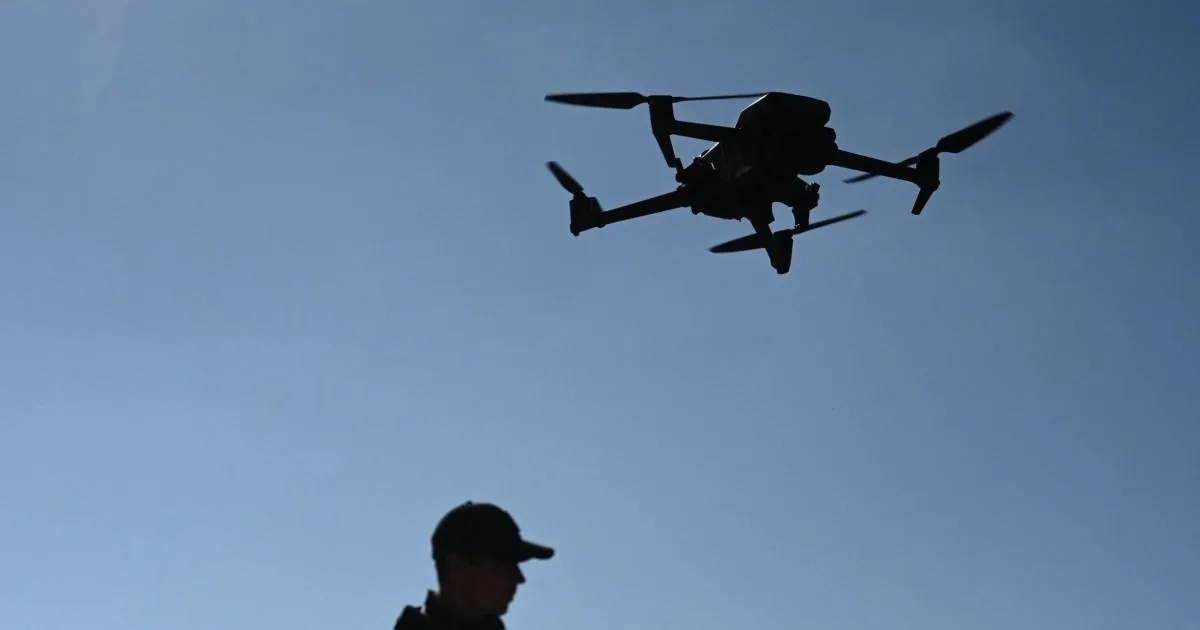
Imagine being a soldier on the front lines in Ukraine, far from the safe confines of a command center, relying on a small satellite terminal to guide a drone that is your eyes in the sky. Your mission is to find and strike the enemy, to protect your comrades, and to push back against an invasion that has ravaged your country for years. Then, in an instant, the screen goes dark. The drone, moving faster than 100 miles per hour, loses its connection to home. It becomes a blind, useless piece of metal in the air, unable to complete its mission. This is not a hypothetical scenario. It is the reality that Ukrainian forces faced recently when restrictions were suddenly placed on their use of the Starlink satellite internet system. The limitations were not subtle. They cut off communications with attack drones traveling at high speed, and in some cases, operators reported losing connections even at speeds as low as 40 miles per hour. For a military that has come to depend on drone warfare as a critical equalizer against a larger adversary, this was a devastating blow. The timing of the restrictions felt deliberate, and the anger among frontline troops was immediate and visceral. One frontline fighter, speaking out of frustration and betrayal, put it bluntly: “This is Trump and Musk directly helping Putin, and selling us out.” That raw sentiment captures the profound sense of abandonment felt by soldiers who believe they are being used as pawns in a geopolitical game that has nothing to do with their survival.
The implications of these restrictions go far beyond a few failed missions. Drone operations have been central to Ukraine’s recent battlefield successes, both in defending its own territory and in striking deep into Russian-held areas. These attacks have disrupted Russian supply lines, destroyed artillery, and demoralized enemy troops. They have also allowed Ukraine to reclaim territory and hold the line against relentless offensives. When you take away the connectivity that makes these drones effective, you are not just inconveniencing a unit; you are undermining an entire military strategy. The loss of communication at critical moments means that reconnaissance becomes impossible, strikes miss their targets, and Ukrainian troops are left fighting blind. This could seriously jeopardize the hard-won progress that Ukraine has made in recent months, both on the front lines and in its broader campaign to weaken Russia’s war machine. For the soldiers who have learned to trust this technology with their lives, the sudden silence in the sky is not just a technical glitch. It is a signal that the support they thought was guaranteed may no longer be reliable.
Paragraph 2: A Diplomatic Firestorm in the West
The overnight restrictions did not go unnoticed in the halls of power, especially in countries that have poured billions into supporting Ukraine. Poland, in particular, has been one of Ukraine’s most steadfast allies, providing military aid, humanitarian support, and diplomatic backing. But Poland has also been a key financial contributor to Ukraine’s Starlink network, paying a substantial sum each year—around £37 million—to ensure that Ukrainian forces have the connectivity they need to operate. When the restrictions came to light, Poland’s foreign minister, Radosław Sikorski, did not mince words. He took to social media to directly confront Elon Musk, the billionaire owner of Starlink, with a message dripping with sarcasm and anger: “Hey @elonmask, big man, are you playing politics with your products again?” This was not a quiet diplomatic note; it was a public rebuke, a signal that Poland viewed the move as an unacceptable interference in the war effort. Sikorski’s accusation was clear: Musk was using his control over critical infrastructure as a lever in a political game, and the cost of that game could be measured in Ukrainian lives.
Musk, however, was quick to deflect responsibility. In his response on X, he claimed that the US government controls Starshield, the military-grade version of Starlink, and that any limits on speed or usage are decided by the US military and ultimately by the US president. This response was designed to shift the blame away from him personally and onto the American political establishment. But it did little to soothe the anger. For one thing, Musk’s own recent behavior has raised questions about his sympathies and motives. He has echoed Donald Trump’s criticisms of Ukrainian President Volodymyr Zelensky, and he has made inflammatory statements suggesting that Zelensky has overstepped his bounds. In one particularly shocking post, Musk wrote that “Zelensky has gone too far” and that “time for Ukraine to get a new leader.” These are not the words of a neutral technology provider. They are the words of a man who seems to be aligning himself with those who want to pressure Ukraine into making concessions. By claiming that the US government controls Starshield, Musk may be trying to absolve himself of responsibility, but the public spat with Sikorski has exposed the uncomfortable truth: the infrastructure that Ukraine depends on for its survival is in the hands of a mercurial billionaire whose political whims could change the course of the war.
Paragraph 3: The Ukrainian Perspective: Betrayal Without Warning
For the Ukrainian military, the most infuriating aspect of the restrictions was the complete lack of warning. Serhiy Beskrestnov, a military technology adviser to President Volodymyr Zelensky, confirmed that the changes were imposed without any prior notice. “Our defence forces received no prior warning of such a restriction, which led to the disruption of several missions,” he said. This was not a case of a technical failure that could be fixed, or a strategic decision that was communicated in advance. It was a sudden, unexplained cutoff that left commanders scrambling to understand what was happening and why. Beskrestnov went on to say, “It is obvious that this action cannot be a coincidence and is linked to the current political situation.” That statement reflects a deep and growing suspicion among Ukrainian officials that the restrictions are not just about technical specifications or military protocol. They are part of a broader effort to force Ukraine into negotiations, to push Zelensky into a peace deal that would likely favor Russia, and to demonstrate that Ukraine cannot survive without the good graces of the United States and its allies.
The restrictions specifically target Ukraine’s use of Starshield, the military version of Starlink, which is designed for more secure and robust communications. This is the system that Zelensky’s forces use to control drones carrying out reconnaissance and strikes against Russian troops. Without it, Ukrainian drone operators are effectively flying blind. They cannot see what the drone sees, they cannot steer it to its target, and they cannot retrieve it for reuse. Each lost drone represents not just a failed mission, but a significant financial loss and, more importantly, a loss of tactical advantage. The timing of the restrictions only deepens the sense of betrayal. They come at a moment when Ukraine is under immense pressure to show progress on the battlefield, to prove that it can continue to resist Russian aggression, and to convince its Western allies that further investment is worthwhile. By crippling its drone operations, the restrictions undermine Ukraine’s ability to do any of those things. And for the soldiers on the ground, the message is clear: the technology they have been trained to rely on can be taken away at any moment, by a man who has shown little regard for their struggle.
Paragraph 4: On the Ground: Evidence of Disruption
This is not just a story about politics and diplomatic spats. The evidence of the disruptions is being gathered on the ground, in the mud and trenches of the front lines. Ukrainian newspaper Ukrainska Pravda reported that a commander supplied footage showing two drones losing their satellite connections in mid-flight, unable to complete their missions. The drones simply became unresponsive, their feeds cutting out, their control systems failing, and their missions ending in failure. This footage is not just a technical demonstration; it is a testament to the chaos and confusion that the restrictions have sown in Ukrainian units. Troops from Ukraine’s 7th Air Assault Brigade also reported communications failures affecting drone operations near Huliaipole, in the Zaporizhzhia region. This is an area of active fighting, where every drone flight is a matter of life and death. When the drones stop working, the troops are left exposed, forced to rely on less advanced methods of reconnaissance and attack, and ultimately more vulnerable to enemy fire.
The fact that these failures are being reported from multiple units, in different locations, suggests that the restrictions are not an isolated glitch or a localized problem. They are widespread and systematic. Ukrainian soldiers have become accustomed to having the upper hand in drone warfare, using their technological superiority to compensate for their disadvantages in manpower and firepower. But when the satellite connections are cut, that advantage evaporates. The drones become expensive, useless decorations, and the soldiers are left to wonder whether the next mission will be the one where the connection fails. The psychological impact of this uncertainty cannot be overstated. Trust is a crucial component of military effectiveness. Soldiers need to trust that their equipment will work, that their commands will be heard, and that their allies will stand by them. The sudden and unexplained restrictions on Starlink have shattered that trust, leaving Ukrainian forces to question not just the reliability of the technology, but the reliability of their partners. In a war where every advantage matters, this erosion of trust is a gift to the enemy, and it is one that Russian forces are likely to exploit.
Paragraph 5: The Broader Political Squeeze
The restrictions on Starlink do not exist in a vacuum. They are part of a larger pattern of pressure being applied to Ukraine by the United States, or at least by powerful figures within the American political establishment. There are persistent rumors that the US is limiting intelligence-sharing with Kyiv, not for technical reasons, but as a deliberate strategy to force Zelensky into a peace deal. The logic behind this strategy is troubling: by weakening Ukraine’s ability to fight, the US hopes to convince Zelensky that he has no choice but to accept a settlement that would likely involve ceding territory to Russia. This approach is based on the dubious assumption that Putin can be reasoned with, and that a quick peace is better than a prolonged war. But it ignores the reality that any deal made under such duress would be a victory for Putin, who has shown no interest in a fair or lasting peace. It would reward aggression, embolden authoritarian leaders, and leave Ukraine in a far weaker position than before the invasion.
Musk’s recent comments have only fueled these concerns. By echoing Trump’s criticism of Zelensky, and by suggesting that Ukraine needs a new leader, Musk has positioned himself as a participant in this political campaign rather than a neutral observer. His influence over Starlink gives him enormous power, and his willingness to use that power to advance a political agenda is deeply alarming. The restrictions on Starlink, the rumors of intelligence-sharing limits, and the public pressure on Zelensky all point to a coordinated effort to undermine Ukraine’s sovereignty and force it into a submission that would benefit Putin. For Ukrainians, this is a bitter irony. They have fought bravely against a brutal invasion, only to see their own allies, or at least powerful figures among those allies, treat them as pawns in a larger geopolitical game. The sense of abandonment is palpable, and it is made even worse by the knowledge that the decisions being made in Washington and on social media could have devastating consequences on the battlefield.
Paragraph 6: A Future Built on Fragile Foundations
The situation raises fundamental questions about the nature of modern warfare and the reliance on private technology for national defense. Ukraine has become a testing ground for a new kind of warfare, one in which commercial satellite networks, private drones, and Silicon Valley billionaires play as important a role as tanks and artillery. This has given Ukraine certain advantages, but it has also created vulnerabilities. When a single company, or a single man, controls the infrastructure that a nation’s military depends on, that nation is not truly sovereign. It is dependent on the goodwill of a private actor, whose interests may not align with its own. The restrictions on Starlink are a stark reminder that this dependence can be exploited, and that the tools of modern warfare can be turned off as easily as they are turned on.
For Ukraine, the path forward is uncertain. The immediate crisis may be resolved, and the restrictions may be lifted, but the damage has been done. Ukrainian commanders now know that they cannot fully trust the systems they rely on, and they will seek alternatives, whether in the form of other satellite providers, more resilient communication networks, or more autonomous drones. But these alternatives take time to develop, and time is a luxury that Ukraine does not have. In the meantime, the soldiers on the front lines must continue to fight, knowing that the technology that gives them an edge can be taken away at any moment. The world watches this unfolding drama with a mixture of fascination and horror, wondering whether the brave defenders of Ukraine will be sacrificed on the altar of political convenience. The story of Starlink is not just a story about satellites and drones; it is a story about trust, betrayal, and the fragile foundations on which freedom now rests. It is a reminder that in the digital age, power is not just measured in missiles and men, but in the ability to control the invisible signals that connect us all. And for Ukraine, the most important question is no longer whether it can defeat Russia on the battlefield, but whether its allies will allow it to try.