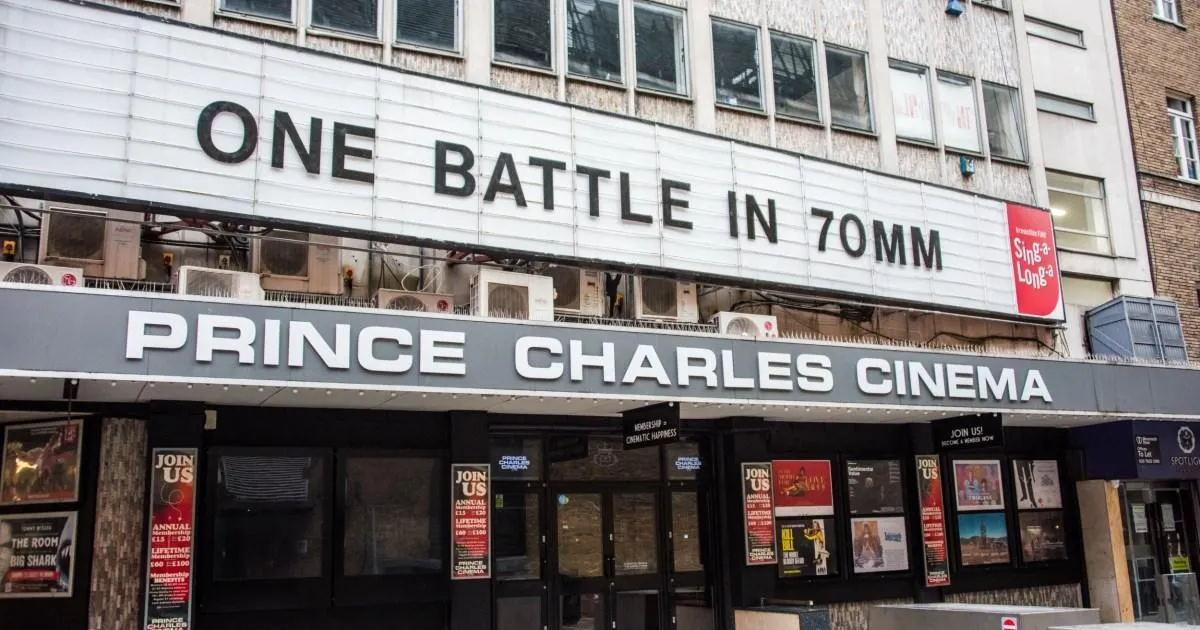
There are certain places in London that feel less like venues and more like old friends. The Prince Charles Cinema in Leicester Square is exactly that. For decades, it has been a haven for film lovers, a slightly scruffy, gloriously eclectic palace of cinema where you could watch a classic, a cult oddity, a marathon screening, or a new release with an audience that actually cares. It has played host to Quentin Tarantino and John Waters, attracted more than 250,000 visitors a year, and built a devoted following that extends far beyond the capital. It is the kind of place where film lovers go not just to watch something, but to feel something; where the audience is as much a part of the experience as the movie itself. So when news emerged that this beloved institution was on the brink of closure, the reaction was immediate and emotional. For nearly two years, the cinema had been locked in a bitter dispute with its landlord over a break clause in its lease. The threat was real: if the site secured planning permission for redevelopment, the cinema could be forced to move out with just six months’ notice. It felt like a slow-moving tragedy, a beloved cultural landmark being pushed toward extinction by the impersonal mechanics of property development. The thought of Leicester Square without the Prince Charles Cinema was almost unimaginable to the thousands of people who had made memories within its walls. But then something remarkable happened. Film fans, staff, celebrities, and local organisations refused to let it go without a fight. And in the end, their love and determination won.
The details of the dispute were always frustratingly technical, but the stakes were deeply human. At the centre was a break clause in the lease, a legal provision that would have allowed the landlord to terminate the tenancy early if planning permission for redevelopment was granted. The Prince Charles Cinema accused its landlord of using intimidating tactics, and supporters described the situation as a David and Goliath battle between a much-loved independent cinema and the financial pressures of central London real estate. The uncertainty lasted 21 months, a period that must have felt like an eternity for the staff who kept the projectors rolling and the customers who never stopped coming. Every ticket bought, every singalong, every midnight screening felt like an act of defiance. The campaign to save the cinema grew organically, powered by social media, word of mouth, and genuine affection. A petition was launched, and it quickly gathered more than 168,000 signatures. The Soho Society stepped in, recommending that Westminster Council officially designate the cinema as an Asset of Community Value, which the council did. That designation didn’t solve everything, but it sent a powerful signal: this was not just a business, it was a community treasure. It also gave supporters hope, a tangible sign that the institutions that shape our cultural lives can be protected if enough people care. The fight was exhausting, but it also revealed something beautiful about the relationship between a cinema and its audience. People weren’t just signing a petition; they were sharing stories of first dates, birthday trips, late-night screenings, and the strange, wonderful comfort of sitting in the dark with strangers who loved the same films.
Then, finally, the news everyone had been waiting for. The Prince Charles Cinema announced it had signed a new 25-year lease with no break clause. No more sword of Damocles hanging over the building. No more wondering whether every visit might be one of the last. The management’s statement was joyful and grateful: “After 21 months of uncertainty, we’re delighted to have secured the future of the cinema, and we couldn’t have done it without the support, commitment and belief of many, many people.” They thanked the 168,645 people who signed the petition, the Soho Society, Westminster Council, the media, filmmakers, actors, writers, and above all their staff and the army of film-lovers who kept coming through the doors. It was a beautiful reminder that a cinema is not really about the building, the seats, or even the films on screen. It is about the people who gather in the dark and share an experience together. The announcement was met with an outpouring of joy on social media. “I’m so glad to see this awesome news, I don’t think Leicester Square would be the same without you there,” wrote one supporter. Another said, “As someone who just took out lifetime membership I’m really glad. Keep being your fabulous selves!” One person simply called it “fantastic news” and “a staple of many people’s London trips.” The relief was palpable, and it was shared by people who had never even been to the cinema but understood that losing it would make the world a little duller. The campaign had worked, and the victory belonged to everyone who had refused to accept that a place so full of life could simply be allowed to disappear.
To understand why this meant so much, you have to understand what the Prince Charles Cinema is. It opened in the heart of the West End in 1962 as a theatre, then had a brief life as a music hall. In the 1970s, it was known for showing soft X-rated films, which is about as far as you can get from its later reputation as one of London’s most beloved repertory cinemas. Over the years, it evolved into something rare and precious: a place where old films are given new life, where classic movies run for weeks, where audiences can discover something they’ve never seen before on the big screen. It is one of the last of its kind in the capital, a true repertory cinema in an age of multiplexes and streaming services. It has also regularly hosted screenings during the London Film Festival, adding to its status as a genuine cultural institution. But perhaps its greatest achievement is the atmosphere. Walking into the Prince Charles Cinema feels like entering a community of like-minded obsessives, people who understand that watching a film at home on a laptop is not the same as watching it with a room full of strangers who laugh, gasp, and applaud together. It is a place where cinema feels like an event, not just an activity. The programming is wonderfully unpredictable, from all-night marathons to themed singalongs, from obscure foreign gems to beloved family favourites. It is a place where you can take a chance on something unknown and leave with a new favourite film, a new friend, or at least a story to tell. That is what makes it so special, and why so many people were willing to fight for it.
The fight to save the Prince Charles Cinema is part of a larger story about the challenges facing independent cinemas today. Rising rents, redevelopment pressure, changing viewing habits, the dominance of streaming, and the lingering effects of the pandemic have all made it harder for these cultural spaces to survive. When a cinema closes, it is not just a business that disappears. It is a loss of a gathering place, a loss of shared experience, a loss of the magic that happens when a group of strangers sits together in the dark and is transported by a story. The campaign to save the Prince Charles Cinema mattered because it proved that people still care deeply about that magic. It showed that a community can organise, campaign, and win against seemingly overwhelming odds. The petition signatures, the Asset of Community Value designation, the media coverage, the public support from filmmakers and actors, the simple act of buying a ticket and showing up — all of it contributed to a victory that feels bigger than one cinema. It is a reminder that the places we love are worth fighting for, and that their survival depends on the people who believe in them. Independent cinemas are not just venues; they are keepers of collective memory, places where culture is shared and celebrated. The Prince Charles Cinema’s survival is a small but significant victory in a much larger battle to keep our cities vibrant, creative, and full of spaces that nourish the soul rather than simply maximise profit.
Now, with a new 25-year lease secured, the future of the Prince Charles Cinema looks bright. The projectors will keep rolling, the midnight screenings will continue, the singalongs will go on, and generations of film lovers will have the chance to make memories in one of London’s most special venues. The management’s gratitude was genuine and heartfelt, and it extended to everyone who played a part in the campaign. “To the global community of filmmakers, producers, actors, writers and everyone else in between. And above all, to our phenomenal staff who have kept things going without missing a beat, and the army of film-lovers who keep coming through our doors, proving that the magic of a cinema is truly the community that shares the movies it presents.” Those words capture exactly why the Prince Charles Cinema matters. It is not just a building. It is a shared love letter to film, a home for the weird and wonderful, a place where anyone can feel like they belong. The battle was long, but the victory is sweet. And for anyone who has ever sat in one of those worn velvet seats, watched the lights dim, and felt the collective hush of an audience waiting for the film to begin, the news is simple and wonderful: the Prince Charles Cinema is here to stay. Its survival is a testament to the power of community, the importance of independent culture, and the simple, enduring truth that when people come together for something they love, they can move mountains. So the next time you walk past Leicester Square, look up at that familiar marquee and know that it will be there for years to come, waiting to welcome you back into the dark, where the magic is always ready to begin.