For nearly a week, the gates of Yorkshire Wildlife Park have been closed, the usual laughter and footsteps replaced by an eerie silence following a tragedy no visitor expected. Tomorrow, however, those gates will reopen. In an Instagram statement released this afternoon, the park said it would welcome the public again for the first time since last Saturday, when a man named William Chapman was fatally attacked by Altai, a 400-pound Amur tiger. The park’s words were measured and somber: “Our thoughts and heartfelt sympathies remain with the family, friends and loved ones of William Chapman, who sadly lost his life.” It went on to insist that “the safety and wellbeing of our visitors, staff team and animals remain our highest priority.” For many, the announcement stirs complicated emotions—relief that life is returning to normal, grief for a life cut short, and questions about how such a thing could happen. But the reopening also signals that a beloved local institution, known for its conservation work and its immersive “Land of the Tigers” exhibit, must somehow find a way to move forward while honoring the memory of the man who died. The park’s decision to reopen so soon is not an act of indifference; it is a practical acknowledgment that animals still need care, staff still need to earn a living, and visitors still seek a connection with the wild. Yet the shadow of William Chapman will remain, not only in official statements but in every corner of the park, especially around the tiger enclosure where he spent his final moments. The park has promised that safety remains paramount, though it has not yet disclosed what changes, if any, will be made to prevent such an incident from recurring. In the meantime, the community that loves this park is holding two truths at once: a profound sorrow for the victim and an equally profound care for the tiger, who was only doing what tigers do. This is the difficult landscape of tragedy—no single answer, no easy blame, only a shared effort to make sense of the unthinkable.
The details of that afternoon are both heartbreaking and hard to comprehend. According to witnesses, William Chapman approached the tiger’s enclosure and asked park-goers to take a photo of him with the feline. He was wearing headphones and, at some point, entered the pen—an area designed for people to observe Amur tigers from a raised, 300-meter walkway, not to touch or interact with them. Video posted to social media shows the moment Altai grabbed and bit Chapman near the middle of his back. He can be heard saying “no,” and appears to gesture in Makaton, a sign language often used by people with communication difficulties. Park rangers fired warning shots in an attempt to drive the enormous tiger away, but the injuries were already fatal. An inquest opening into his death heard that the provisional cause was “multiple traumatic injuries.” It also heard that Chapman had been diagnosed with schizophrenia, a condition characterized by delusional thinking and hallucinations. That diagnosis does not explain his actions in a simple way, nor does it make the tragedy any easier for his family to bear. It does, however, open a window into the complex reality of mental illness and the incredible vulnerability that can accompany it. A young man who may have been living in a different mental landscape, perhaps seeking comfort or connection with an animal he admired, found himself in a situation of mortal danger. The image of him asking strangers for a photo, then stepping beyond the barrier, is filled with a kind of heartbreaking innocence. It is not possible to know what he was thinking in those final moments, but the footage and the witness accounts paint a picture of someone who did not fully understand the risk. The rangers’ warning shots, the tiger’s instinctive reaction, the screams of onlookers—all of it became a chaotic and terrifying scene. What remained, when the chaos subsided, was a body, a grieving family, and a park in shock.
William Chapman was not just a name in a police report; he was, by all accounts, a bright and warm young man. His family, speaking through their devastation, described him as “a bright, warm and engaging young man.” “The family are utterly devastated by their loss and are struggling to come to terms with what has happened,” they said. Those words carry the weight of grief that no news article can fully convey. William’s life had its own story: he was a former child actor, having appeared in the ITV show May Contain Nuts in 2009 alongside Shirley Henderson. The Internet Movie Database lists him as having starred as a schoolboy in that production. Later, he became a self-employed online trader, carving out an independent life. On paper, these details might seem like trivia, but they remind us that he was a real person with dreams, relationships, and a place in the world. He was also a man living with schizophrenia. The illness, which affects how a person thinks, feels, and perceives reality, may have played a role in what happened. It may have made him more vulnerable, more likely to misunderstand the nature of the barrier between humans and animals, more drawn to an impulsive act that would cost him his life. But it is important to remember that mental illness is not a moral failure, and a tragedy involving someone with schizophrenia should not become a reason for stigma. Rather, it should invite compassion and a renewed commitment to supporting those who struggle with such conditions. The inquest, which will unfold in the coming weeks, will likely examine all of these factors—the diagnosis, the enclosure design, the park’s supervision, and the choices William made. Yet no verdict will change the central fact that a family lost a beloved son and brother, and that the world lost a man who, despite his difficulties, was remembered with love. In the end, the most human thing we can do is hold him in our thoughts, not as a cautionary tale, but as a person.
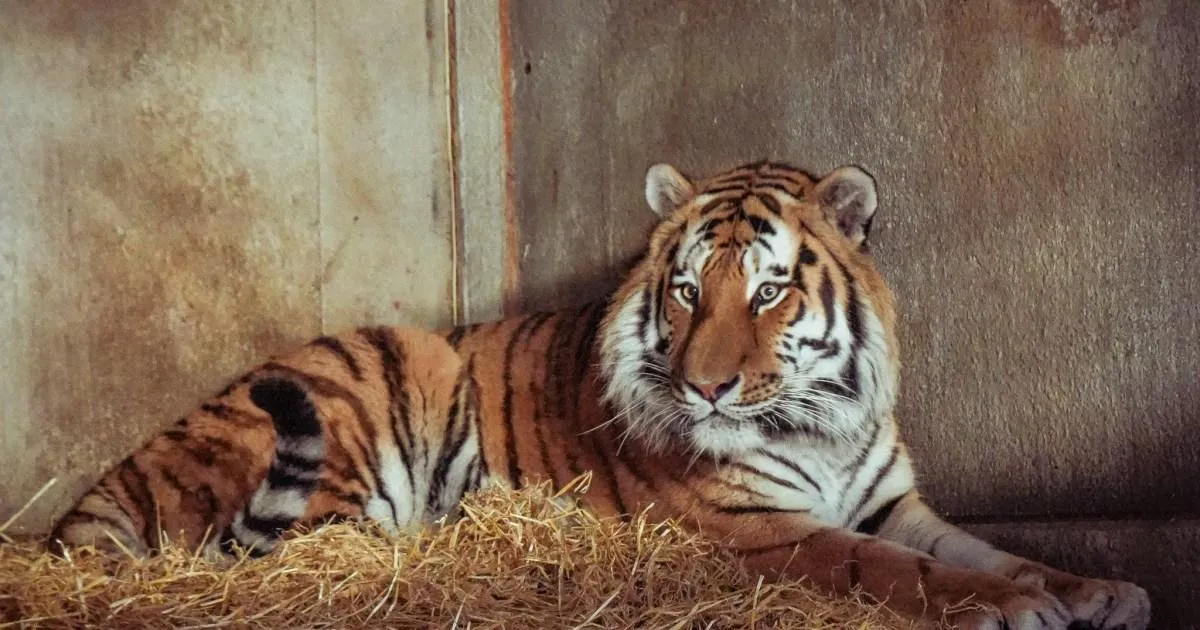
Then there is Altai. The tiger, whose name calls to mind the vast Siberian mountains that once were home to her species, survived the encounter. The park made clear that she is safe and will not be euthanized. She will return to the enclosure where she lives—a 300-meter-long raised walkway that is part of the “Land of the Tigers” exhibit, designed to let visitors see the majestic cats as they roam woodlands and grasslands, play in a waterfall pool, and climb elevated platforms. Altai is an Amur tiger, also known as a Siberian tiger, a species that is endangered in the wild. Her life in captivity, however dramatic and controversial, is part of a broader conservation effort to preserve a magnificent creature whose wild populations continue to face poaching and habitat loss. In the aftermath of the attack, there are those who might call for the animal to be destroyed, as if she had somehow committed a crime. But a tiger cannot be held morally responsible for acting on its instincts. The park’s decision to spare her is not only humane; it is an acceptance that this was not the tiger’s fault. Altai was living in an unnatural setting, with human beings gawking at her, and when a human came too close, she responded as her nature demanded. It is impossible not to feel some empathy for her, too. She, too, is a victim of circumstance—an animal removed from her wild origins, dependent on humans for food and care, and yet still possessed of the wildness that makes her awe-inspiring. The exhibit’s own language—“witness the majestic cats freely roaming”—promises an experience of untamed beauty, but it also exposes a fundamental tension in wildlife parks: how to display wild animals while keeping both them and visitors safe. Altai will likely live out her days in the walkway, watched by visitors who may whisper about the man who died there. She cannot know what happened, cannot grieve or regret. But she remains, in her own way, a living reminder of the forces that exist beyond human control.
The wider public reaction has been as complicated as one might expect. The story has appeared in headlines around the world, and even former President Donald Trump shared a video of the attack with a “warning” to America, a fact that drew both criticism and morbid fascination. In the UK, a far more restrained but still powerful discussion has emerged about how such a tragedy could have been prevented. One headline, “Man mauled to death ‘bowed to tiger’ before attack,” suggests that Chapman may have genuflected or made a gesture of deference to Altai before the attack. Whether that is accurate or a misreading of the footage, it adds another layer to the tragedy: a young man, perhaps in a delusional state, treating the tiger with something like reverence, a fatal act of trust. Social media has been flooded with opinions, some blaming the victim, some blaming the park, some blaming a culture that encourages people to seek extreme “experiences” for social media. Many of these judgments are harsh and unfair. It is far too easy to stand outside and declare what we would have done, but none of us can fully comprehend the thoughts of a person living with schizophrenia. What is clear is that the incident has raised important questions about safety protocols in wildlife parks, the ethics of keeping large predators in captivity, and the responsibility we all have to protect those who are particularly vulnerable. It has also, unfortunately, become fodder for political point-scoring and rubbernecking, which often does more harm than good. In the midst of the noise, the voice of William’s family stands out because it is not seeking blame or attention; it is simply grieving. As the park reopens and the world moves on, we should resist the temptation to turn this tragedy into a spectacle. Instead, we can use it as a moment to reflect on what we value: human life, animal welfare, kindness, and the fragile boundaries that keep us safe. Perhaps if those boundaries are strengthened—not just fences and barriers, but also support for mental health and community care—then William’s death will not be entirely meaningless.
Ultimately, the reopening of Yorkshire Wildlife Park is not a return to normal, because normal is no longer possible. It is an act of continuity, a decision to keep living even while mourning. For the staff, every day at the park will now be touched by the memory of what happened. They will walk past the tiger enclosure with heavier hearts. They will watch visitors and wonder if they are safe, if they are following the rules, if they are stable enough to be near these creatures. They will continue to care for Altai, who cannot understand the pain she caused, and for the other animals who rely on them. For the family of William Chapman, the reopening may feel like an insult, a sign that the world has moved on too quickly. But grief does not follow a timetable, and a park’s decision to open its doors does not mean the loss has been forgotten. It means that life, with all its fragility and stubbornness, continues. What happened at Yorkshire Wildlife Park is a reminder of the unpredictable and sometimes tragic relationship between human beings and the wild. We are drawn to wild things, enchanted by their power and beauty, and yet we are not of them. When we cross that line, as William did, we risk consequences that are as ancient as humanity itself. It would be easy to respond to this tragedy by turning away from wildlife parks, by demonizing a tiger, or by dismissing a man’s death as self-inflicted. None of those reactions would be fair. The more honest response is to acknowledge that we are all fragile, that mental illness can lead to unimaginable situations, and that animals deserve our respect and distance. The park’s decision to spare Altai is a small act of grace. The family’s call for privacy and compassion is another. And the community’s willingness to move forward, even with heavy hearts, is yet another. As visitors once again walk the raised path above the tigers, they might pause and remember William Chapman—not as a cautionary tale, but as a human being who, on a sunny Saturday, wanted a photo with a magnificent tiger and never walked away. May he rest in peace, and may all of us find ways to keep each other safe.