


On a lively evening in Cologne, Germany, an ordinary night out turned into a deeply unsettling experience for a 16-year-old girl when a four-foot-tall robot, dressed in a white tank top, black bottoms, sunglasses, a gold chain and a fake moustache, approached her in the street, allegedly groped her and made thrusting movements. The machine had been deliberately transformed into a strange, carnival-like figure—half toy, half crude caricature of a human being. It was not moving on its own; two young men were steering it through the crowded nightlife area near a fast-food restaurant, and police say they were apparently controlling its actions at the time. Video footage posted on social media captures the bizarre and disturbing scene. The robot is guided toward a group of women, and as it reaches the teenager, it makes sexually aggressive gestures. One of the men can be heard shouting at the robot and pulling it backward, as if trying to regain control or perhaps pretending to be shocked by what the robot was doing. Around them, people laugh. The sound of that laughter is jarring. It suggests that some onlookers viewed the entire incident as a prank, a funny story to tell later, a viral moment. But for the victim, there was no punchline. She was touched without consent in a public place, surrounded by strangers who found her humiliation entertaining. The images and videos of the attack were then streamed online, multiplying the harm and making it impossible for her to simply walk away and try to forget. The whole scene may have lasted only a moment, but its effects will linger far longer. Police in Cologne later seized the robot, which was found in the trunk of a vehicle, and the case has since attracted attention around the world. It is a moment that forces a reaction: shock, disgust, disbelief, and questions about how something so absurd could also be so harmful. The robot’s playful accessories—the fake moustache, the oversized chain—cannot hide the seriousness of what allegedly occurred. This was not a malfunction. It was not an accident. This was an intentional act, and the people behind it were fully aware of what they were doing. A teenage girl went out for an evening and became the target of a machine weaponized by human cruelty, while the sounds of a city night played on around her.
Authorities moved quickly after the incident, arresting two suspects: the 16-year-old owner of the robot and his 19-year-old friend. Both were taken into custody on suspicion of being involved in the attack, with police believing that they were jointly controlling the device when it approached the girl. The fact that the owner himself is a minor adds a complicated layer to the case, but it does not diminish the seriousness of the allegations. When emergency teams reached the scene near a fast-food restaurant, they did not find the robot out on the street. Instead, it was discovered in the trunk of a vehicle, as if the young men had tried to hide it before the police arrived. Along with the robot, officers also confiscated the mobile phones belonging to the two suspects. This was a crucial move, because the attack was reportedly streamed online. The footage, which had already begun to spread across social media, is now part of the evidence, and the phones may contain messages, settings, or live-streaming accounts that could shed more light on what happened before, during and after the incident. The decision to broadcast such an act raises chilling questions. Were the young men trying to gain attention and internet fame? Did they think the remote-controlled nature of the robot would somehow distance them from responsibility? Or did they simply get caught up in the moment, encouraged by the laughter around them? Authorities have not yet disclosed whether the suspects have made any statements about their motives. Whatever their intentions, the consequences are now real. They face an ongoing criminal investigation, and the robot—once a source of amusement—has become a piece of evidence in an alleged assault. It is not yet clear what charges they will ultimately face, but the legal process will need to determine exactly how much control each person had over the machine at the moment of the incident. The arrests send an important message: using a robot as a tool does not erase the human hand behind it. The owner and his friend are now facing real consequences, and their case could shape how law enforcement and courts view crimes committed with the assistance of automated or remote-controlled devices.
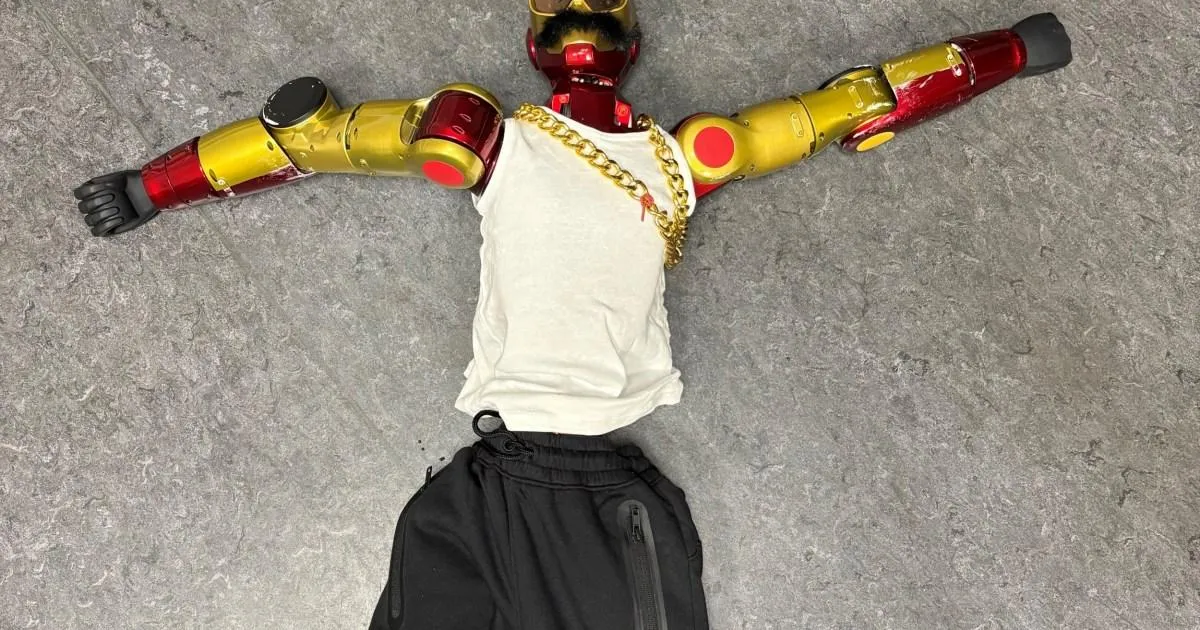
Speaking about the unusual case, Cologne police spokesman Christoph Bermel admitted that officers were navigating uncharted legal and social territory. “We have not been aware of this phenomenon so far,” he told The Associated Press. The quote is striking because it captures the novelty of this kind of crime, but also the speed at which technology can outpace law and culture. In the past, an incident like this would have been impossible. Today, anyone can buy a robot, dress it up, and send it walking toward strangers. The police statement confirmed that emergency teams were dispatched to the scene after receiving reports of the attack. It was there that they found the robot in the trunk of a vehicle, and later confiscated both the robot and the two young men’s mobile phones. North Rhine Westphalia Police Cologne also shared an image of the robot on Facebook, showing the red-and-gold machine lying on the ground, stripped of its theatrical accessories. The image itself is somehow sad and absurd at the same time—a reminder that this object, now evidence, was used in a way that damaged a real person. The investigation is not just about the physical contact, but also about the planning involved. The robot had to be dressed, remote-controlled, and guided through a public street. That level of preparation suggests this was not an impulsive act, but a deliberate decision to humiliate someone. Police are likely examining video footage, witness statements, and digital evidence to build a clear picture of what happened. They are also navigating a legal question that has rarely been tested: when a robot commits a physical act, how should the law treat the human operators? In this case, the answer seems clear to investigators—the men were in control, and they are responsible. Yet establishing that in court requires proving the specifics of that control, including who was holding the remote at the critical moment, who gave the commands, and who decided to stream the incident online. These are not easy questions, but the police have made it clear that they are taking them seriously. Their public call for empathy is particularly notable in a case that could easily have been dismissed as a senseless prank.
What has made this case even more troubling is the reaction it has generated online. The video of the robot—wearing its absurd outfit and making crude gestures—quickly became something of a viral spectacle. Some viewers laughed. Some shared it without thinking. Many comment sections filled with jokes about the robot’s appearance, the fake moustache, the gold chain, and the strangeness of the story. But police in Cologne were quick to push back against the mockery. On their official Facebook account, they criticised the inappropriate comments and warned that sharing or joking about such incidents can worsen the impact on any victim. This was a rare and important intervention. In an age where internet culture often prioritizes entertainment over empathy, the police had to remind the public that there is a real person behind the viral moment. For the 16-year-old girl, the video is not just a strange clip to laugh at. It is the record of an assault. It is a memory that can be replayed, shared and commented on endlessly. Every joke, every mocking comment adds weight to an already heavy burden. The fact that she is a minor makes the internet’s reaction even harder to defend. The police’s warning is a broader lesson about digital citizenship. When content involves harm to a real person, sharing it can further victimize them. The laughter heard in the video is bad enough, but the laughter of strangers online days later extends the trauma. It also creates a dangerous narrative: that this was harmless fun, that the girl was not really hurt, that technology makes everything a game. Police have made it clear that they do not see it that way, and neither should the public. The aftermath of the incident has become a test not just for the criminal justice system, but for society’s willingness to look at a bizarre story and still see the serious harm at its core. It is easy to focus on the robot. It is much harder—and much more important—to focus on the victim.
This incident in Cologne is a stark reminder that technology is not always a force for good. It can be used to connect, entertain and improve lives, but it can also be used as a tool for harassment, violence and humiliation. The remote-controlled robot in this case is just the latest example of a disturbing trend. From cyberbullying to deepfakes, from GPS stalking to live-streamed abuse, the methods by which people harm others are evolving faster than our laws and social norms. The two people connected to this robot, one a teenager and the other barely into adulthood, may not have considered themselves criminals. They may have thought they were pulling off an edgy stunt, something to get likes and laughs online. But the consequences for the victim are no different from any other form of sexual harassment. The physical contact was made by a machine, but the intent was human. The laughter from the crowd was human. The stream was human. The decision to target a young woman was human. All technology is created by humans, and all abuse of technology is a human choice. Legal experts may debate the exact charges that can be brought against the two men, and the question of whether a robot can be considered an instrument of assault is likely to be examined in court. But in the wider sense, the moral responsibility is clear. When people use technology to cause harm, they cannot hide behind the technology. This case should also serve as a wake-up call for platform companies, law enforcement agencies and legislators. Social media sites need to think carefully about how videos of assaults are handled. Police need training in technology-enabled crimes. And society as a whole needs to have more honest conversations about the way young men are taught to treat women. A robot with a fake moustache is a gimmick, but the anger, fear and humiliation it caused are very real. If the only lesson from this story is that it was a weird news item, then we will have missed the point entirely. We have to see it for what it is: a human crime made possible by a machine.
At the heart of this strange and disturbing story is a young girl. She went out for what should have been an ordinary evening, and instead she was touched without consent, mocked, recorded and streamed to an online audience. The robot has been seized. The phones have been confiscated. The suspects have been arrested. But for the victim, the process of healing is only beginning. The images and videos are likely to resurface, and the memories may be difficult to escape. That is why the police response matters so much. By acknowledging the severity of the incident, by warning against jokes, and by taking the suspects into custody, they have sent a signal that this is not acceptable behavior. The rest of us have a role to play as well. We can choose not to share videos that exploit victims. We can choose not to laugh at comments that minimize harassment. We can choose to speak up when we see something wrong, instead of standing by while a crowd forms. The bystanders in Cologne did not stop the robot. Perhaps they did not know what to do. Perhaps they were caught off guard by the absurdity of the scene. But this case can be a teaching moment for all of us. If we see technology being used to harass or humiliate another person, we should intervene, support the victim, and call the authorities. We can also support the young woman by respecting her privacy and refusing to turn her assault into entertainment. The incident should never have happened. The robot should never have been dressed up and aimed at a woman like a weapon. But the response—by police, by the public, and by everyone who reads this story—can still shape what happens next. It begins with remembering that the robot was not the victim; it was the object. The victim was a person, a teenager whose life was interrupted by an act of cruelty that she did not invite and could not control. Justice in this case will be defined by more than a verdict; it will be defined by whether society treats her with compassion, whether the offenders face meaningful consequences, and whether we learn something about the relationship between technology, power and respect. If we do that, then perhaps a small measure of good can emerge from such a senseless act.