

Here is the summarized and humanized version of the provided content, structured into six paragraphs to meet your request.
—
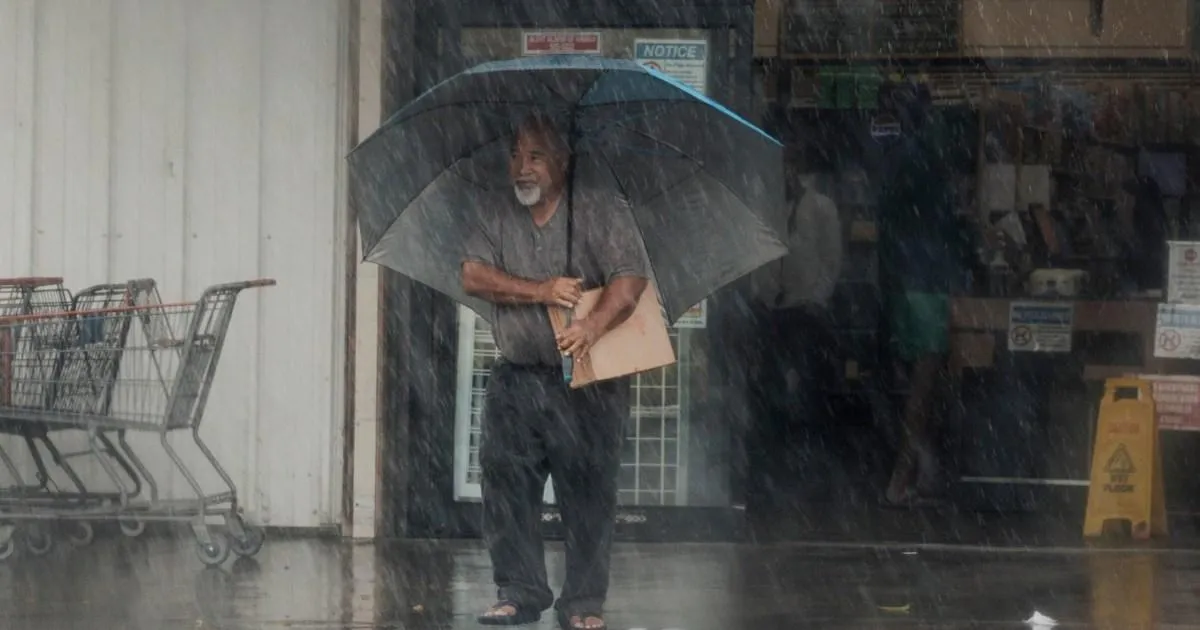
The Big Island of Hawaii, a place of volcanic black sands and lush, emerald rainforests, is holding its breath this weekend as a menacing force churns just off its southern coast. Hurricane Nolo, a Category 1 storm with maximum sustained winds of up to 80 mph, is inching closer, and the warnings coming from the US National Oceanic and Atmospheric Administration (NOAA) are nothing short of alarming. Meteorologists are forecasting a staggering three feet of rain to fall, a deluge that carries the potential for catastrophic and life-threatening flash flooding across the island’s rugged terrain. The storm is currently positioned roughly 240 miles south of South Point, which places it on a trajectory that will bring it dangerously close to the 210,000 residents who call this remarkable island home. While the storm is expected to make its closest pass on Saturday, forecasters are quick to note that the margin for error is thin; if Nolo shifts to a more northerly track, the damage could become exponentially worse, transforming an already severe weather event into an unmitigated disaster.
For the people living in the small towns and rural communities that dot the Big Island’s coastline, this weekend represents a familiar yet deeply unsettling ritual of waiting. The fear isn’t just about the relentless horizontal rain or the howling of the wind that sounds like a freight train passing overhead; it’s about the water. The island’s steep volcanic slopes, carved by millennia of lava flows, are notoriously bad at absorbing heavy rainfall. Instead, the water races downhill in sheets, gathering debris and earth, morphing into devastating mudslides that can carve away roads, swallow homes, and isolate entire communities. The threat of flash flooding is not an abstract concept here; it is a terrifying reality that has already left its mark this season. As residents tie down outdoor furniture, fill sandbags, and board up windows, they carry the heavy weight of recent memory. They know that a single, unstoppable wall of muddy water can erase a lifetime of work in minutes, and the vulnerable geography of their beautiful home makes them sitting ducks for nature’s fury.
The anxiety gripping the island right now is compounded by the fact that this is not a one-off event. Hawaii has already endured a staggering four tropical threats this season, which is highly abnormal for a region that typically sits in a relatively quiet zone of the Pacific. The ghost of Hurricane Lala looms large in the collective consciousness. Just last month, Lala tore through the same areas now threatened by Nolo, unleashing winds of up to 91 mph and dumping a monstrous 25 inches of rain across the island. That storm whipped up a three-foot storm surge that battered the coastline and left over 60,000 residents in the dark, without power or communication. The devastation was so intense that two homes in the rural district of Naalehu were completely swept away by the surging floodwaters, and tragically, the storm was indirectly responsible for at least one death after a “terrible car accident” occurred in the treacherous conditions. The memory of that destruction is raw, and the psychological toll of facing a similarly wrathful storm just weeks later is exhausting for a community already stretched thin.
From a scientific standpoint, the sheer frequency of these storms is a stark anomaly. Historically, Hawaii is a natural fortress against hurricanes, protected by cooler ocean waters and high-pressure systems that typically steer storms away. In recorded history, only 19 hurricanes have passed within 100 miles of the islands, and the vast majority of those occurred during periods of El Niño, a global climate pattern that blows warm ocean water westward and creates a more hospitable breeding ground for tropical cyclones. Yet this year, the usual atmospheric protections have failed. The ocean around Hawaii is running warmer than usual, and the jet stream patterns are behaving erratically, allowing storms like Lala, Lowell, and now Nolo to survive their long journey across the Pacific and threaten the archipelago. This meteorological bending of the rules is a worrying sign, transforming a safe haven into a target for some of the most destructive forces nature can produce, and leaving residents wondering what other records this year will break.
As the clock ticks down to Saturday, the preparations on the ground are frantic but methodical. In grocery stores across Hilo, Kailua-Kona, and the southern districts, shelves are being stripped of bottled water, canned goods, and batteries. Gas tanks are filled, generators are tested, and emergency radios are tuned to the emergency broadcast frequency. But beyond the physical preparations, there is a palpable sense of communal resilience mixed with sheer exhaustion. The rhythm of the island—the easygoing aloha spirit, the slow pace of life—has been replaced by a grim urgency. Neighbors are checking on the elderly, farmers are trying to secure livestock, and families are gathering essential documents in waterproof bags. The steep terrain that makes the island so visually stunning is now the enemy, and everyone knows that a mudslide could cut off their road to safety in an instant. The forecast of up to three feet of rain is not just a number; it represents hours of relentless pounding, the smell of wet earth, the sound of groaning trees, and the terrifying sight of streams swelling into raging rivers.
Despite the dire predictions, there is a thread of unyielding hope that weaves through the fear. Hawaii has faced hurricanes before, and the people have a deep, historical connection to the land that comes with an innate understanding of survival. The Big Island is home to some of the most resilient communities in the world—people who live on the edge of an active volcano are inherently attuned to the power of the earth. They know that the storm will eventually pass, that the waters will recede, and that the sun will shine again over the black lava fields and green pastures. The immediate priority now is safety: staying indoors, heeding evacuation orders, and looking out for one another. The broader worry remains for the long-term recovery, as the damage from Nolo will compound the existing scars left by Lala. But for now, as the dark clouds gather on the horizon, the people of Hawaii are doing what they have always done—bracing for the impact, holding their families close, and praying that the mountain they call home will shelter them once more.