

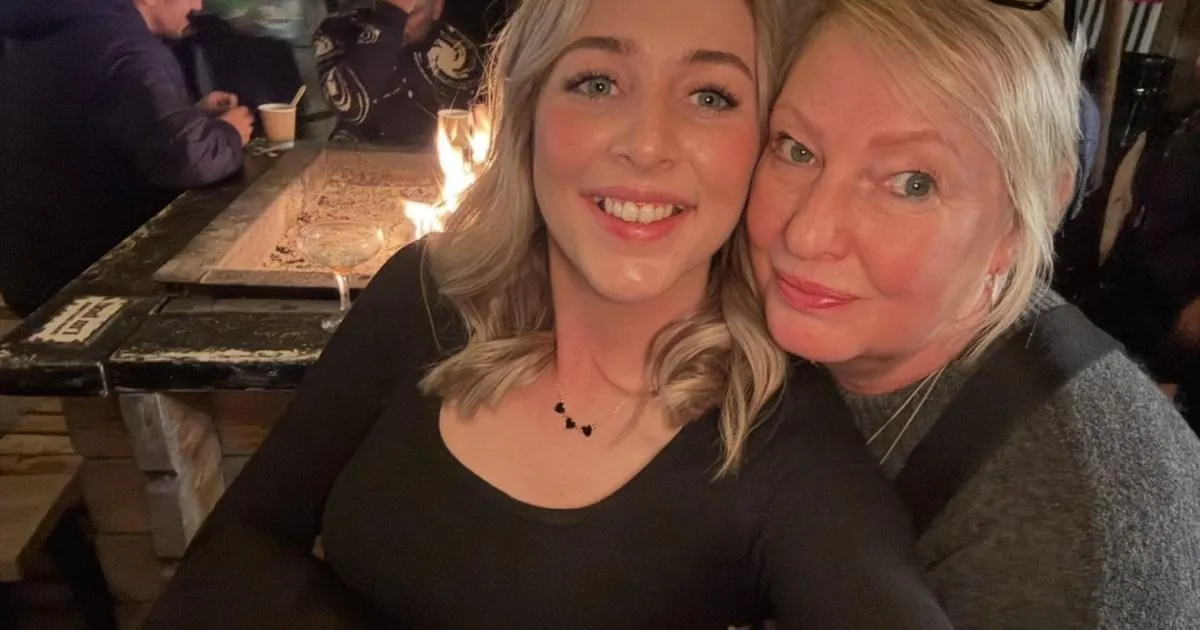
Yvonne Ford was the kind of woman who made everyone around her feel loved. She was funny, warm, caring, and endlessly selfless, the heart of her family, and a devoted wife, mother, and grandmother to four grandchildren. In February 2025, she and her husband Ron set off for Morocco, looking forward to a happy holiday abroad. They had worked hard all their lives and were enjoying the freedom of retirement, travelling together and experiencing different cultures. The trip was supposed to be another wonderful adventure. One day, while relaxing on sun loungers on the beach, Yvonne put her legs down onto the sand and accidentally startled a stray puppy. The puppy scratched her leg, leaving what seemed like nothing more than a tiny, superficial mark. It barely broke the skin. She cleaned it with a wet wipe and thought nothing more of it. Her daughter, Robyn Thomson, a 33-year-old neonatal nurse from Barnsley, South Yorkshire, remembers that moment as the beginning of a nightmare none of them could have imagined. “It barely broke the skin and looked so insignificant,” Robyn recalls. At the time, no one in the family had any idea that such a tiny scratch could expose someone to rabies. It was not a vicious attack, just a chance encounter with a stray puppy, and the idea that it might be deadly simply never crossed their minds.
Back home in the UK, life returned to normal. Yvonne seemed perfectly healthy for weeks, and the holiday faded into a pleasant memory. Robyn even asked her mum whether she wanted to get the scratch checked, but Yvonne declined because it seemed so insignificant. Why would she worry about a mark that had almost disappeared? The family had no reason to suspect that something so small could be hiding such a devastating threat. But in early June, everything changed. Yvonne developed a headache, and within days her condition spiralled out of control. She was rushed to Barnsley Hospital, where her deterioration was terrifyingly rapid. She became confused and frightened, and began hallucinating. Soon she could no longer walk, talk properly, swallow, eat, or sleep. Robyn, who works as a nurse and has seen serious illness up close, was completely unprepared for what was happening to her own mother. “One minute mum was independent and full of life, and then she deteriorated so quickly,” she says. “As her daughter, watching someone you’ve looked up to your entire life become so desperately ill and knowing there was nothing anyone could do was unbearable.” The disease was attacking Yvonne’s body and mind with ferocious speed, turning a vibrant woman into someone barely recognisable, and leaving her family helpless beside her.
What made the tragedy even harder to accept was that no one knew what was wrong. For five agonising days, doctors struggled to diagnose Yvonne. It was only when a psychiatrist, who initially suspected Lyme disease, recognised the symptoms and asked about her recent travel history that the possibility of rabies was raised. Robyn says that delay is one of the hardest things to live with. “This is what I’ve found so hard, knowing that nobody knew what was causing my mum to be so poorly for the first five days until a doctor within the mental health sector suggested it could be a possibility,” she says. Being told her mother had rabies was the worst news imaginable. There was no cure, no treatment that could bring her back, and the damage had already been done. Yvonne was transferred to the infectious disease unit at Sheffield’s Royal Hallamshire Hospital, where she died on 11 June 2025, four months after being scratched by the puppy. She was 59 years old. “It was the worst news we could have received because there was no cure, nothing to be done to bring mum back,” Robyn says. The family had never believed rabies could touch them. It felt like something that happened in distant places, not to their mother after a holiday, and certainly not because of a scratch so small it had barely broken the skin.
In the aftermath of such an unimaginable loss, Robyn finds herself haunted by what might have been. She thinks constantly about the lack of awareness that cost her family everything. If anyone had known the risk, if Yvonne had been told to wash the wound thoroughly and get post-exposure treatment immediately, she might still be alive today. “Looking back now, that’s one of the hardest things to accept. If we’d understood the risk and known she needed urgent treatment immediately, everything could have been different,” Robyn says. “We would have pushed her to get the treatment and it would have saved her life.” Yvonne was an animal lover, and she would never have imagined that a friendly-looking puppy could pose such a danger. That, Robyn says, is one of the biggest misconceptions people have. You cannot judge the risk of rabies by how an animal behaves or by how serious an injury looks. The puppy that scratched Yvonne did not seem threatening, and the scratch was barely visible, yet it was enough to end her life. Yvonne had so much life left to live. She and Ron had plans, dreams, and a family who adored her. She was the heart of everything, and her sudden, senseless death has left a wound that will never fully heal.
Determined to make sure no other family has to suffer the same heartbreak, Robyn has turned her grief into action. She is now working with Worldwide Veterinary Service and its Mission Rabies programme, which focuses on eliminating rabies by vaccinating dogs and educating communities. Through this work, she has seen the incredible efforts being made to stop the disease at its source. She has also joined the organisation’s “Think Rabies Before You Travel” campaign, which urges holidaymakers to check local rabies risks, avoid contact with unfamiliar animals, and seek immediate medical help after any potential exposure. The statistics are alarming: rabies is present in more than 150 countries, including popular holiday destinations such as Turkey, Morocco, and Thailand. Yet nearly half of Brits, 47%, say they would approach or interact with a dog or cat abroad, and 61% do not know that rabies can be transmitted if an infected animal licks an open wound or scratch. Robyn’s message is simple and urgent. “Please don’t take the risk,” she says. “Our family thought it was only a tiny scratch too.” She stresses that anyone scratched or bitten by an animal while travelling should wash the wound thoroughly with soap and running water straight away, and seek urgent medical advice immediately, even if the injury seems insignificant. Don’t wait until you get home, and don’t assume you’ll be fine because the animal looked healthy or friendly. The vaccine can save your life.
Yvonne Ford’s story is a heartbreaking reminder that rabies is not a distant threat, but a real and present danger even for ordinary holidaymakers in popular destinations. A tiny scratch on a sunny beach, dismissed in a moment, changed everything in the most devastating way possible. Robyn knows she cannot change what happened to her family, but she is determined to help stop it happening to someone else’s. “After losing mum, I felt I had to do something,” she says. “I couldn’t change what had happened to our family, but I could help stop it happening to somebody else’s.” She speaks not only with grief but with a fierce sense of purpose, honouring her mother’s memory by spreading the knowledge that could have saved her. She also wants people to know that her mother would not want any harm to come to the dog involved. It was just a friendly-looking stray puppy, and no one could have known the danger. But the lesson is clear: when it comes to rabies, there is no such thing as “just a scratch.” Awareness, education, and immediate action are the difference between life and death. Robyn’s campaign is a powerful legacy for a woman who was funny, warm, caring, and deeply loved, and her hope is that no one else will ever have to learn this lesson the way her family did. If her mother’s story can save even one life, then something meaningful will have come from this terrible tragedy. Yvonne should have had many more years of travel, laughter, and love beside the family who adored her. Instead, her memory has become a warning, and her daughter has made it her mission to ensure that her death was not in vain.