

-
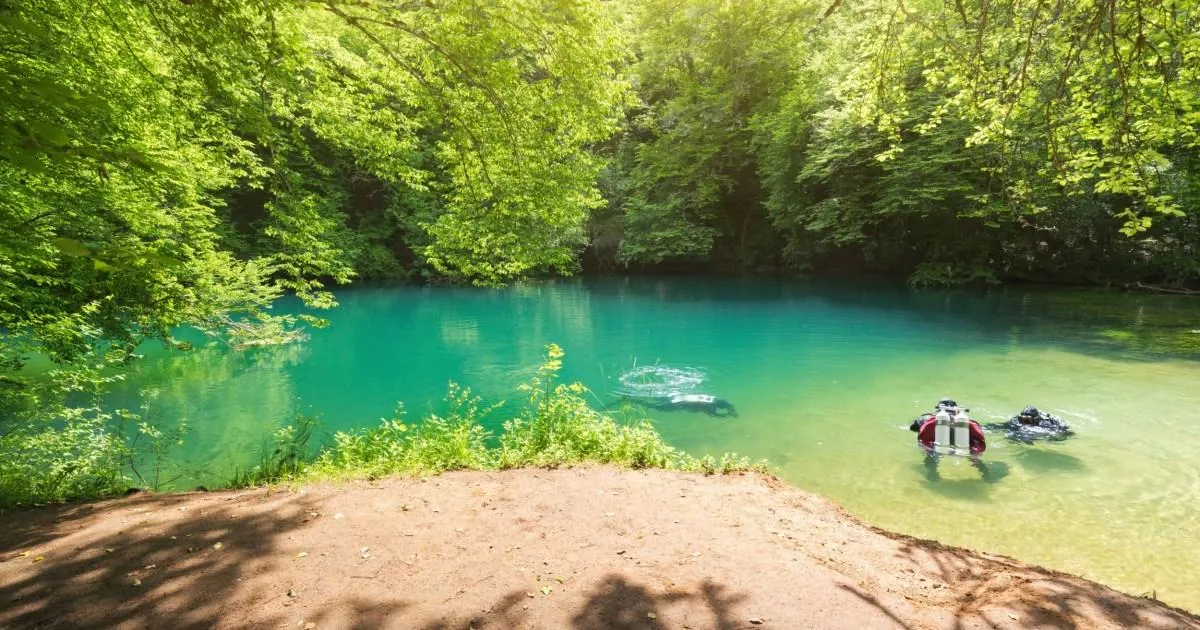
The news landed with the peculiar weight that only comes from stories of the deep. A British diver, just 43 years old, had gone into the Gouffre de Saint-Sauveur cave system in southwestern France on a Friday afternoon, part of a close group of eight experienced British cave divers. He never came back out. For days, rescue teams scoured the labyrinthine passages beneath the limestone hills near the village of Calès, hoping against hope for a miracle. But on Sunday, their search ended in the only way that truly matters for such an unforgiving environment: they found his body, resting in the cold, silent dark at a depth of about 288 feet. The man, whose name has not yet been officially released, was described by those who knew the circumstances as highly experienced — not a reckless thrill-seeker, but someone who had spent years learning the discipline, the breath control, and the respect for water that cave diving demands. That such a seasoned individual could perish in this way is a stark reminder of the absolute indifference of underwater caves, where a single mistake, a moment of entanglement, or a glimpse of poor visibility can turn a well-planned dive into a fight for life.
-
The timeline of the tragedy reveals how quickly routine can turn to desperation. The diver descended into the caverns at around 3:30 in the afternoon, carrying an eight-hour oxygen supply and a spare tank, which suggested an ambitious but carefully prepared dive. When he did not resurface at the cave entrance as expected, his diving companions grew concerned. They raised the alarm at about eight in the evening, and emergency services responded swiftly. Specialist cave rescue teams and firefighters scoured the area until around midnight, navigating the narrow, flooded corridors in full gear, searching for any sign of the missing man. As Saturday dawned, a larger operation swung into action. Equipment and teams arrived by helicopter, including the Gendarmerie’s elite marine brigade from the Mediterranean city of Marseille. The rescuers were not simply searching blindly; they were working with detailed dive plans and knowledge of the cave’s geometry. For a while, hope flickered that the missing diver might have found an air pocket at a depth of 262 feet, a natural refuge where a trapped person could breathe while awaiting rescue. But when the teams reached that chamber, it was empty. The silence there must have been crushing.
-
To understand what happened, it helps to understand what cave diving actually demands. Unlike open-water diving, where the surface is always a quick upward swim away, cave diving takes a person into a completely enclosed world. Overhead is solid rock; the only way out is the way you came in. In passages as narrow as the Gouffre de Saint-Sauveur, divers move through spaces barely wider than their own shoulders, often in near-total darkness broken only by their lights. The guide line — a permanent rope installed along the route — is the diver’s lifeline, the thread that leads back to the entrance. But that same line can become a deadly snare. Investigators believe the 43-year-old became entangled in the guide line in a narrow passage deep underwater. In such conditions, panicking is fatal; the body burns through precious air, and every movement can tighten the trap. Even the most experienced divers can find themselves contorted in a way that makes it impossible to reach the knife on their harness, unable to twist around to free a tangled valve or hose. The fact that his second tank was later found unused suggests that he did not even have time or space to switch to his backup supply. He was, in that final moment, utterly alone.
-
The recovery of his body was not swift, nor was it easy. When the search resumed on Sunday, a body was discovered underwater at approximately 288 feet. But the rescuers could not immediately retrieve it. Public prosecutor Clara Ribeiro explained that the conditions were “extremely difficult.” The same narrow passages that made the cave so treacherous for the victim also made it treacherous for those who came to bring him home. The movement of the rescue divers themselves stirred up silt and sediment, turning the already murky water into something almost opaque. Visibility, which is already poor in these deep cave systems due to suspended particles, dropped to nearly nothing. In such conditions, even moving a body through a narrow restriction is a painstaking, high-risk operation. The rescue team had to balance their own safety with the dignity of the deceased. Eventually, the decision was made that the recovery could not be completed immediately, and the body remained in the cave while the professionals assessed their options. The Gendarmerie has launched an investigation into the cause of death, but in a case like this, the official report will likely confirm what the circumstances already suggest: a tragic accident in an environment where human beings were never meant to tread.
-
Beyond the technical details is the human grief that this tragedy leaves behind. Somewhere in Britain, a family is waiting for more news, trying to process the fact that a husband, a father, a son, or a friend went on a diving trip and will not be coming back. The group of eight British cave divers who entered the Gouffre de Saint-Sauveur together were not just colleagues; they were a community bound by a shared passion for exploring places that almost no one else sees. They trusted each other with their lives, and now they must carry the memory of that failed resurface with them forever. The wider cave diving community, which is small and tightly knit, will also feel the loss deeply. Every death in the cave diving world is studied, discussed, and mourned, because every death offers a grim lesson in the margins of human error and the mercilessness of the underground. For those who were not there, it is tempting to ask why anyone would take such a risk. But for the divers who knew him, the question is less about why he went into the cave and more about how they can process the simple, brutal randomness of a guide line catching at the wrong moment.
-
In the end, the Gouffre de Saint-Sauveur remains exactly what it has always been: a vast, dark, indifferent geological formation that does not care about experience, courage, or preparation. It has swallowed many before, and it will swallow more. But for now, the focus is on the man who lost his life there. His fellow divers will remember the dives they shared, the moments of awe in the silent chambers, the quiet hand signals in the dark. His family will remember his laugh, his stubbornness, his love for the water. The rescue teams who worked for days will remember the difficulty of the search, the fruitless check of the air pocket, the murky struggle to reach a body that had been claimed by the deep. An investigation will continue, but no official finding will change the essential truth: a British diver died doing something he loved, in a place that was beautiful, dangerous, and utterly unforgiving. And the rest of us, standing safely on the surface, can only honor his memory by recognizing the courage it takes to descend into the unknown — and the profound cost that courage can sometimes demand.