
Here is a summary and humanization of the content in six paragraphs.
—
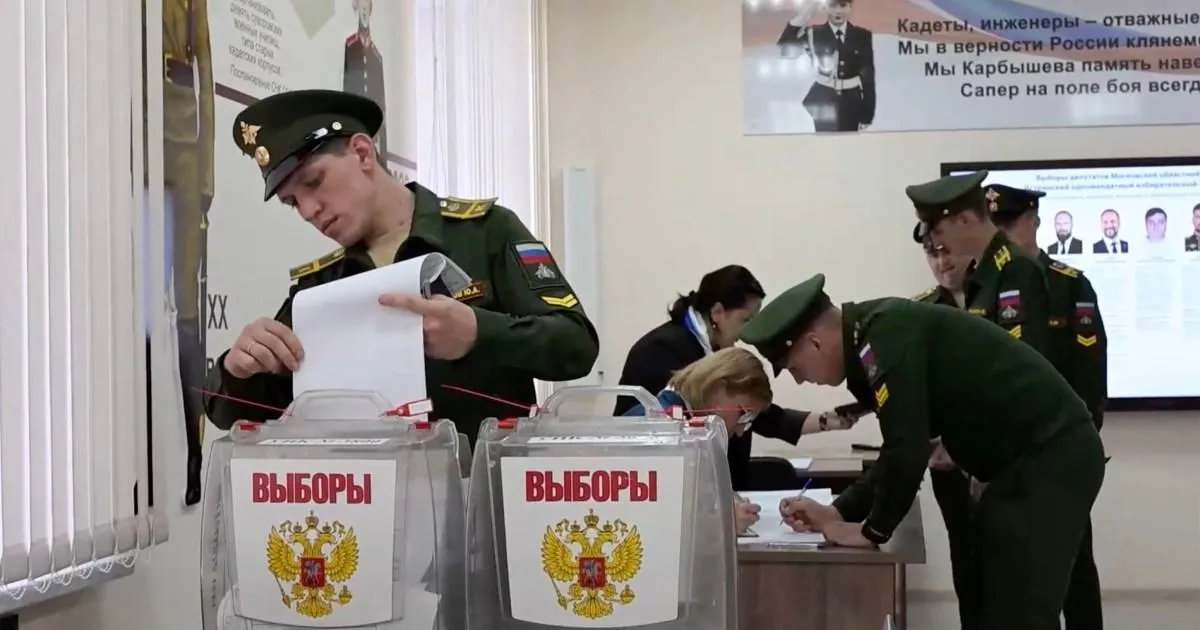
When Vladimir Putin logged on to cast his ballot in Russia’s State Duma election, the image of the Kremlin leader hunched over a computer that seemed to belong to another era was one of the few genuinely authentic moments of the entire exercise. It was the kind of small, almost human detail that drew laughter online, a reminder that even the most powerful man in Russia is still just a man fumbling with technology like the rest of us. But the joke was not remotely funny to millions of Russians or to the wider world watching with bated breath. Putin’s United Russia party won a landslide victory, securing nearly 58 percent of the vote, a result that far exceeded its performance five years ago and gave the Kremlin an overwhelming majority in parliament. Western leaders, independent observers, and even many Russians were quick to call the whole event a sham, a carefully stage-managed display of manufactured loyalty rather than a genuine expression of voter will. The election was marred by widespread allegations of ballot stuffing, pre-marked ballots, and mysterious breakdowns in electronic voting systems. Even the basic mechanics of democracy, like arriving at a polling station and placing a cross next to a name, were turned into something else entirely. And yet, despite the farce, the result carries deadly real consequences. With the war in Ukraine grinding into its most dangerous phase, Putin now has what he wanted: a public endorsement, however illegitimate, for his aggressive path. The question is not whether the election was fair, but what this fake mandate will be used to justify next.
The idea that this election was a genuine contest is difficult to square with the experience of anyone who actually tried to compete against the Kremlin. Nikolai Rybakov, the leader of the anti-war Yabloko party, was nearly entirely barred from the ballot by the Supreme Court, and he claims that without that ban, his party would have surged into second place. He spoke of a “political event of global significance,” not because his party won, but because millions of Russians had allegedly been willing to stand up for peace, freedom, and a life free from fear. Even the country’s long-serving Communist Party leader, Gennady Zyuganov, whose party came in second with around 14 percent of the vote, accused the Kremlin of outright manipulation. The most chilling explanation came from political analyst Kirill Rogov, who described a “55-55 strategy” in which the regime engineered the turnout and the vote share to meet minimum thresholds, making sure the election looked respectable enough to sell to the Russian public while remaining an obvious farce to anyone with eyes. Then there was the ridiculous result from Chechnya, where the repressive warlord Ramzan Kadyrov won more than 99 percent of the vote, a figure so absurd it practically invited mockery. These numbers were not meant to be believable. They were meant to send a message: the Kremlin decides what is true, and everyone else just lives with it.
The most dangerous consequence of this rigged election might not be the result itself, but what comes next. For months, there have been persistent fears that Putin intends to use his fresh mandate to announce a new wave of mobilisation, either openly or by stealth, sending hundreds of thousands more men to fight and die in a conflict that has already consumed an estimated half a million Russian soldiers, with another million wounded. Those are not just statistics; they are sons, husbands, fathers, brothers. They are people whose lives have been turned inside out by a war that began in the dark and has crept inexorably toward the border of NATO. Czech security chief Michal Koudelka issued a stark warning that a limited incursion into NATO territory could come within “months, not years,” involving false-flag operations, drone incursions, and massive disinformation campaigns. It is a terrifying thought: the very real possibility that an artificially reinforced Putin, emboldened by a fake vote, might decide that the only way to stay in power is to expand the war beyond Ukraine. Western intelligence agencies have reportedly predicted that a new mobilisation plan was being prepared for after the election, and everything we have seen suggests they were not just guessing. The election gave Putin a stage, but it also gave him a countdown clock.
While the Kremlin was celebrating its hollow victory, Ukraine delivered a message of its own. On the final day of the vote, Ukraine launched its largest attack of the war on the Moscow region, including footage of its newly produced Flamingo cruise missiles flying toward the Russian capital for the very first time. It was a deliberate act of defiance, a warning shot that said: you may have your election, but we still have weapons. The attack was also a signal that Ukraine is willing to bring the war home, to make the Russian people feel the same fear they have inflicted on millions of innocent civilians. In Zaporizhzhia, Russian strikes destroyed a historic university building, reducing a hall of learning to smoking rubble. Apartment buildings were torn apart, shopping centres hit, warehouses set ablaze near Kyiv, and critical infrastructure like logistics hubs and gas distribution stations were targeted. The images from Ukraine were scenes of absolute devastation, the kind of carnage that has become so routine it barely makes the news anymore. But every building destroyed is someone’s classroom, someone’s home, someone’s place of work. The war has become a cycle of endless revenge, a spiral of violence where each side believes it has no choice but to keep fighting. For the civilians caught in the middle, there is no victory, only survival.
Amid the bombing and the ballots, there was also the strange, almost surreal diplomacy of a war conducted through telephone calls. Hours after Donald Trump reportedly called Volodymyr Zelensky to urge Ukraine to avoid striking Russian diesel production facilities, Ukrainian forces hit the Ufa Oil Refinery in the country’s Bashkortostan region. The refinery produces diesel, petrol, aviation fuel, and other essential supplies for the Russian war machine, and Zelensky clearly believes that the most effective way to weaken Putin is to strike directly at his country’s economic veins. The word “diesel” apparently came up many times during the call, and it is not hard to understand why: wars are not just won with bravery and heroism, but with fuel, logistics, and supply lines. A single refinery can feel more important than a huge battlefield victory because without fuel, the tanks do not move, the planes do not fly, and the infantry cannot advance. The two leaders were due to meet in New York, and the world held its breath, hoping that between phone calls and handshakes, some kind of off-ramp might be found. But diplomacy in the middle of a war is a strange and fragile thing, and every conversation can be undone by the next missile strike. The strike on the Ufa refinery was a reminder that words, no matter how carefully crafted, are not the same as peace.
Back in Russia, the election itself kept tripping over its own lies. At one polling station, pre-marked ballots for United Russia were discovered. Voters were allegedly told they had already cast their ballots even though they were standing in line waiting to do so. In Moscow, long queues formed under mysterious circumstances when the electronic voting system collapsed and officials were unable to issue ballots. An election is supposed to be a sacred ritual, a moment when the voice of the people is supposed to be heard above the noise of power. Instead, it was exposed as a ghost process, a staged performance in which the result was already known before a single vote was cast. And yet, the people were asked to believe. They were asked to look at a screen showing 58 percent and feel something other than contempt. They were asked to look at Kadyrov’s 99 percent and applaud. But real life cannot be managed quite so easily. Behind the farcical numbers, there are real hearts, real fears, real grief. Putin may have won his rigged election, but he cannot rig the pain of the mothers who have lost their sons, nor the fury of the soldiers who know they are dying for a lie. He cannot manufacture the legitimacy that only comes when people genuinely believe that their choice matters. The final result was never in doubt, but the consequences of that reality will continue to unfold long after the ballots have been burned. As the world watches, waiting to see what Putin will do with the mandate he gave himself, one thing is painfully clear: this was never really an election. It was a warning. And the worst part is, we are all just waiting to see what happens next.