

Here is a six-paragraph humanized summary of the article:
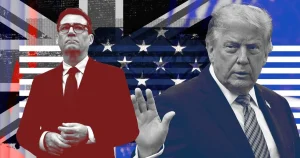
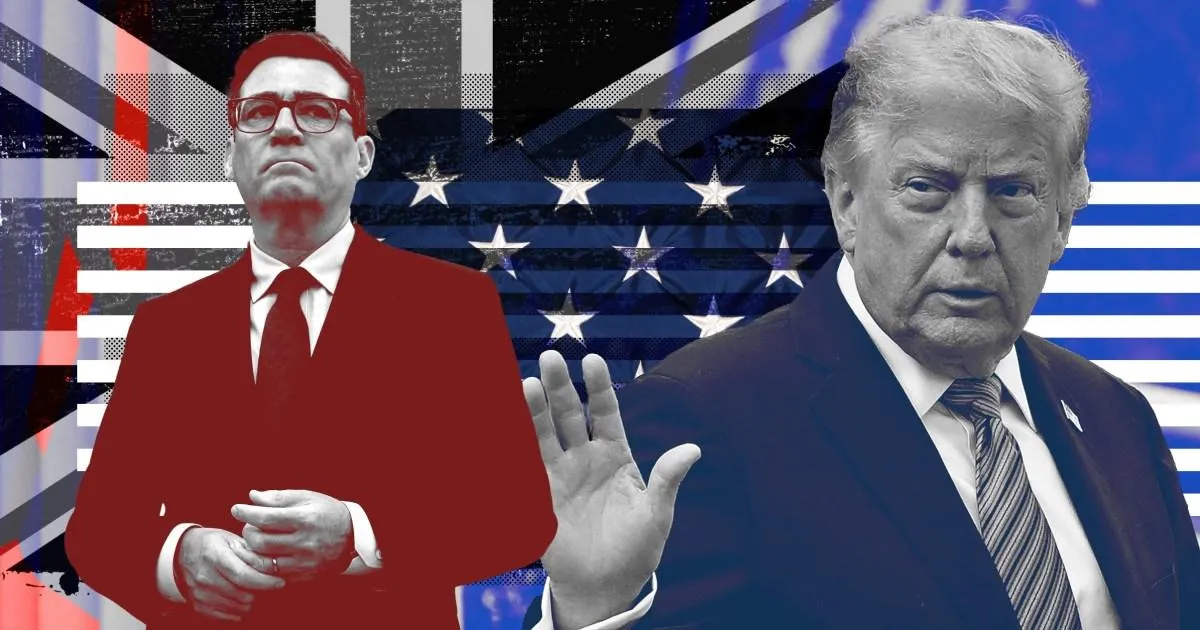
Tomorrow in New York, Andy Burnham will do something that no amount of briefing books, policy papers, or diplomatic rehearsal can quite prepare him for: he will come face-to-face with Donald Trump for the first time. The setting is the United Nations General Assembly, a sprawling global gathering where leaders trade handshakes, photo opportunities, and carefully worded statements, but this particular meeting carries an extra charge. Downing Street, we are told, will be feeling it. It is striking that Burnham’s last big international trip as Prime Minister was to Kyiv, where he met Volodymyr Zelensky on Ukraine’s independence day. That visit felt almost easy by comparison, a warm and cordial affair full of handshakes, defence agreements, and even an impromptu guitar rendition of Smiths songs. There is something almost sweet about that image, a British leader bonding with a wartime president over music and solidarity. But the UN General Assembly is a very different kind of stage. The article makes a darkly comic point: what is the threat of a Russian drone attack compared to a meeting with Donald Trump? It is the kind of joke that masks real anxiety, because everyone knows that Trump is unpredictable in a way that formal state occasions cannot contain. Even Burnham’s big speech to world leaders, expected soon after, will probably feel like the undercard. The main event is the encounter with the former, and perhaps future, occupant of the White House. Everyone will be watching, and the only thing predictable about it is that it will be unpredictable.
What makes this meeting so fascinating is not the possibility of a major diplomatic breakthrough or a spectacular blow-up, but the strange, low-key nature of it all. According to the article, the stakes are surprisingly low. There are no major deals on the line, no trade agreements hanging in the balance, no urgent treaty waiting to be signed. Burnham may press Trump on support for Ukraine, and there is no shortage of other big issues to discuss, but the expectation is that the conversation will be exactly that: a conversation, not a negotiation. This is a stark change from the early meetings between Trump and Burnham’s predecessor, Sir Keir Starmer. Back then, Starmer seemed to feel obliged to lay on the flattery in an attempt to secure a significant trade agreement. There was a sense that the UK needed the US more than the US needed the UK, and the body language showed it. A year and a half later, the British government is no longer leaning quite so heavily on Washington. Like plenty of other Western governments, it has decided that it is more productive to build relationships with more reliable allies. Trump, meanwhile, is in a very different position. After alienating much of the world with his tariffs, he managed to make himself even less popular with his disastrous war on Iran. He has never looked weaker. Midterm elections are just over a month away, and they are happening against a backdrop of rising costs that many people blame him for. So Burnham can afford to walk into the room without grovelling. That is not just a diplomatic calculation; it is a relief. The relationship between the UK and the US has always been described as special, but special relationships can also be exhausting, especially when one side is constantly seeking approval.
And yet, and yet. This is Donald Trump. Nothing about him is normal, and nothing about him is predictable. However weak he may be in the polls, however chaotic his foreign policy may have become, he still has the capacity to derail a meeting with a single offhand comment or a sudden flash of anger. The article suggests that Burnham might need to work hard to avoid public blow-ups over immigration or renewable energy, two issues where Trump has strong opinions and no patience for disagreement. So how does he plan to handle it? Burnham has hinted at his strategy, and it sounds almost disarmingly simple. He wants to find a connection while staying honest. In a recent interview with Channel 5, he said: “I’ve had a habit of saying what I feel over the years, and I will continue to do that. But at the same time, I’m somebody who works with people and tries to find common ground.” That is a very Burnham way of putting it, direct but not confrontational, principled but not self-righteous. Whether it will be enough to win over a president who still grits his teeth over the UK’s lack of unqualified support for the attacks on Iran is another question entirely. Trump does not forget slights, especially from allies he expects to stand with him unconditionally. The article captures this tension perfectly: Burnham wants to be honest, but honesty is not always the easiest currency in a room with someone like Trump. It might work, and it might not. The only way to find out is to watch what happens when the two men actually sit down together.
There is also the question of the little things, the human touches that often matter more than the official agenda. Diplomatic meetings are rarely just about policy; they are about atmospherics, chemistry, and the small gestures that signal whether two people are going to get along. In that spirit, the article suggests that Burnham might bring a Manchester-themed gift to kick off the pair’s first face-to-face interaction on the best possible terms. It is a nice idea, a token of place and identity, something that says something about who he is and where he comes from. It could be a joke, a talking point, a way to break the ice. But whatever it is, the article adds, don’t expect Burnham to reach into his jacket pocket and whip out a letter from the King. The point here is subtle but significant. Burnham is not trying to be someone he isn’t. He is not going to play the part of a fawning emissary, waving royal letters and trading on institutional charm. He is going to be himself, for better or worse. That is both the promise and the risk of the encounter. The Manchester gift is a reminder that Burnham has his own political identity, rooted in a city, not a palace. It suggests a meeting between two people who come from very different worlds, not a formal summit between interchangeable heads of government. Whether that will resonate with Trump, who tends to respond to strength and flattery in equal measure, is hard to say. But at least it will be authentic.
If all goes to plan, the article says, we may not be talking about this meeting for very long. That is not a criticism; it is actually the best-case scenario. In a world where every Trump meeting has the potential to become a five-alarm news cycle, a quiet, uneventful conversation would count as a victory. The hope is that Burnham and Trump will talk, disagree where necessary, but leave the room without any fireworks. The article describes the changing nature of the transatlantic relationship with some optimism. The UK, along with much of the West, appears to have learned a lesson: relying on the United States under Trump is a risky business, and it is better to build a broader network of alliances. That is a mature, pragmatic approach, and it gives Burnham room to be firm without being hostile. He can afford to prioritise Ukraine, because he knows that the relationship with the US is no longer a matter of life and death for British interests. He can afford to disagree on Iran, because the political consequences of a split are less severe than they once were. And he can afford to keep things light, because the idea of a special relationship has already been quietly downgraded. None of this means the meeting is unimportant. On the contrary, it is a chance to establish a working relationship, to let Trump see that the new British Prime Minister is not going to be pushed around, and to test whether the two men can find enough common ground to keep the conversation going in the future.
But beneath the strategic calculations and the political analysis, there is a very human story here. Two powerful men, each with their own ego, their own instincts, and their own sense of what is at stake, are going to sit in a room and try to read each other. For Burnham, this is the moment where the abstract idea of leadership meets the messy reality of personalities. He has spent years building a reputation as someone who says what he means, but presidential meetings require a degree of diplomacy that can sometimes feel like the opposite of honesty. For Trump, the meeting is an opportunity to test his own authority, to see whether this new British leader is someone he can work with or someone he will dismiss as weak. The article captures the strange mixture of anxiety and indifference that surrounds the encounter. On one hand, the stakes are low, and there is no need for Burnham to grovel. On the other hand, this is still Donald Trump, and nothing is ever simple when he is involved. The best approach, Burnham seems to be saying, is to be yourself, find a connection, and hope that is enough. That may sound naive in the ruthless world of international politics, but sometimes a Manchester-themed gift and a willingness to tell the truth are as good a strategy as any. Tomorrow, the world will see whether it works. But whatever happens, the meeting will be remembered less for its outcomes than for its tone, and that is precisely why everyone will be watching.