

Paragraph 1: A Family’s Private Grief Becomes a Nation’s Shared Moment
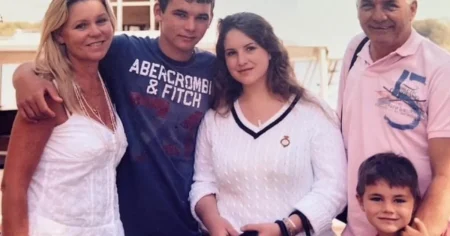
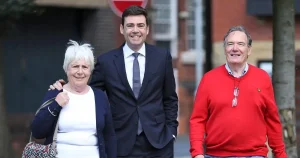
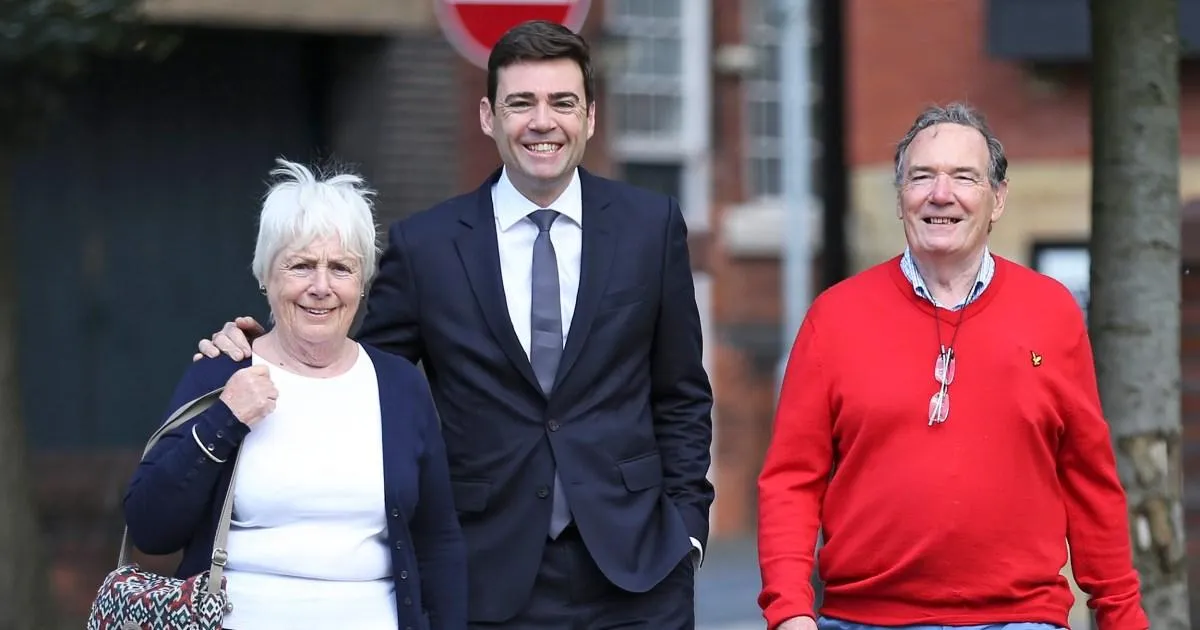
When a public figure loses a parent, the news often arrives with a strange mixture of intimacy and distance. We see the photographs, read the statements, and hear the well-rehearsed condolences, but the reality behind the headlines is always much more human: a son saying goodbye to his father, a family trying to find its footing in the sudden silence left by a loved one. That was the scene this week for Prime Minister Andy Burnham, who announced the death of his father, Roy Burnham. The news landed with particular weight not only because Burnham is a prominent political leader, but because the circumstances were so deeply personal. Roy Burnham had been living with Alzheimer’s disease, a cruel condition that slowly erodes memory, recognition, and connection. For Andy, this meant that even as he reached the pinnacle of his political career, his father was no longer able to fully share in that joy or even understand the magnitude of what his son had achieved. The Prime Minister cancelled all of his public engagements on Monday, including a planned meeting with business leaders and a speech before the TUC, choosing instead to be with his family in the raw, quiet hours after his father’s passing. It was a reminder that no title, no office, and no amount of responsibility can shield anyone from the fundamental sorrow of losing a parent. In the days that followed, an outpouring of sympathy came from across the political spectrum and from ordinary members of the public, many of whom recognised in Burnham’s loss their own experience of saying goodbye to someone they loved. The Prime Minister, clearly moved by the response, took to social media to express his gratitude. In a post that was both graceful and deeply human, he thanked everyone who had shared a kind message, singling out the leaders of the other parties for their compassion. “My family and I have been helped though this difficult time by people’s warmth and compassion,” he wrote. “It means a great deal to us and we wanted to say thank you.” Those words, simple as they were, spoke volumes about the decency that can still exist in public life, even in moments of profound personal pain.
Paragraph 2: A Public Thank You and the Politics of Compassion
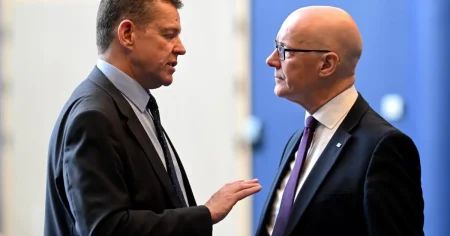
Andy Burnham’s message of thanks was not just a formality; it was an acknowledgment that grief is not something anyone should have to carry alone. In the strange and often brutal world of politics, where rivals are expected to attack each other daily, the death of a family member has a unique ability to cut through the noise and remind everyone of their shared humanity. The Prime Minister specifically thanked the leaders of other parties, and that was no small gesture. In an era of deep political division, the fact that figures from across the aisle set aside their differences to offer condolences matters. It says something about the kind of country people want to live in, and the kind of leaders they hope to be. For Burnham, the support seemed to provide at least some comfort during one of the hardest weeks of his life. His post on X was brief, but it carried a warmth that many found striking. He did not rush back to work or pretend that everything was fine. Instead, he allowed himself to be vulnerable, to admit that his family had been helped by the kindness of others. That kind of openness is rare among public figures, who often feel pressure to appear strong and unaffected. Yet Burnham’s decision to share his gratitude publicly was not a sign of weakness; it was a sign of emotional honesty. It also reflected the values he has long championed in his political career: community, compassion, and the belief that people are at their best when they look out for one another. The response from the public was equally telling. Many people shared their own stories of losing parents, offering words of encouragement and solidarity. For those who had followed Burnham’s career, the moment felt personal. They had seen him fight for social justice, advocate for better public services, and speak openly about his family. Now, they had the chance to offer something back. In the midst of policy debates and political manoeuvring, this was a reminder that behind every politician is a person, with a family, a history, and a heart. Burnham’s thank-you message closed with a sentiment that resonated widely: that warmth and compassion had made a difficult time more bearable. It was a simple truth, but one that can be easy to forget in a world that often feels cold and transactional. By reaching out to say thank you, Burnham not only honoured the kindness he had received; he also reminded everyone that even in moments of deepest sorrow, human connection is what carries us through.
Paragraph 3: Returning to Duty with Diplomacy and Football
Grief does not follow a schedule, and neither does the work of governing. By Tuesday, Andy Burnham had made the decision to return to his duties, stepping back into the role of Prime Minister with a series of high-level diplomatic appointments. Among those scheduled to meet with him were NATO Secretary-General Mark Rutte and Canadian Prime Minister Mark Carney, two significant international figures whose visits underscored the importance of the moment. It cannot have been easy for Burnham to shift from the private world of mourning to the public stage of diplomacy. But the demands of leadership are relentless, and there is a certain dignity in choosing to carry on, even when your heart is heavy. The meetings with Rutte and Carney were likely to cover a range of pressing issues, from international security to economic cooperation, but they also provided an opportunity for Burnham to ease back into work in a structured, purposeful way. There is something grounding about sitting down with colleagues and allies, focusing on shared challenges, and being reminded that the world continues to move forward, even when your own has stopped for a moment. In a particularly touching note, it was expected that Burnham would attend Everton’s game against Wolves later in the evening alongside Mark Carney, who is also a devoted supporter of the Merseyside club. For Burnham, a lifelong Evertonian, the match was more than just a sporting event; it was a chance to share something familiar and comforting with a fellow fan. Football has always had a way of bringing people together, offering a sense of belonging and continuity that few other things can match. In the stands, surrounded by thousands of supporters singing and cheering, Burnham could briefly lose himself in the rhythm of the game, finding a small measure of peace in the ritual he has loved since childhood. The decision to attend with Carney also highlighted the human side of international diplomacy. Leaders often connect over shared interests, and a football match provides a relaxed setting for conversations that might be more formal in an office. It was a reminder that even amid grief and responsibility, moments of joy and connection are still possible. Returning to work so soon after his father’s death was not about pretending nothing had happened; it was about acknowledging that life goes on, and that service to others can sometimes be a source of strength. For Burnham, the day’s schedule offered a path forward, one step at a time, from the sorrow of loss to the steady rhythm of duty.
Paragraph 4: The Quiet Sorrow of Alzheimer’s and a Father’s Unawareness
The death of Roy Burnham was not sudden in the way some losses are. Alzheimer’s disease had been slowly taking him away for some time, eroding the memories and connections that once defined him. For Andy Burnham, this meant grieving in a way that began long before his father’s final breath. He had spoken publicly before about the difficulty of knowing that his dad was not aware of his new role as Prime Minister. That admission was heartbreaking in its honesty. Imagine achieving the highest office in the land, a moment of triumph that any child would want to share with their parents, only to realise that the person who raised you, who shaped you, who cheered for you, can no longer understand what you have accomplished. It is a uniquely modern heartbreak, one faced by countless families dealing with dementia, but it carries an extra poignancy when set against the backdrop of national leadership. Burnham’s father had been a constant presence in his life, a source of support and guidance. To watch that connection fade, to see the recognition in his eyes dim, was a form of loss that no professional achievement could offset. The Prime Minister’s willingness to talk about this experience was significant. Too often, we hide the realities of dementia behind euphemisms and silence. We talk about the practical challenges, but less frequently do we speak about the emotional toll, the strange loneliness of loving someone who no longer remembers you fully. Burnham’s openness helped to normalise those feelings for many people going through similar experiences. It also humanised him in a way that few political moments can. Here was a man who had the weight of the country on his shoulders, yet he carried the same private sorrow that so many others carry. He knew what it was like to visit a parent and search for a flicker of recognition. He knew what it was like to grieve someone while they were still alive. And now, he knew what it was like to say the final goodbye. In his previous comments, Burnham had spoken about the difficulty of the situation, not with self-pity, but with a kind of resigned tenderness. He loved his father, and his father’s illness did not change that. It only made the moments of connection more precious and the absence more profound. As he returns to work, the memory of his father will travel with him, a quiet presence in the halls of power, a reminder of where he came from and who he is beyond the title of Prime Minister.
Paragraph 5: From Personal Pain to a Political Mission
Grief can either close a person off from the world or open their eyes to the struggles of others. For Andy Burnham, his father’s illness had already done the latter. Long before Roy Burnham’s death, the Prime Minister had spoken about how his father’s Alzheimer’s diagnosis shaped his views on social care. Watching a loved one decline, struggling to navigate a system that often fails the most vulnerable, gave Burnham a deeply personal understanding of the challenges facing families across the country. He has cited that experience as one of the driving forces behind his ambition to reform social care, a policy area that is often described as a ticking time bomb, underfunded, understaffed, and poorly organised. For Burnham, this was never just about policy or statistics. It was about real people, like his father, and the devoted family members who cared for them. It was about the exhaustion of caregivers, the isolation of patients, and the indignity of a system that treats people as burdens rather than as individuals with value and history. The Prime Minister has spoken movingly about the injustice of a society that pays so much attention to the beginning of life and often so little to its end. His father’s illness made the abstract concrete. It gave him a personal stake in the fight to ensure that no one should have to face dementia alone, and that families should not have to battle for basic support and dignity. His ambition to reform social care was not born in a briefing room or a think tank; it was born at his father’s bedside, in the quiet moments of confusion and tenderness, in the frustration of knowing that more could be done and should be done. Now, with his father gone, that mission takes on an even deeper urgency. Burnham has the power to shape policy, to allocate resources, and to change the way the country treats older people and their families. He has the ability to turn his grief into action, to ensure that his father’s legacy is not just a memory but a movement. It is a heavy responsibility, but also a profound one. In the coming months and years, as debates about social care continue, Burnham will carry with him the image of his father, and the knowledge that behind every statistic is a family struggling to cope. His commitment to reform is not just political; it is personal. And that makes it all the more powerful. The loss of Roy Burnham is a private tragedy, but it may yet contribute to a public good. Out of sorrow, there can be purpose. Out of grief, there can be change.
Paragraph 6: Tributes Across the Aisle and a Shared Sense of Loss
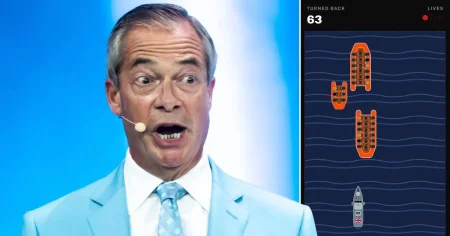
In the aftermath of Roy Burnham’s death, tributes poured in from across the political spectrum, a rare moment of unity in a divided world. Conservative leader Kemi Badenoch offered a particularly heartfelt message, writing on X: “No matter how old you are, or how much you try to prepare, losing your father is a profoundly painful experience. A part of your life that has always been there is suddenly gone forever and it can feel as though a part of you won’t ever be the same again.” Her words captured something universal about the loss of a parent, the way it changes the landscape of your life, leaving a permanent absence that you learn to live with but never fully get over. Badenoch’s message was echoed by other party leaders, including Sir Ed Davey, Nigel Farage, and Zack Polanski, all of whom put aside their political differences to offer sympathy and support. In that moment, they were not rivals but fellow human beings, united by the understanding that no one is immune to grief. For Burnham, the outpouring of support from people he often opposes in the political arena must have meant a great deal. It is one thing to receive condolences from allies and friends; it is another to hear kind words from those who challenge you, criticise you, and compete with you. It is a reminder that beneath the surface of political conflict, there is a shared recognition of the things that truly matter. Family. Love. Loss. The simple, profound experiences that connect us all. The death of a parent is a milestone in every person’s life, a moment when the generations shift and you become keenly aware of your own mortality. For Andy Burnham, this loss arrives at a time when he is already shouldering immense responsibilities, but the weight of grief does not pause for the convenience of a political calendar. He will carry it with him as he meets world leaders, as he attends football matches, as he pushes forward with his agenda. And that is okay. Grief is not a weakness; it is a sign of depth, of love, of having been truly connected to another person. In his public statement, Burnham thanked everyone who had helped his family through this difficult time. But perhaps he also helped them in return. By sharing his loss so openly, by speaking about his father with tenderness and gratitude, he reminded everyone of the importance of cherishing the people we love while we still have them. Life is fragile. Time is short. And in the end, what matters most is not the titles we hold or the battles we win, but the relationships we nurture and the memories we leave behind. Roy Burnham may have been unknown to most of the country, but he raised a son who has touched many lives. And for that, he will be remembered. As Andy Burnham returns to the responsibilities of leadership, he does so with a heavy heart, but also with the knowledge that he is not alone. The warmth and compassion he received this week are proof that even in the cold world of politics, humanity can still shine through. And that, perhaps, is the greatest tribute of all.