

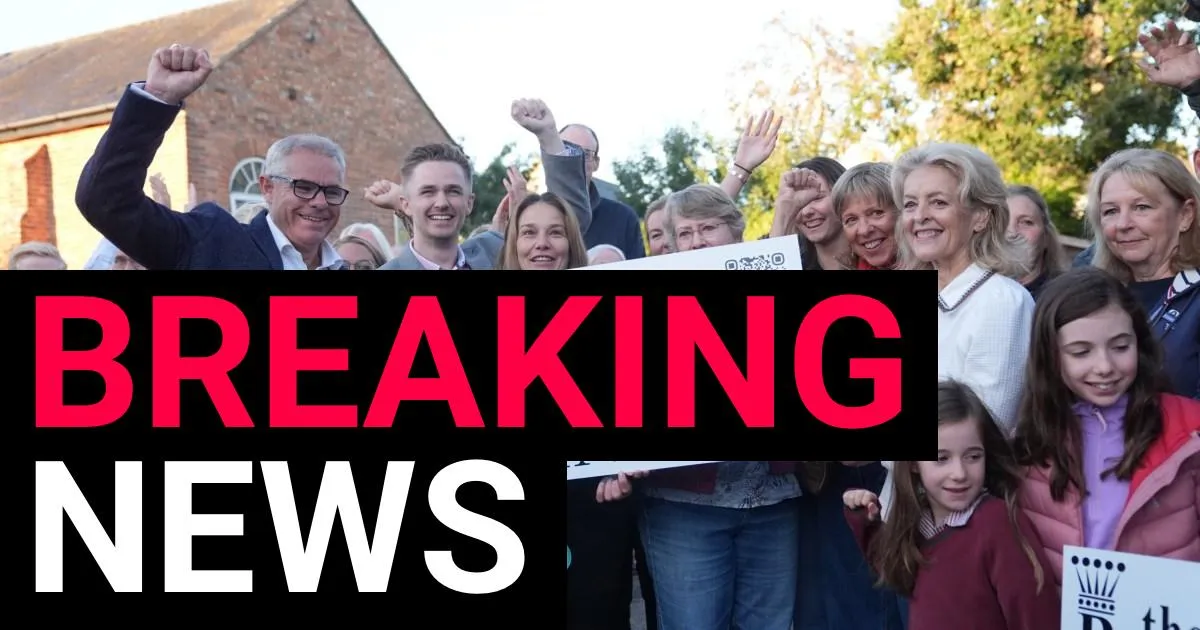
In the quiet Oxfordshire countryside, where narrow lanes thread between ancient hedgerows and the sound of birdsong outlasts the rumble of passing tractors, the small village of Piddington has made an extraordinary stand. With a population of around 400 people, it is the kind of English village that seems untouched by the great debates of the day, a place of modest brick cottages, a village hall, and memorials that remember the sacrifices of the Battle of Britain and the Second World War. But in recent weeks, Piddington has been thrust into the centre of Britain’s bitter argument over migration. Residents voted overwhelmingly, by a margin of 285 to 26, with one spoiled ballot and a turnout of almost 92 percent, to secede from the United Kingdom. The vote is purely symbolic; there will be no new borders, no passports, no embassy in Oxford. But as a declaration of anger, it could hardly have been louder. The cause of this extraordinary protest is the government’s plan to turn a nearby former Ministry of Defence site, located on the B4011 between Piddington and the villages of Upper and Lower Arncott, into temporary housing for 1,256 lone male asylum seekers. For a village whose entire population could fit inside a couple of London apartment blocks, the proposal felt less like a policy and more like a flood. People spoke of property prices collapsing, of crime, of fear, and of a community that had lost control of its own future. The result was announced just a few yards from the village hall, surrounded by the quiet memorials of past wars, and many residents greeted it not merely as a protest but as a triumph.
At the centre of the villagers’ anger is a deep sense of injustice, one that has little to do with the asylum seekers themselves and everything to do with the way the decision was made. Tim McNally, the parish chairman, stood outside the village hall and spoke with raw emotion about what the announcement had done to the community. ‘It doesn’t matter whether they’re priests or vicars, the proportionality isn’t acceptable,’ he said. He was not speaking of charity or compassion but of numbers, of a small village being asked to absorb a population several times its own size overnight. McNally talked about the practical consequences that had already arrived, even before a single asylum seeker has been moved in. House values have dropped, he said. Deals that were nearly completed have been cancelled. Banks and building societies have withdrawn mortgage offers. Elderly residents, people who put their savings into their homes and expected to draw on that value in retirement, have had their properties revalued and discovered that their life’s work was suddenly worth less than it had been a month ago. ‘That’s not about saying this is a wealthy area,’ he insisted. ‘This is no more wealthy than any other village around the country, but people work very hard, and they worked hard to earn what they’ve made, and they should be entitled to have what they’ve made. But overnight, to have that destroyed, ultimately, is disgraceful, and we’ve had no involvement in that process to determine what it means for us.’ His words captured an emotion that went far beyond politics: the feeling of being invisible, of being sacrificed by distant officials who had never walked down Piddington’s lanes and never would. It is not difficult to understand why a community might react with fury when its home is treated as a blank space on a map, a convenient location for a policy imposed from above.
Then there is the question of safety, which hung over the vote like a shadow. The proposed site is off the B4011, a country road with a 50mph speed limit, no pedestrian path, and no proper verge for walkers. Parish councillor Mike Nixon explained that vehicles routinely exceed the limit, and that the road would present a real danger to anyone on foot. He claimed that officials had suggested providing asylum seekers with high-visibility jackets if they wanted to walk, even though government documents themselves advise against it. ‘It is likely that there would be significant risk of road traffic collisions, injury, or even death, should the plan go ahead,’ he said. It is a practical objection, the kind that any rural community might raise, but beneath it lies a deeper anxiety about change and the unknown. Resident Jamie Perkin, a father of three young children, spoke more bluntly. He said the village would be ‘outnumbered’ if the plan went ahead, pointing out that no other town or village in the country had ever had its population quadrupled in a single stroke. ‘You won’t be able to name one, we would be the first ones,’ he said. ‘Why should we be the first ones to have this dropped upon us?’ Perkin went on to describe the asylum seekers as ‘illegal men’ about whom ‘we don’t know anything about.’ He spoke about his wife and his children, and his fear that women in the village would be ‘outnumbered ten to one.’ ‘It is a massive risk to the women,’ he said. His language is uncomfortable, and it echoes narratives that have been heavily pushed by far-right groups, but his fear is real. In a village of four hundred souls, the sudden arrival of more than a thousand young men is not an abstract statistic. It is a transformation that no amount of reassurance can soften. Whether those fears are rooted in fact or in the unknown does not change the intensity with which they are felt.
The political atmosphere surrounding the vote made Piddington something more than a local story. The leader of the far-right group Restore Britain, Rupert Lowe, travelled to the village to join the residents during the symbolic referendum, and his presence turned the event into a rallying point for a wider movement. Herbert Owen, a 76-year-old villager, stood among the memorials to fallen soldiers and called the result a ‘Battle for Britain.’ ‘This is not just about our village,’ he said. ‘It’s about our whole country.’ He accused the government of ‘destabilising our country,’ words that carried the weight of a man who remembered past wars and felt that a new one was being fought on his doorstep. The memorials behind him were a reminder that this part of England had once faced an existential threat, and many villagers seemed to believe that they were, once again, the last line of defence. The vote drew on a powerful set of ideas: the alleged risk to women and girls posed by lone male asylum seekers, the sense that the country was being changed beyond recognition, the grievance that ordinary people were being ignored by an elite that did not care. It is a narrative that has become familiar across Britain, and it is not unique to Piddington, but here it was given a new and potent symbol. A village declaring independence from the United Kingdom is the kind of story that resonates far beyond the parish boundary. It is a protest that says, with a kind of theatrical desperation, that the institutions of the country no longer represent the people who live in it. There was celebration in the village when the result was announced, but it was not a triumphant celebration. It was the celebration of people who felt they had been cornered and had finally found a way to scream.
Piddington is only one pin on a map that stretches far beyond Oxfordshire. The Home Office’s plan to move asylum seekers out of hotels and into former military sites is national in scope, and the government has already identified other locations. Alongside the Bicester site, there are proposals for Barnham in Suffolk and Linton-on-Ouse in North Yorkshire, and together these three sites could house around 3,750 asylum seekers. The policy is driven by economics as much as by ideology. Hotels are expensive, and the government has been under enormous pressure to end the costly system of temporary accommodation. According to the Home Office, closing asylum hotels has saved taxpayers more than £1 billion since the 2024 General Election. A spokesperson said: ‘We are working to fairly house asylum seekers across the country, moving asylum seekers into alternative accommodation, including former military sites which are designed to be self-contained to reduce impact on the local community. As part of the process, we engage with local authorities and police forces to ensure the safety and security of those in the surrounding area.’ But the government’s assurances have done little to calm the waters. In the same week that Piddington voted, around 200 protesters, many wearing balaclavas, gathered at a marina in Eastney, Hampshire, after people who had been rescued from the English Channel were brought ashore. They said they were trying to stop the migrants from being taken to a processing centre. The scenes were tense, and they offered a glimpse of a country that is increasingly divided between those who see asylum seekers as victims and those who see them as a threat. The debate is no longer confined to Westminster or to coastal towns. It has travelled inland, to villages like Piddington, where the sight of a former military base being reopened as accommodation for hundreds of men has become a symbol of everything that feels out of control.
Ultimately, the vote in Piddington was never really about independence. It was about powerlessness. The villagers knew, even as they cast their ballots, that they would not be seceding from the United Kingdom. They knew that no army would come to defend their new imaginary borders and that the government in London would go about its business as if nothing had happened. But symbolic gestures are not always empty. Sometimes they are the only language left to people who feel they have been ignored. The residents of this small Oxfordshire village wanted to be noticed. They wanted to show the politicians, the civil servants, and the journalists, that they were not just a footnote in a policy document. And in that, they certainly succeeded. The image of four hundred people voting to leave the country they have always belonged to is a strange and unsettling one, and it should give the rest of Britain pause. It is easy to dismiss Piddington’s concerns as xenophobia or scaremongering, and some of the language used during the campaign certainly deserves criticism. But it is harder to dismiss the underlying sadness of a community that believes its history and character are being erased. People work hard to buy homes, to raise children, to build lives, and then feel that a distant government can dismantle it all without a conversation. The asylum seekers at the centre of this storm are also human beings, many of them fleeing violence and devastation, looking for the same safety that the villagers are trying to protect. There are no easy answers here, no clean lines between right and wrong. But there is a lesson: when people feel unheard, they will do dramatic things. If the government continues to impose decisions on communities without genuine engagement, there will be more villages like Piddington, more angry votes, more protests, and more distance between the people who make policy and the people who live with it. Until then, the green fields and quiet streets of Piddington remain a place of beauty and memory, but also a warning that the bonds holding a country together can stretch, and sometimes begin to fray, when people believe their voices no longer matter.