
Here is a humanized summary of the reporting, presented in six paragraphs.
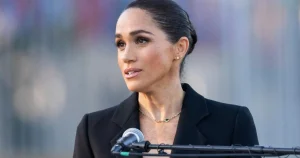
In the winter of 2019, Meghan, Duchess of Sussex, was already living through a private nightmare in the most public way imaginable. Fresh from a royal wedding that should have been a fairytale, she was being battered by headlines, accused of being cold and ungrateful, and vilified for something millions of people understand all too well: choosing to step away from a parent whose behavior had become impossible to bear. Her father, Thomas Markle, had been absent from her wedding, and their relationship had descended into an estrangement that played out in tabloids. Then, into that already unbearable storm, came a letter that would change everything. The Metropolitan Police had received correspondence from Roslyn Loveless, the first wife of Thomas Markle, containing handwritten allegations of the most disturbing kind: claims of child sex abuse, including that the father Meghan had once idolized had routinely traveled to the Philippines and Thailand, allegedly saying appalling things about children being legal there. The police shared this letter with Meghan and Prince Harry for their awareness, but according to reports, they did not share it up the chain of command. Meghan, now 45, reportedly wanted to go public with what she had learned. Imagine carrying that weight in private—knowing something so dark about your own blood while the world continues to attack you for being a bad daughter. It would feel suffocating. But an officer from the Royalty and Specialist Protection arm of the Met allegedly advised her to hold her silence, telling her, “Leave it with us, we’ll investigate it.” So she did. She waited. She trusted the system. And for years, it seems, the system did almost nothing with the information, leaving a young woman and her husband to sit with a devastating secret that was never investigated, never escalated, and never explained.
This is the part of the story that should trouble anyone who has ever believed that institutions will protect them when they speak up. The letter from Roslyn Loveless was not written by a stranger. It was a deeply personal, damning accusation from a first wife who would later die in 2024, meaning her account could never be fully answered by her in public. The allegations were specific enough to demand immediate attention, yet the details were allegedly kept in a bubble, shared with the Duke and Duchess for their awareness but not with the senior leaders who might have understood the magnitude of what was in front of them. According to The Times, senior royal aides were left in the dark. Even at the top of the Met Police, the then-commissioner Cressida Dick and her assistant commissioner Neil Basu were not told. An officer, it is alleged, simply failed to grasp the seriousness of what had been received, failed to pass it upward, and left the matter to curdle in obscurity. For Meghan, the officer’s reassurance that the police would handle it must have carried enormous weight. She was already being accused of destroying her father’s life; to speak publicly about such terrible accusations would have been explosive. But by following the advice of someone she believed was there to protect her and the Royal Family, she became part of a silent, bureaucratic failure. The Met eventually referred itself to the Independent Office for Police Conduct, but that does little to undo the years of confusion. The force has declined to comment, and it is now reportedly trying to identify the officer involved. But the deeper question remains: had the information been treated seriously from the beginning, would more have been done, and would Thomas Markle have faced scrutiny long ago?
Years later, the accusations came into the open through a different, even more painful route: another family member, a son who was trying to care for his ailing father. Thomas Markle Jr., Meghan’s estranged stepbrother, had been looking after their father in Cebu City in the Philippines when, according to reports, he discovered a stash of alleged indecent images of children. Markle Jr. said he found “hundreds, if not thousands” of images and videos, including one fifteen-minute film showing children believed to be no older than ten or eleven. He reported it to local police. For Markle Jr., this cannot have been an easy choice. Whatever his history with his step-sister Meghan, whatever fractures existed in that family, it takes a particular kind of courage to walk into a police station and make an accusation about your own father. But that is what he says he did, and it opened the gates for a flood of further allegations. Thomas Markle, now in a nursing home in Florida after having a leg amputated last year, has denied possessing any such images. He is aging, isolated, and frail, and he says he does not know what his son is talking about. The complexity of that image—a broken father in a nursing home, surrounded by accusations, estranged from his daughter, defended and accused by different members of his own blood—is a reminder that family stories are rarely clean. It is far easier to turn a person into a caricature than to sit with the truth that someone can be loved, damaged, and accused, all at once. Authorities have reportedly obtained warrants to search Thomas Markle’s phones and laptops, but the investigation is still unfolding, and in the meantime, the family remains shattered.
And then the story became even stranger and more complicated. Reports emerged of a storage unit in Rosarito, Mexico, allegedly rented by Thomas Markle since 2017. According to the Daily Mail, the unit had gone unpaid for two years, and a reporter was given access to it. Inside, investigators and journalists allegedly found boxes containing what was described as suspected voyeuristic material, including 35mm negatives of children on a beach. There were also books, one of which was titled Forbidden Sexual Behaviour, and a piece of paper with the words “Dark Web” written next to several URLs. Hours after the contents of the unit were reported to authorities, sex crime investigators from Mexico’s Guardia Nacional arrived and took boxes of material away for examination. Thomas Markle has denied having anything to do with the unit, saying in a statement, “I had no storage units in Rosarito!” It is impossible to know, at this stage, whether the storage unit belonged to him, whether the material inside was connected to him, or whether a man with many enemies and a fractured family has been caught in a web of accusations that are now impossible to untangle. What is undeniable is the cumulative weight of the evidence being reported. A letter from a former wife. A son’s discovery in the Philippines. A storage unit in Mexico. Together, these accusations form a pattern that investigators will have to examine carefully, not with the eyes of tabloid readers hungry for scandal, but with the meticulous care that serious allegations deserve. At the same time, the presumption of innocence matters. Thomas Markle has denied every claim made against him, and he is entitled to a fair process. But the sheer volume of alleged material, and the specific nature of what has been described, demands that no one look away simply because the accused is old, ill, or connected to the Royal Family.
For Meghan, the public emergence of these allegations has reopened wounds that were already deep. In a statement released last week, she described the accusations against her father as “troubling and disturbing.” She said her decision to keep her family, including her children Archie and Lilibet, away from Thomas Markle was made to protect them. It is hard to argue with a mother who says she is shielding her children from a father she believes could harm them. But it is also heartbreaking to think of a grandfather who has never met his own grandchildren, and who may never meet them now. The estrangement between Meghan and her father has been one of the saddest subplots of her story, beginning long before the serious allegations became public. Whatever Thomas Markle did or did not do, there was once a time when he was a father to a little girl, and there was once a time when Meghan loved him unconditionally. That love does not simply disappear; it becomes complicated, painful, and unspoken. In the years since the royal wedding, Meghan has often spoken about the importance of breaking cycles and creating a different life for her children. She has been open about the difficulty of navigating family trauma under a microscope. Her children are still young, and she has made the difficult choice to protect them from not only potential danger but also the chaos that has followed her father’s name for so long. It is impossible to know what goes through her mind when she sees a headline about her father, or when she thinks about the grandfather her children will never know. But any parent can understand the instinct to create a boundary, even a painful one, especially when the world is watching and the stakes are so high.
The bigger issue in all of this is not just one family’s tragedy; it is a reminder that institutions made of people can fail profoundly when they are not held accountable. The Metropolitan Police, the very institution that is supposed to protect survivors and ensure justice, found itself at the center of a story in which a serious allegation was reportedly buried because an individual officer did not understand what he or she was dealing with. Meghan did what victims and witnesses are often told to do: she reported what she knew, and she trusted the police to take over. That trust appears to have been misplaced. The force has said little, but its decision to refer itself to the Independent Office for Police Conduct is an admission, in effect, that something went wrong. Whether that was incompetence, a culture of deference to the Royal Family, or a simple human mistake, the result is the same: years of delay, and a family left to fall apart in public while the truth was left to rot in a drawer. The most human thing we can do with a story like this is to resist the urge to reduce it to a headline. There are real people here: an elderly father in a nursing home, a son who made a terrible choice to speak against his father, a mother trying to protect her children, and investigators in multiple countries trying to piece together fragments of a life that may have been hidden for years. There are also victims, unnamed and unseen, whose suffering must always come first. If these allegations are true, then justice demands that they be taken seriously. If they are not, then every breath wasted on false accusations is a tragedy of a different kind. What is needed now is not judgment but investigation, not outrage but honesty. For Meghan, for Thomas Markle, and for everyone caught in the shadow of this unfolding story, the greatest hope is that the truth—whatever it is—can finally be allowed to surface. A family cannot begin to heal until it knows what was real and what was not, and an institution cannot regain trust until it admits that silence is never a form of protection.