

Here is the story of a 12-year-old boy whose ordinary afternoon took a sudden and frightening turn, told with the emotional depth and human perspective it deserves.
It was just after two in the afternoon on a Wednesday in late October, and for 12-year-old Zain Evans, it was supposed to be a simple mission. His electric scooter, his trusty little way of getting himself to school, had broken down. The electrics had failed, and the plan was straightforward: with a friend by his side, he would walk the scooter to his mate’s house, not far away in the small valley community of Pontardawe, to see if they could get it working again. The two boys were not speeding along the pavement or causing a nuisance; they were simply pushing the disabled machine along the road, taking their time, chatting as boys do. On their route, they passed an old, abandoned chapel, a crumbling and desolate structure on Swansea Road that had long since been left to the elements. Curiosity got the better of them. They paused to look at the disused church, an innocent bit of local exploration in the middle of a walk. It was in that moment, on that quiet street, that a police car pulled up and everything changed.
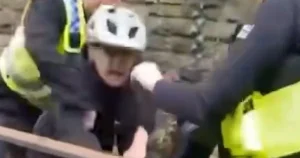
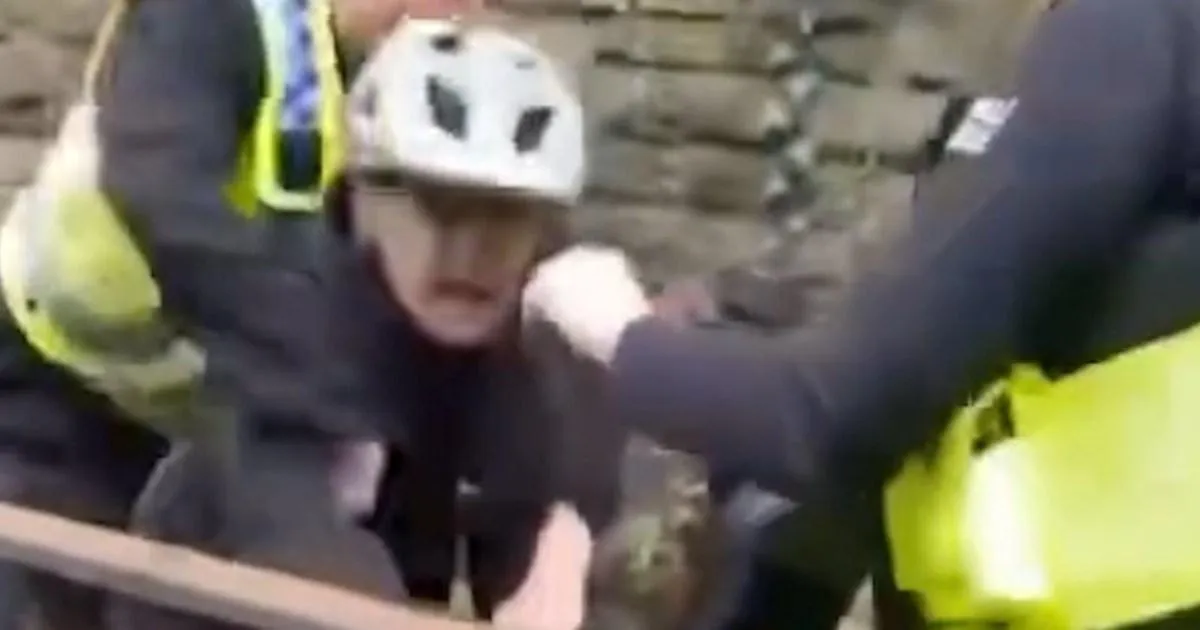
What happened next has been captured in a short, jarring clip that has since circulated online. The footage shows Zain and his friend being confronted by officers, with their tone immediate and accusatory. The police had apparently seen the boys near the chapel and believed they were involved in criminal damage to the building, and they suspected the scooter had been used illegally. When Zain and his friend tried to explain that they were walking the scooter to be repaired, the officers did not believe them. The boys were told, in no uncertain terms, that they were “lying” and that the officers “weren’t born yesterday.” For a 12-year-old, being called a liar by a figure of authority is a terrifying and humiliating experience, but Zain stood his ground, insisting he needed the scooter to get to school. But the argument did not sway the officers. Without warning, Zain was suddenly grabbed. He was thrown down onto the hard, unforgiving ground, his small body hitting the floor as his arms were yanked behind his back and heavy handcuffs were snapped onto his wrists. The force was so fierce, so wrenching, that Zain later said he heard a sinister “pop” from his arm. As if the physical shock were not enough, the officers then confiscated the scooter and both phones belonging to Zain and his friend, leaving the boys powerless, frightened, and unable to call for help.
The most heartbreaking part of this whole ordeal is that Zain’s own mother, Emily Evans, was unwittingly a witness to it all. She happened to be driving by the area at that exact moment and saw, to her horror, her own son being detained by police. She watched as the boy she describes as “a darling” with “a heart of gold” was manhandled on the floor. To see your child in the grip of police officers is any parent’s nightmare, and for Emily, the shock quickly turned to anger and sorrow. She rushed to be near him, and later told the press that the officers’ conduct was “completely out of order.” Her son was left shaken to his core, his trust in the world around him deeply dented. She took him straight to the hospital in Port Talbot, where his injured arm was examined and placed into a sling. The physical pain was bad enough, but the emotional damage from being so violently subdued when he insisted he had done nothing wrong is something that will likely linger for a long time. And then there was the frustrating, Kafkaesque aftermath. Emily tried to recover her son’s confiscated scooter and phones, but when she went to the police compound where they were supposed to be stored, the staff there claimed to have no knowledge of any of the items. She was left with a broken boy, a sling on his arm, and no scooter, no phones, and no answers.
To understand the context, e-scooters exist in a legally grey area in Wales and England, and this particular incident arose out of a report of criminal damage to a disused church. The police say their officers were responding to a suspected incident of illegal activity at the chapel on Swansea Road around 2:15 pm, and they conducted searches of individuals they believed had committed offences. It is entirely possible that the boys, with a scooter in tow, looked suspicious to the officers, and that proactive police work was intended to protect the derelict building from vandalism. But the reality is that Zain and his friend were not riding the scooter, nor were they seen breaking into the chapel; they were lingering and looking, just as curious kids have done for generations. The escalation from “let’s talk” to “slam to the floor and handcuff a child” was so swift and severe that it defies proportionality. A 12-year-old is not a fleeing felon, and even if the officers suspected the boys of vandalism, such an aggressive physical takedown on a child should be an absolute last resort, not the natural first response. This moment has sparked a conversation in the community about how police interact with young people, and whether the uniform of authority should inspire fear or respect.
For their part, South Wales Police have acknowledged the incident and the public’s concerns. A spokesperson confirmed that officers were responding to a report of criminal damage and that an e-scooter was seized because it was “believed to have been used illegally.” They stated that they are aware of the footage circulating on social media and that they understand community concern regarding the use of force. The incident has now been referred for review by the force’s Professional Standards Department, the internal body that investigates potential misconduct, and the mother of the young person has been contacted. This is a standard procedure, but for the family, it is a small measure of relief that perhaps someone in authority will take a second look and realize just how wrong this situation was. The larger question remains, though: what will the review actually change? Will the officers involved face any real consequences for seeing a group of boys standing near an old church and deciding that slamming one of them to the ground was a reasonable course of action? Or will it be dismissed as a necessary use of force against someone who was doing nothing more than being young and curious?
In a world that often feels increasingly indifferent to the vulnerability of children, this story is a stark reminder that compassion and communication must be at the heart of every interaction, especially between law enforcement and the public. It is a story about a boy and a broken scooter, but it is also a story about the sudden, terrifying loss of innocence that can occur in a single moment of misunderstanding. Zain did not deserve to be thrown to the floor; he did not deserve to hear a pop in his arm; he did not deserve to be called a liar. All he wanted was to fix his scooter so he could go to school. This family has been left dealing with the physical and psychological aftermath of an incident that was, to put it bluntly, entirely avoidable. As the Professional Standards Department conducts its review, one can only hope that they will see the clip not through the officer’s eyes, but through the eyes of a 12-year-old boy who was just walking down the street with his friend, and whose only crime was stopping to look at a forgotten chapel, and whose shining example of resilience will remind us all of the urgent need for empathy and restraint. The boy does not need a lesson in obedience; the officers need a lesson in humanity.