


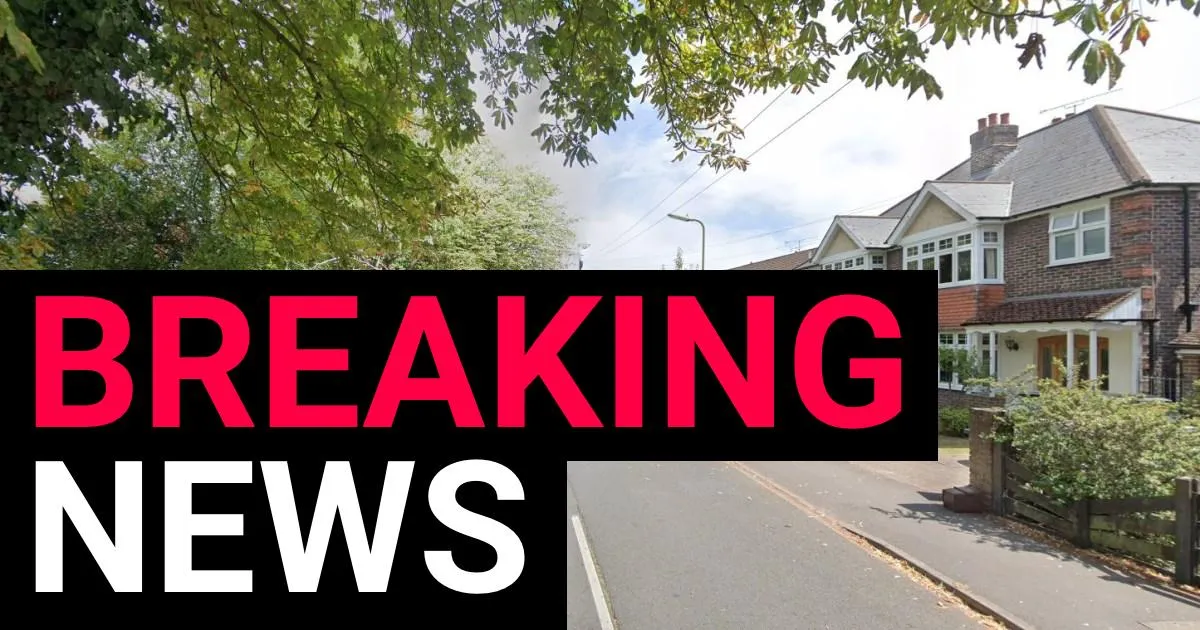
A Halloween night in Chandler’s Ford, a quiet residential suburb in Hampshire, was supposed to be full of the usual playful horrors: fake cobwebs, carved pumpkins, and teenagers dressed as ghosts and ghouls, moving through the streets with excitement and nerves. But on Friday evening, the line between costume and reality collapsed in the worst possible way. At around 10:30pm, emergency services were called to a house on Park Road, where a private Halloween party had been transformed into a scene of chaos and bloodshed. When police arrived, they found five teenage boys, three aged sixteen and two aged seventeen, with serious injuries caused by stabbing. The victims were young men on the cusp of adult life, people with families who loved them and friends who had shared the ordinary rituals of growing up. The house where they had gathered was not a packed concert hall or a nightclub; it was a home, a setting that should have felt safe. Yet detectives now believe an unknown group somehow managed to get into the party, turning a gathering of young people into a violent ambush. By the time the first officers walked through the door, the damage was done, and the night that should have ended with tired laughter and armfuls of candy had become a nightmare that no one in this tight-knit neighborhood was prepared for. Park Road and the intersecting Valley Road were immediately sealed off, blue and white police tape cutting across the pavement under the glare of emergency lights. As the hours passed and daylight crept in, forensic teams in white protective suits could be seen moving methodically through the area, collecting evidence from bins, porches, and the road itself, while neighbors stood in small clusters behind the barriers, their faces pale with disbelief.
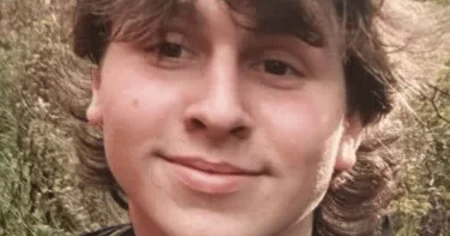
At the heart of this tragedy are five boys, and it is impossible to write about this without holding onto their humanity. They are not simply a list of ages and injuries in a police report; they are individuals with names, birthdays, memories, and futures that have now been thrown into terrifying uncertainty. Three of them are only sixteen, old enough to drive themselves to a party on a Friday night, yet still young enough that their parents waited up in the living room, checking their phones every few minutes. The other two are seventeen, teenagers who should be worrying about exams, part-time jobs, and all the thrilling, awkward moments that come with growing up. Instead, they are now lying in hospital beds, surrounded by doctors and machines, with families holding vigil in waiting rooms. The violence did not just wound their bodies; it fractured the security of an entire community. Parents everywhere are asking themselves the same horrifying question: if it happened to them, could it happen to my child? There is an unbearable cruelty in a stabbing at a Halloween party, an event that is supposed to be about fun and harmless scares. The only horror these boys and their families have experienced is real, raw, and painful. No parent ever expects to receive a phone call in the middle of the night telling them that their son has been knifed at a party. No friend expects to watch someone carried away in an ambulance, their costume covered in blood. And no neighborhood expects to see forensic teams sifting through a suburban street for clues to a violent crime that targeted children. That is the human cost that numbers alone cannot capture, and it will stay with those five boys and their loved ones for the rest of their lives.
Police detectives have been working around the clock to piece together exactly what happened. Detective Chief Inspector Elizabeth Pirie has been the voice of the investigation, making it clear that a great deal of work is already underway. Her appeal is direct and urgent: anyone who was at the party, anyone who saw what happened, anyone who filmed footage on their phone, or anyone who can help identify the unknown group must come forward. The investigation has involved a painstaking review of CCTV from the surrounding streets, as well as interviews with witnesses, some of whom may have been too young to fully process what they saw. Park Road and Valley Road remained cordoned off for hours, a necessary intrusion that allowed officers to examine every detail in the search for truth. In daylight, forensic specialists were seen photographing the scene and collecting items in clear evidence bags, their work a silent but powerful reminder of the seriousness of the attack. DCI Pirie also acknowledged the weight of the situation for the local community, saying that she understood the shock residents felt when they woke up to the news and that she did not underestimate the impact of the police scenes on their daily lives. She thanked the public for their patience and asked anyone with concerns or information to speak to officers without hesitation. Behind the official statements, there is a deeper significance: this is an attack that has shaken the sense of safety that every neighborhood relies on. The investigation is not just about finding culprits; it is about restoring a fragile sense of order, about showing the five boys and their families that society will not look away, and about proving that even the most senseless acts of violence can be answered with justice.
For residents of Chandler’s Ford, Friday night’s events feel incomprehensible. This is not a place that expects to appear in national headlines as the backdrop for a mass stabbing. It is the kind of area where people recognize each other at the supermarket, where children walk to school together, where the most exciting thing on a weekend is a local football match or a birthday party. The morning after the attack, the neighborhood woke up to police tape instead of discarded costumes, and the quiet routine of life was interrupted by the hum of generators and the low murmur of officers. People who had heard sirens in the night had told themselves it was something else, an accident, a false alarm, perhaps a burst of drugs or a domestic dispute. But the truth was much closer to home. A house on Park Road, a dwelling that had probably hosted countless ordinary celebrations over the years, is now a crime scene, a symbol of vulnerability in a place where everyone thought they were safe. Parents who had allowed their teenagers to attend a Halloween party now face a sickening wave of guilt and worry, wondering if they should have been more careful, if there were signs they missed, if they can ever let their children out of their sight again. Teenagers in the area are also dealing with a loss of innocence; the world they thought they knew, where parties are fun and friends are trustworthy, has suddenly revealed an edge of violence that is terrifying to confront. And yet, in the midst of this shock, the community has also shown strength. Neighbors have offered support, shared information, and made it clear that they will not be paralyzed by fear. There is a collective promise in the air: the five boys will not be forgotten, and their families will not have to carry this burden alone. That resilience is fragile, but it is real, and it may be the most important thing that gets this community through the difficult days ahead.
This attack also forces a broader conversation about knife crime and the safety of young people in Britain. It is a conversation that feels theoretical until it arrives on your own street, but here it is, raw and undeniable. Five teenagers are in hospital because an unknown group invaded a party with weapons. These are not hardened criminals in a movie; these are flesh-and-blood young people, some of them likely the same age as their victims, carrying knives to an ordinary social event. The reasons behind such violence are often complicated—gang affiliations, personal grievances, peer pressure, or the simple, terrifying fact that knives have become cheap and accessible. But whatever the cause, the result is always the same: families shattered, communities frightened, and young people left with scars that never fully heal. The boys who were stabbed will face physical recovery, but they will also have to live with the psychological trauma of that night. Sleep will not come easily. Loud noises will startle them. The faces of their attackers may replay in their minds. Their friends, too, will carry what they saw, and the wider community will be left with a lingering sense of unease. We cannot pretend that this is an isolated incident or that it will solve itself. There is a collective responsibility to ask hard questions: Why do young people feel the need to carry weapons? What leads a group to force its way into a party with the intent to harm? How can parents, schools, and police work together to create environments where conflict does not end in bloodshed? These are not easy questions, and they do not have simple answers. But ignoring them would be an even bigger failure than the one that left five boys injured on a residential street. The response must be about more than punishment; it must be about prevention, about reaching young people before they pick up a blade, and about building a society where a Halloween party remains a memory of laughter rather than a nightmare.
For now, the most urgent and humane response is one of empathy, vigilance, and action. The police have asked anyone with information to come forward, and that plea should not be underestimated. Some people may know something but hesitate because they are scared, because they feel loyal to someone, or because they do not think their detail is important. But in the search for justice, every fragment matters. A person who was at the party may have filmed a moment that reveals an attacker’s face. A neighbor may have seen a group of strangers acting suspiciously. A friend may have heard a boast that seems meaningful in hindsight. All of it needs to be shared. The five boys and their families deserve that effort. They deserve to know that their community stands with them, that the violence they endured will not be buried or ignored, and that the people responsible will be held accountable. There will be time to debate policy, to demand more youth programs, to call for stronger laws, and to search for longer-term solutions. But right now, the focus should be on healing. The road will be long. The boys will need physical and emotional support, their families will need patience and compassion, and the neighborhood will need time to process what has happened. Yet out of this dark moment, there is an opportunity for something better: a determination to protect the young, to speak up for the vulnerable, and to turn collective grief into meaningful change. Halloween is supposed to be about facing our fears in a controlled, playful way. This attack was a reminder that the real world can be far scarier than any costume. But it is also a reminder that courage is not the absence of fear; it is the choice to act in spite of it. The bravest thing anyone can do now is to pick up the phone, tell the truth, and help bring a small measure of peace to a community and five boys who desperately need it.