


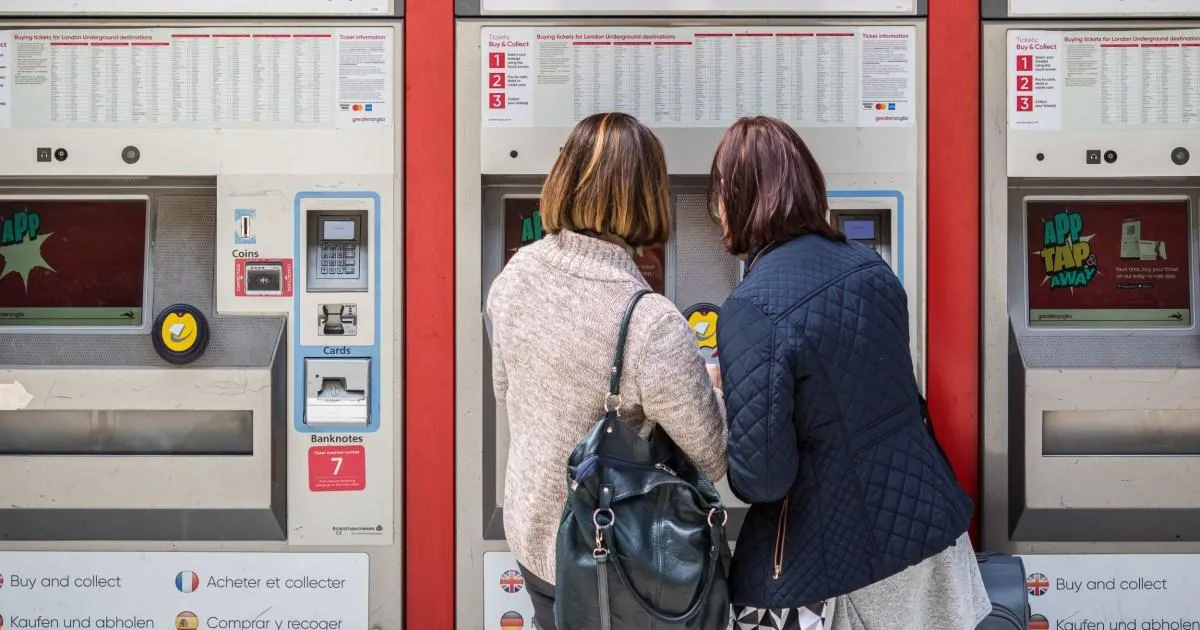
There is something deeply unsettling about a crime that happens without a single moment of alarm. You do the same ordinary thing you have done a hundred times before—tap your card, enter your PIN, wait for the little green light, and carry on with your day. It is only later, when you check your balance or try to take out cash, that the quiet betrayal reveals itself. That is exactly what has been happening to London Underground passengers recently, and the ripple of unease is spreading across the city. Police have launched a formal investigation into a sophisticated scam involving tampered Oyster Card top-up machines at major Tube stations. They believe that fraudsters have been secretly fitting these familiar machines with hidden devices, known as skimmers, capable of copying the data stored on passengers’ bank cards. Once that information is captured, the criminals can create counterfeit cards and use them to drain money from victims’ accounts without their knowledge. Several arrests have already been made, but for many travellers, the damage is done. The machines are supposed to be safe. They are maintained by Transport for London, used by millions of people, and sit in one of the most heavily monitored transport networks in the world. Yet somehow, in the brief window between swiping a card and walking away, a stranger now has everything they need to steal a life’s savings. The fear is not just about losing money; it is about the loss of trust in the small, mundane tools of city life.
For one visitor to London, that trust was shattered in a matter of days. Étienne Bouvier, a software company employee from Lille in northern France, arrived in the capital for a three-day work trip. On 7 October, he stopped at Piccadilly Circus station to top up his Oyster Card. It was a routine errand, the kind of thing every commuter does without thinking. But something felt off. His debit card was rejected several times by the machine. He tried again, switched to another device, and eventually managed to get the top-up to work. He did not think much of it at the time—machines are glitchy, cards are temperamental, and contactless payments can be fussy, especially for visitors using foreign bank cards. But days later, after he had already boarded the Eurostar and returned home to France, his bank account began to tell a different story. He received a notification that he had reached his weekly cash withdrawal limit, which struck him as odd because he had not used an ATM in weeks. Then came the cold realisation: nearly £2,000 was missing. Two withdrawals of £800 each had been made from his account, recorded as cash withdrawals from an ATM located near Bow Bell House on Cheapside in the City of London. Bouvier had never even visited that part of the city. Somehow, the transaction he made at the Oyster machine had been transformed into an ATM withdrawal elsewhere in London. The money was gone, and the only clue was that quiet, faulty machine at Piccadilly Circus.
This is the signature of card skimming, a form of fraud that has been plaguing financial systems for years but still manages to catch people off guard. The method is deceptively simple. Fraudsters attach a small, often undetectable device over the card reader on a legitimate machine. When a passenger inserts their card, the hidden device reads and copies the magnetic strip or chip data. In many cases, a tiny camera or an overlayed keypad is also placed to capture the PIN as it is typed in. The passenger walks away believing everything went smoothly, unaware that their financial identity has just been cloned. The counterfeit card can then be used at ATMs, in shops, or online, with the true cardholder left to fight for their money. Several other passengers have reported being caught in the same trap. One traveller posted on Reddit that £250 had been taken from their account after they used a machine at Piccadilly Circus, adding that the skimming device must have been incredibly discreet because they had noticed nothing unusual at the time. Another passenger reported losing £500 after using a ticket machine at St Paul’s station. The common thread is that the victims only discovered the theft days later, when they checked their accounts or tried to make a purchase. There is no immediate warning sign, no flash of red, no suspicious delay. The machine simply does its job, and the crime silently completes itself.
What makes this particular wave of fraud even more insidious is that it targets a system specifically designed to be convenient. Oyster Card top-up machines are meant to make travel easier, and for many visitors to London, they are also a point of vulnerability because foreign bank cards often require a chip-and-PIN transaction to enable contactless payments. That means the very people who are least familiar with the city, and least likely to notice subtle tampering, are prime targets. Fraudsters know this. They are choosing locations with high footfall and heavy tourist traffic, places like Piccadilly Circus and St Paul’s, where hurried travellers are more focused on catching a train than examining a card slot for unusual resistance. The advice from experts is clear: always inspect the machine before using it, look for any moving, loose, or detachable parts, and be wary of card slots that feel unusually tight, as they may have been fitted with a hidden reader. Keypad covers are another red flag, as they can be installed to record PINs as they are entered. Passengers are also urged to prefer contactless payments where possible, to use machines that look and feel normal, and to abandon a machine immediately if it rejects a valid card more than once. But even with these precautions, the reality is that skimming devices are becoming increasingly sophisticated, and the responsibility should not fall solely on the shoulders of weary travellers. It is the job of authorities and transport operators to ensure that the infrastructure of daily life is safe.
The police, for their part, say they are taking the matter seriously. British Transport Police confirmed to Metro that officers are leading an investigation into tampered machines at several London Underground stations. Detective Inspector Marvin Bruno issued a public statement, explaining that the inquiry is ongoing and moving forward at pace. “We have already arrested people in connection,” he said, “and our enquiries into the fraudulent activity are continuing at pace. We continue to work closely with Transport for London and partner agencies to identify those responsible and prevent further offending.” He also urged passengers to remain vigilant, especially if a machine functions strangely, and asked anyone with information to contact police by texting 61016 and quoting Operation Solent. Transport for London echoed those sentiments, emphasising that the safety and security of customers is a top priority. A spokesperson said that TfL takes reports of criminal activity on the network extremely seriously, works closely with the British Transport Police, and regularly inspects ticketing equipment across the network. It is reassuring to hear these words, but for victims like Bouvier, the damage has already been done. His bank refused to reimburse the stolen money, insisting that he had failed to adequately protect his card details. That answer feels almost cruel when the system failed him in the first place. He did everything right. He used a legitimate machine, entered his PIN, and walked away believing the transaction was safe. The failure was not his. It was the failure of a system that allowed criminals to tamper with public infrastructure and walk away with people’s money.
At its core, this story is about more than just a few stolen pounds and a technical form of fraud. It is about the erosion of the quiet assumptions that make modern life possible. We trust the machine at the train station. We trust the screen that asks us for our PIN. We trust that the institution behind it, whether it is a bank or a transport authority, has done everything it can to protect us. When that trust is broken, the consequences are not just financial. They are emotional. For Bouvier, nearly £2,000 is a significant sum, especially when he was simply trying to get around London for a work trip. He now faces the frustrating, lengthy process of trying to recover his money, with his bank telling him he is at fault. Other victims may have been luckier, with some reporting that they were able to reclaim their losses, but the psychological toll remains. Every future transaction is shadowed by suspicion. Every card reader looks like a trap. And every visit to a busy station becomes an exercise in vigilance rather than ease. The arrests and ongoing investigation are welcome steps, but they are not enough. As commuters and visitors alike continue to use Oyster machines, ticket gates, and ATMs, they deserve a transport system that prioritises their safety not just in terms of physical security, but in terms of the digital and financial security hidden within everyday machines. Until then, the best defence is awareness. Look closely before you insert your card. Trust any feeling that something is wrong. And if a machine rejects your card, remember that the fault may not lie with you. It might lie with the invisible thief who was there before you, waiting for the next person to come along and, without knowing it, hand over the keys to their bank account.