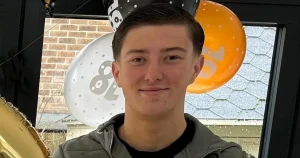

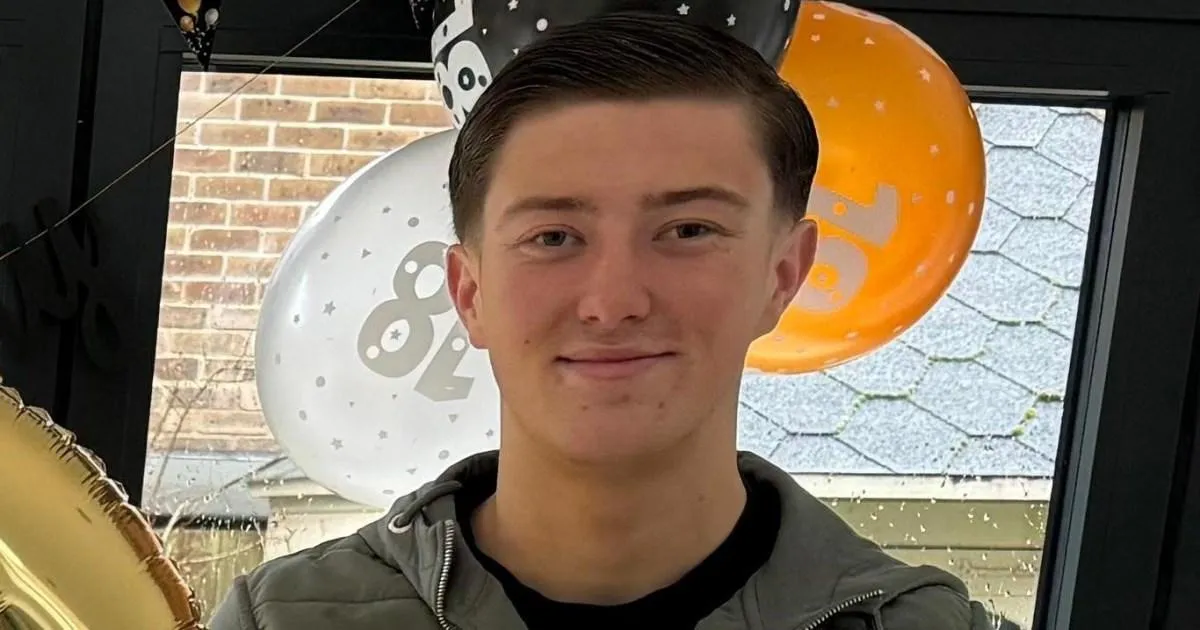
The family of Henry Nowak has finally broken their silence, and the words they have shared are not just a recounting of a death but a raw, heartbreaking glimpse into the loss of a young man whose life was cut short in the most brutal and senseless way imaginable. Henry was only eighteen years old, a teenager with the rest of his life ahead of him, when he was stabbed in the chest in Southampton on December 3, 2025. The wound was fatal, and within a short, chaotic span of time, the world lost him. For months, his relatives have had to sit with the unbearable weight of what happened, unable to speak publicly until now. The first face we see in their testimony is Katie, his stepmother, whose memory of the moment she learned of the tragedy is frozen in a singular image: the sight of police officers standing outside her home, one of them holding his hat in his hand. She described jumping out of bed in the middle of the night, her instincts immediately telling her that something was terribly, irreversibly wrong. A police officer removing his hat is not a casual gesture; it is a silent signal of death and deliverance of news that no family is ever prepared to hear. Katie’s recollection is raw, and in her words we feel the sudden horror of a mother-like figure realizing that her stepson, her boy, was never coming home.
What makes this tragedy even more agonizing is the sequence of events that unfolded after Henry was attacked, events that have now been caught on police body camera and are reportedly part of an ITV documentary airing this evening. Vickrum Digwa, a twenty-three-year-old man, stabbed Henry five times. Five separate moments of violence, five wounds to the body of an eighteen-year-old, one of which ultimately pierced his chest and ended his life. In the immediate aftermath, according to the reporting, Digwa told police that he himself had been the victim of a racist attack, a statement that created a fog of confusion around the entire incident. Instead of being treated as the desperately injured young man he was, Henry was handcuffed by officers who apparently misread the situation. The body camera footage is said to show that Henry was held in handcuffs for roughly a minute, though that single minute must have felt like an eternity to a boy fighting for breath. He was lying there, dying, his body already shutting down, and the people whose job it was to protect him had made him a prisoner in his own final moments. There is something deeply unsettling about the image: a boy gasping for air, his hands bound, his killer’s words already shaping the police response.
The most devastating part of the footage is the exchange between Henry and the police officer, as described in the article. Henry could still speak, enough to tell them what was happening to his own body. “I can’t breathe,” he said. Then he told them plainly: “I have been stabbed.” Those are not the words of a panicked person; they are a truthful, desperate plea from a dying teenager trying to make the people around him understand the gravity of the situation. And yet the officer’s response, as quoted, was: “I don’t think you have, mate.” That phrase, delivered with a kind of dismissive familiarity, shatters the heart. “Mate” — a word meant to convey casual ease, perhaps even reassurance, but in this context it sounds grotesquely wrong. Henry was not misinformed. He was not confused. He was not exaggerating. He was bleeding internally from a stab wound to his chest, and the adult in authority chose to doubt him. Those five words from the officer will never be forgotten by the family, and they should haunt anyone who watches the footage or hears this story. How many seconds were lost because of that doubt? How long did Henry have to lie there, handcuffed, struggling to breathe, with his killer’s story temporarily outweighing his own dying testimony? The body camera footage apparently shows that it took about a minute for officers to realize the severity of his injuries, but a minute is an eternity when the clock is counting down to a young man’s final heartbeat.
When the realization finally came, it must have been a frantic blur of action — undo the cuffs, call for help, try to save him. But the damage was already done, and Henry Nowak died from his injuries. There is no way to know whether the delay caused his death or simply sealed what had already been inevitable, but that uncertainty is one of the cruelest parts of grief. His family will forever wonder: if someone had believed him, if the handcuffs had come off sooner, if the officer’s instinct had been to check for a wound instead of questioning him, would Henry still be here? Katie’s testimony about that night, seeing the officers with their hats in their hands, comes after this knowledge. She did not see the body camera footage before she got the news; she simply saw the posture of the officers on her doorstep, and she knew. A mother does not need words in the moments when a uniformed stranger arrives at her door and removes a hat. She knows. She jumps out of bed, her heart already racing, her mind already preparing for news that shatters. And then the brutal reality is confirmed: Henry was gone. The documentary airing this evening promises to give the public a deeper view into the case, including the body camera footage that has already become central to the story. For many viewers, it will be difficult to watch. For the family, it is another painful step in a long, unresolved journey toward justice.
The wider context of this case adds an extra layer of anguish and complexity. The man who stabbed Henry, Vickrum Digwa, reportedly claimed that he was the victim of a racist attack. That statement, whether true or false, changed the direction of the police response and placed Henry in the wrong category in the eyes of the officers. Instead of seeing him as a bleeding child, they saw him as a potential aggressor. It is a terrifying illustration of how quickly assumptions can override evidence, how a narrative can become more powerful than the reality lying on the ground. A teenager with a lethal injury was handcuffed because the person who had just stabbed him was able to convince the police that the roles were reversed. We may never know the exact truth of what happened before the stabbing, and that is not to say the police deliberately harmed Henry. But the fact remains that an innocent boy, in the most vulnerable moment of his life, was not believed when he said he could not breathe and could not feel his life slipping away. That is not just a procedural failure; it is a human failure. It is the kind of failure that leaves a family forever asking why, a community forever wondering how, and a country forced to confront uncomfortable questions about prejudice, weaponized accusations, and the enormous power of an officer’s first instinct.
Henry Nowak is more than the victim of this tragedy. He is a boy with a name, a family, a laugh, a future. His stepmother’s account of jumping out of bed, of seeing the officer’s hat, of knowing that something horrific had happened, is a reminder that behind every headline and every news report is a group of people left to carry the rest of their lives without him. The documentary airing tonight will give their family a platform to tell the world what it was like to lose him, and her words — so simple and yet so profound — will stay with viewers long after the credits roll. In this life, there are moments that change everything forever. For the Nowak family, that moment was December 3, 2025, when a violent act, a false claim, and a few failed seconds of human compassion came together to steal an eighteen-year-old away. No apology, no court verdict, no documentary can bring Henry back. But by telling his story, by exposing what those final minutes looked like, his family has done something deeply important: they have made sure that the world does not look away. They have made sure that Henry’s last words, “I can’t breathe,” are not drowned out by static and bureaucracy, but echo loudly enough to demand answers, accountability, and change. As they sit down to watch the documentary, perhaps for the first time seeing exactly what happened, they will carry him with them — not as a victim in handcuffs, but as the boy they loved, the boy they lost, and the boy they will never stop fighting for.