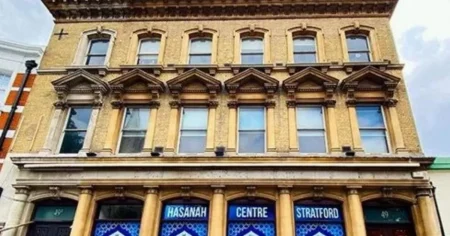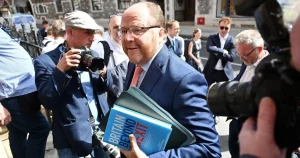
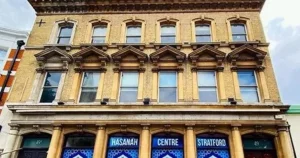

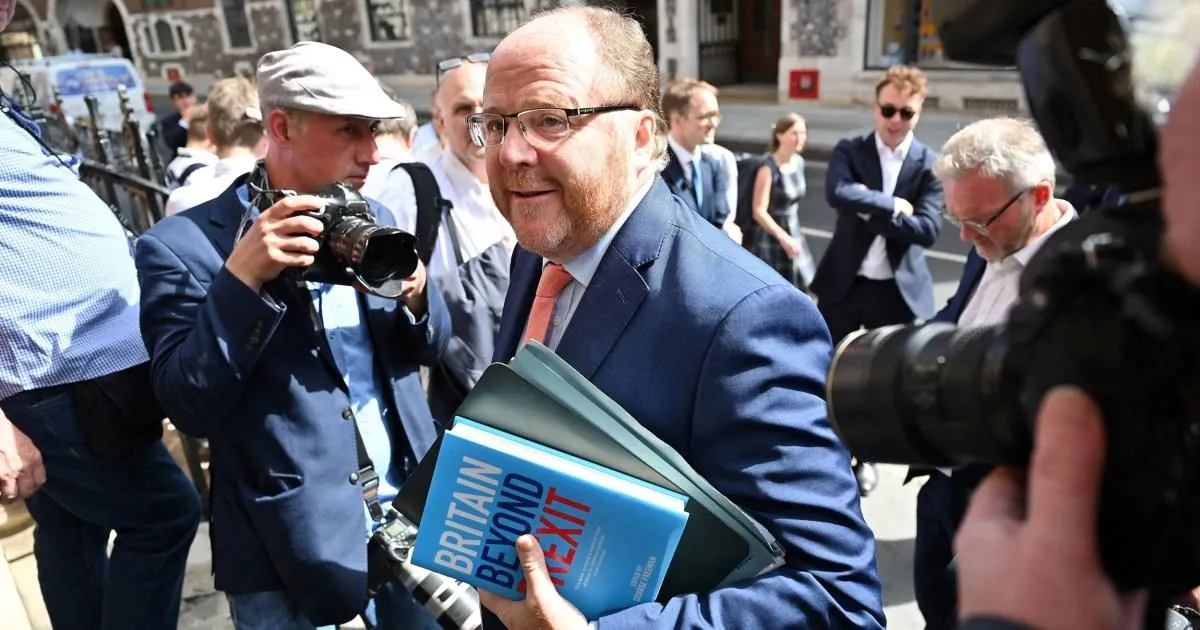
There is a moment almost every driver knows: the motorway has turned into a car park, the minutes are ticking by, and the phone is sitting there in the passenger seat, glowing with possibilities. For George Freeman, that moment arrived on an ordinary journey somewhere in London. The Conservative MP for Mid Suffolk, a former transport minister, found himself stuck in gridlocked traffic and reached for his mobile to check Waze, the navigation app, hoping to find an alternative route. It was a small, human decision, the kind millions of people make every day. But Freeman was not an anonymous commuter. A passing cyclist noticed him, pulled out a phone, took a photograph, and reported him to the police. That single image turned a routine frustration into a legal case, a public scandal, and a sobering day in court. At Stratford Magistrates’ Court, Freeman pleaded guilty to using a handheld phone while driving. He was ordered to pay a £430 fine, a £172 victim surcharge, and £130 in costs to the Metropolitan Police. He also received six penalty points on his driving licence, a serious punishment that pushes any driver to the edge of a ban. Speaking afterward, Freeman did not try to justify himself. “I was sitting in gridlocked traffic and checking Waze on my phone. I took full responsibility and deeply regret my actions,” he told the Mirror. It was, in many ways, a textbook guilty plea: no excuses, no deflection, no attempt to blame the cyclist or the traffic. Just admission and regret. But the case is more complicated than a simple traffic violation, because Freeman’s past gives the story an uncomfortable irony. This is a man who once held ministerial responsibility for transport, who had campaigned for road safety funding after accidents in his constituency. To see him caught looking at his phone behind the wheel is not just a story about a law broken; it is a story about the gap between public roles and private fallibility.
The law has been clear for years: a driver must not hold a phone or a device while driving, even if stationary in traffic or waiting at lights. The rules exist because a glance at a screen can take eyes off the road for several seconds, and in that time a child might step into the street, a cyclist might swerve, or traffic might stop suddenly. Freeman did not cause a crash. He was caught by a cyclist who saw the danger and took action, photographing the former minister at the wheel. That decision may seem harsh to some people, especially in a city where traffic crawls at a snail’s pace. But the law is deliberately strict, and the courts have little patience for explanations. “I was only checking the satnav” is one of the most common defences heard in magistrates’ courts across the country. The law says that if the engine is on and you are in control of a vehicle, you must not use a handheld phone. The fact that traffic was gridlocked does not change the legal position. Freeman, as a former transport minister, should have known this better than almost anyone. He had sat in meetings about road safety, signed off on campaigns, and made speeches about responsibility. Yet in the everyday reality of a bad journey, with frustration building and time slipping away, he did exactly what he had once warned others not to do. That is the uncomfortable truth at the heart of this story. People are not machines. Even politicians who have helped shape the very laws they break are capable of lapses. The court accepted his guilty plea and imposed a punishment designed to hurt: a fine of more than £700 in total, six points on a licence, and the unavoidable publicity of being named in every newspaper. For a man who has spent more than a decade in public life, the reputational damage may be heavier than the financial penalty. There is no way to spin a photograph taken by a stranger, no press release that can erase the image of a former transport minister holding a phone while sitting in traffic.
To understand why this story has generated so much attention, it helps to look at Freeman’s career and the circumstances that have shaped his recent life. First elected to the House of Commons in 2010, he was for years a rising star in the Conservative Party. He served in a series of ministerial roles, including science minister under David Cameron, Boris Johnson, and Rishi Sunak, and at various points seemed destined for the upper ranks of government. But politics, especially for MPs without private wealth, often involves a constant struggle to balance public service with personal survival. In 2023, Freeman made the unusual and highly public decision to step down as science minister, saying he could no longer keep up with mortgage payments on a £120,000 salary. It was a startling admission for a senior minister, but it spoke to a reality that many people outside Westminster would recognise: houses are expensive, interest rates had risen, and the cost of living was biting everyone, including politicians. He returned to the backbenches, where his salary as an MP was around £86,000 a year, and took on second jobs to make ends meet. In April 2024, he accepted a paid advisory role at GHGSat, a company that monitors greenhouse gas emissions from space. On the surface, this was a sensible arrangement: an experienced science minister advising a climate technology firm. But it also raised questions about how MPs use their time and whether outside interests conflict with parliamentary duties. Freeman had previously served as trade envoy for Malaysia, the Philippines, Singapore, and Brunei, an important role for British commercial diplomacy. He was later suspended from that position after referring himself to the parliamentary watchdog over claims that he had been paid by a company that helped him write questions to government departments. The details of that controversy are tangled and contested, but the broader picture is one of a man under financial pressure, trying to earn a living while navigating an unforgiving public arena. The driving offence adds another layer to this complex portrait: a human being, stretched thin, making a mistake that millions would recognise.
The most poignant element of Freeman’s case may be his own history with road safety. In 2014, following a spate of accidents in his Mid Suffolk constituency, he campaigned for more investment in roads and for measures to protect drivers and pedestrians. He used his position as an MP to press for improvements, to meet with local residents, and to speak about the need for safer driving. There is no suggestion that he was ever indifferent to the dangers of the road, and his record appears to have been unblemished before this incident. That makes the lapse all the more human and all the more difficult. Someone who has seen the reality of road collisions in his own community, who has listened to constituents describe their fear and frustration, is not someone who lacks understanding of the risks. He is someone who, in a single unguarded moment, failed to live up to his own standards. The same could be said of doctors who smoke, teachers who shout at their own children, or financial advisers who struggle with debt. Being close to danger does not make a person immune to temptation. It may even create a sense of familiarity that dulls the fear. Freeman’s apology suggests that he understood the gravity of his action. He took responsibility, accepted the penalty, and did not try to minimise what had happened. In an age when public figures often hire lawyers, issue carefully worded non-apologies, and fight every charge to the last detail, there is something almost refreshing about his straightforward plea. But it also highlights a deeper problem. If a former transport minister, someone who has spent years thinking about roads, statistics, and safety campaigns, can be caught with a phone in his hand, what does that say about the rest of us? The answer is not that politicians are hypocrites or that the law is pointless. The answer is more uncomfortable: everyone is vulnerable to distraction, and the social pressure to stay connected is stronger than the memory of any cautionary tale. Freeman’s case is a warning, but it is also a mirror.
Freeman’s court appearance is the latest in a series of episodes that have placed him under scrutiny, and it would be naive to separate the driving offence from the wider questions about his conduct. The allegations surrounding his work as a trade envoy and the company that helped him write questions to government departments are serious, even though he was the one who referred himself to the parliamentary standards watchdog. Self-referral can be interpreted in two ways: as a proactive act of transparency, or as a way of getting ahead of a story that was about to break. Either way, the suspension from his trade envoy role was a significant blow. For an MP, the loss of an external position also means the loss of income, at a time when Freeman had been open about his financial struggles. His paid role with GHGSat was presumably meant to provide stability, but every additional job generates additional questions: Who is paying? Why? And what do they expect in return? These questions are not just the stuff of scandal-hungry headlines. They go to the heart of how British politics is funded and how trust is maintained between voters and their representatives. A politician who accepts money from a company while also asking questions in Parliament must expect public suspicion, no matter how honourable their intentions. Freeman’s decision to refer himself suggests awareness of that risk, but the shadow remains. Now, on top of all that, he has a conviction for using a handheld mobile phone while driving, which will stay on his record and in the public memory for years. The cumulative effect is a portrait of a politician under immense pressure, juggling a mortgage, an MP’s salary, outside contracts, and the relentless demands of public life. It is a portrait that many ordinary voters might recognise, even if their own mistakes are never photographed and reported to the police. The difference for Freeman is that every fall is public, every misstep is scrutinised, and every apology is quoted back to him.
At its simplest, this is a story about a man who broke the law while driving and paid the price. But it is also a story about how we treat people in public life, and how we judge them when they fall short. There will be readers who think Freeman got what he deserved, perhaps even that he should have been banned from driving. There will be others who feel a pang of sympathy, remembering the times they have glanced at a phone while stuck in traffic and been lucky enough not to get caught. Both reactions are understandable. The law is the law, and someone who has helped shape road safety policy should be held to the highest standard. But the human truth beneath the headline is more complicated. George Freeman made a mistake. He admitted it, expressed regret, and accepted the punishment. He did not claim to be a victim, blame the cyclist, or attack the court. In a political world full of defensiveness and denial, that kind of accountability is rare and should perhaps be acknowledged, without letting anyone forget the seriousness of distracted driving. The cyclist who photographed him did not cause him to break the law; Freeman did that himself. But the cyclist’s decision to report it may have prevented future harm, even if it was motivated by frustration or outrage. If we want safer roads, we need people to speak up when they see dangerous behaviour, and we need drivers to accept the consequences when they are caught. Freeman now has six points on his licence and a lighter bank balance. He will carry the embarrassment of this incident for a long time. Perhaps he will also carry a changed understanding of what it means to sit behind a wheel. Public service does not end when the ministerial car is parked. It continues in private choices, ordinary decisions, and the quiet discipline of following rules that exist to protect everyone. If Freeman has learned that lesson, then at least something good will have come from his moment of distraction. And if the rest of us can look at his photograph and remember to put our phones away, the story will have served a purpose beyond the courtroom: a reminder that everyone, no matter how expert or powerful, is human.