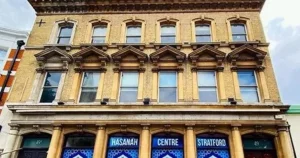



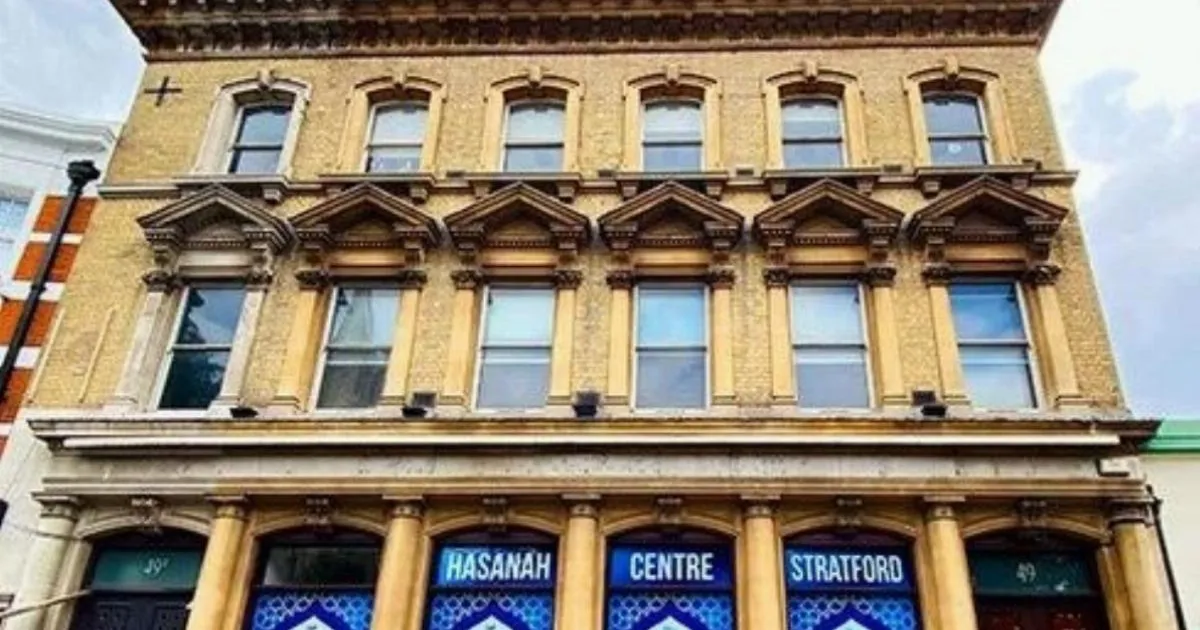
It was an ordinary Friday evening in Stratford, east London, when the calm of a community space was shattered—quite literally. The Hasanah Centre, a mosque and prayer venue that serves as a spiritual and social anchor for many local Muslims, was targeted by an act of vandalism. At around 10.30pm, police received reports that the building’s front-facing window had been smashed, forcing officers to descend on the scene in the middle of the night. For those who were inside, or who arrived shortly after, the sight of broken glass scattered across the pavement must have been deeply unsettling. A place meant for quiet reflection, communal prayer, and the nurturing of faith had been violated. The incident did not cause any physical injuries, but the emotional damage is real and lingering. It is the kind of experience that makes people pause, look over their shoulders, and wonder whether they are truly safe in their own neighborhood. The Hasanah Centre is not just a building; it is a home for the soul, a landmark of belonging for Muslims in Newham. When its windows are shattered, the message is not only about glass and property—it is about intimidation, exclusion, and hatred. And that message, whether intentional or not, echoes far beyond the walls of the centre.
For the Muslim community in Newham, this attack arrives at a particularly painful moment. As the group Newham Muslims noted, it comes as we enter Islamophobia Awareness Month, a time dedicated to highlighting and challenging anti-Muslim hatred. Their words were stark and heartfelt: “As we enter Islamophobia Awareness Month, we wake up to a stark reminder that Newham is not immune to anti-Muslim hatred. A mosque in Stratford has had its window smashed. Attacks on places of worship must never be normalised.” The phrase “must never be normalised” is crucial. Too often, acts of hate can slip into the background noise of daily life, especially when they happen repeatedly. But this is not something that should be accepted as routine. It is a wake-up call. It reminds us that intolerance exists even in diverse and welcoming boroughs, and that places of worship—mosques, synagogues, churches, gurdwaras, and temples—are not automatically protected from the ugliness of prejudice. The vandalism at the Hasanah Centre is not an isolated incident but part of a worrying pattern of religiously-aggravated attacks in London, a city that prides itself on multiculturalism and mutual respect. Every smashed window, every vandalised doorway, every daubed slogan chips away at that pride. It creates an atmosphere of fear and vulnerability, particularly for minority communities who may already feel marginalised or targeted. The emotional toll is immense: worshippers may now hesitate before attending prayers, parents may worry about sending their children to the mosque, and ordinary people may feel less welcome in the city they call home.
In the aftermath of the attack, local leaders moved quickly to respond with compassion and resolve. Uma Kumaran, the local MP, and Farhad Hussain, the mayor of Newham, released a joint statement expressing their concern and offering reassurance to the community. “We are aware of a concerning incident at Hasanah Centre Stratford,” they said. “We are following the matter closely and are in touch with Newham Met Police to stay updated regarding the situation. We want to reassure the Muslim community and all our communities in Newham that as your local MP and your Mayor the safety of local residents is our top priority.” These words matter because they show that the community is not alone. When an act of hatred occurs, silence from civic leaders can feel like complicity. But here, there was no silence. There was immediate recognition, empathy, and a commitment to vigilance. The leaders did not merely condemn the vandalism; they stood alongside the affected community and affirmed that their safety is paramount. This kind of leadership helps to counter the isolation and fear that hate crimes can breed. It sends a signal that the wider community sees the attack for what it is—an assault on the values of respect and coexistence that Newham holds dear. It also encourages residents to report similar incidents and to support one another in times of crisis. The response from local politicians is not just a formality; it is a crucial part of the healing process, reminding everyone that the bonds of community are stronger than the forces of division.
The Metropolitan Police have also taken the incident seriously, launching an investigation and appealing for information from the public. A spokesperson for the force said: “An investigation has been launched after damage was caused to the front window of a mosque in Stratford in the early hours of Saturday, 31 October. We understand this incident may cause concern within the community. London is shaped by diversity and anti-Islamic behaviour has no place in our city. Although no arrests have been made at this stage, we are committed to tackling hate crime and have officers working at pace to build a picture of the incident and locate those responsible.” This statement is important for several reasons. It acknowledges the wider impact of the crime, not just the property damage. It explicitly names the incident as anti-Islamic behaviour and condemns it. And it promises action. Hate crimes are often underreported because victims fear they will not be taken seriously or that nothing will be done. By speaking out publicly and urging anyone with information to come forward, the police are trying to build trust and show that hate crimes are treated with the urgency they deserve. The investigation is still in its early stages, and no arrests have yet been made, but the commitment to finding those responsible is clear. For the community, knowing that police are actively working on the case can provide some measure of comfort. It is not enough to condemn hate in the abstract; there must be tangible efforts to bring perpetrators to justice and to prevent future attacks. The appeal for information is also a reminder that the public has a role to play in standing against hatred.
The vandalism at the Hasanah Centre forces us to reflect on the deeper significance of places of worship in our society. These are not just buildings where people gather for religious services; they are sanctuaries of hope, community, and resilience. They host educational programmes, cultural events, charitable initiatives, and support networks. They are places where generations come together, where children learn about their heritage, and where people find comfort in times of joy and sorrow. When such a place is attacked, the entire community feels the blow. The damage to the Hasanah Centre is a reminder that hatred is not abstract—it has real consequences in the lives of real people. It is a reminder that Islamophobia, like all forms of racism and religious intolerance, thrives when good people remain silent. But it is also a reminder of the strength and dignity of the Muslim community in London. Despite the fear and frustration that this incident may cause, there is also resilience. Community groups immediately spoke out, leaders offered support, and neighbours began to express their solidarity. The response to the attack has been far more powerful than the attack itself. It shows that even when someone tries to spread fear, they cannot erase the bonds of community. It shows that the vast majority of Londoners value diversity and refuse to let hatred win. In the coming days, the glass will be repaired, the windows will be cleaned, and the Hasanah Centre will reopen its doors. But the memory of this incident will remain, not as a symbol of victimhood, but as a reminder of the courage and unity that arose in its wake.
Ultimately, this incident should challenge all of us to think about what we can do to combat hatred in our own communities. It is not enough to say that we stand against Islamophobia; we must show it through our actions. That might mean reaching out to a Muslim neighbour or colleague to check if they are okay. It might mean attending a vigil or a community meeting in support of the Hasanah Centre. It might mean reporting suspicious activity to the police, or sharing information that could help with the investigation. It might mean educating ourselves about Islamophobia and challenging harmful stereotypes when we hear them. The police have asked anyone with information to contact them via 101. That is one practical step. But there are many others. The message that must go out from this incident is loud and clear: attacks on places of worship are attacks on all of us. There is no place for anti-Muslim hatred in our city, our country, or our world. The Hasanah Centre is more than its broken window; it is a symbol of faith, community, and belonging. And no act of vandalism can ever break that spirit. As the community moves forward, it does so with the support of leaders, neighbours, and allies who refuse to let fear define them. The window may have been shattered, but the resolve of the community remains unbroken. And in that resolve, there is hope—hope that hatred will not win, hope that solidarity will prevail, and hope that the light of the Hasanah Centre will continue to shine, brighter than ever, despite the darkness that briefly touched it.