

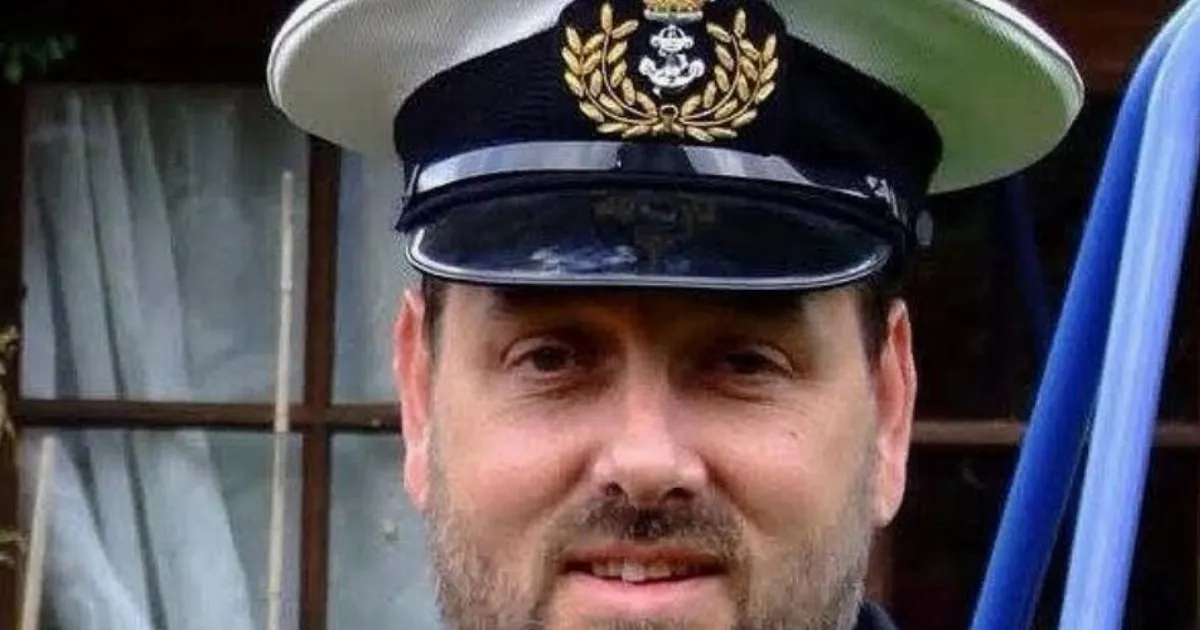
Behind every name released in a police statement lies a life that was rich, textured, and deeply loved—and the name Richard Skilton now carries with it a story of devotion, service, and heartbreaking loss. Richard, 66, was pronounced dead at the scene of a collision on the M27 in Hampshire on the morning of October 16, after the black-and-white Triumph motorcycle he was riding was involved in a crash. The news has sent ripples of sorrow through his family, his friends, and the wider community of everyone who knew him, but it has also prompted an outpouring of affection for a man described as a devoted husband, a loving father of five, and a proud grandfather of ten. For his relatives, the suddenness of the loss is almost unbearable; for those who served alongside him or shared his enthusiasm for two wheels, the silence left by his passing will be felt for a long time. The crash occurred on a stretch of motorway that many people use every day, a familiar ribbon of tarmac that suddenly became the site of an unthinkable family tragedy. Richard’s loved ones have had to begin the slow, painful task of coming to terms with a future that no longer includes his presence, and the ordinary places and objects that once brought him joy now serve as reminders of what has been taken away. Yet even in their grief, they have chosen to remember him in the most generous terms possible: as a man who gave his life to his country, who loved his family without reservation, and who pursued his passion for motorcycling with a sense of freedom and joy that was unmistakable to anyone who knew him. His name will now be remembered by many who never met him, precisely because of the way his family has chosen to speak about him—not with anger, but with tenderness, pride, and a profound love that refuses to be extinguished by death.
The tribute released by Richard’s family paints a portrait of a man whose greatest happiness was found in the people he loved. They described him as a devoted husband, a loving father to his five children, and a proud grandfather to ten grandchildren—with an eleventh grandchild on the way, a child he will unfortunately never get to meet. That final detail carries a particular weight, because it reminds us that grief is not only about the moments that have passed, but about the moments that will never come: birthdays, school plays, weddings, and the quiet afternoons that would have been filled with a grandfather’s laughter and stories. Richard was looking forward to that new life, to welcoming another member of the family into the world, and to watching his grandchildren grow. The news that this future has been taken away adds a layer of sadness that is difficult to articulate. His family’s words were simple and dignified: “He completed a full career in the Royal Navy, dedicating many years of his life to serving his country. A passionate motorcycle enthusiast, Richard will be remembered for his love of family, his naval service and the memories he leaves behind. He will be greatly missed by his family, friends and all who knew him, and his memory will live on with love, pride and respect.” There is something profoundly moving about the way these sentences are structured. They do not dwell on the circumstances of his death, but on the substance of his life. They speak of love, pride, and respect—words that might sound abstract in ordinary conversation, but that become anchors of meaning in the wake of tragedy. For the family, every word is a way of holding onto him, of making sure the world understands that Richard Skilton was more than a name in a news report or a statistic on a road-safety chart. He was a husband who shared his days with his wife, a father who shaped his children’s lives, a grandfather who delighted in the next generation. And now, in the midst of their loss, they are asking us to remember those qualities, to honor the man rather than merely mourn the accident. It is a request that friends, neighbors, and strangers alike will no doubt be honored to fulfill.
Before Richard ever became a grandfather, before he found the open road on his Triumph, he dedicated many years of his life to the Royal Navy. A full career in the service means more than a job; it means a way of living rooted in discipline, duty, camaraderie, and sacrifice. For Richard, those years shaped the man he would become. Naval service instills in people a kind of resilience and a habit of looking out for others, and those qualities likely stayed with him long after he left the service. It is easy to imagine him carrying the values of the Navy into his daily life—punctual, reliable, unflappable in a crisis, and loyal to the people around him. His family mentioned his career with obvious pride, and rightly so. In an era when stories of public service can sometimes be overlooked, Richard’s commitment to his country stands as a reminder of the countless men and women who spend their working lives preparing to defend others, often far from home, and often at great personal cost. But Richard’s identity was not only defined by his naval years. He was also, as his family noted, a passionate enthusiast of motorcycling. That word “passionate” is important. It suggests someone who did not simply ride a motorcycle as a form of transport, but who loved the machine, the road, the wind, the sense of freedom that comes with travelling on two wheels. His black-and-white Triumph was not just a vehicle; it was an extension of his spirit. Triumph is an iconic British brand, with a heritage that echoes the very qualities Richard seemed to embody—engineering excellence, independence, and a bit of daring. For motorcyclists, the bike is often a source of identity and joy, a way of feeling fully alive. That Richard was riding his Triumph on a crisp October morning may be tragic, but it is also fitting: he was doing something he loved, something that made him feel himself. His family will find some comfort, perhaps, in knowing that he was taken while engaged in a pursuit that brought him happiness, even as they struggle to understand why it had to be taken from them.
The details of the accident are still under investigation, but what is known is that emergency services were called to the M27 at around 6.39am on October 16. The crash occurred on the stretch between junctions 9 and 12, just outside Portsmouth, and it led to the closure of the motorway for several hours while police, paramedics, and other responders worked at the scene. For those caught up in the ensuing traffic delays, it may have been an inconvenience; for Richard’s family, it was the beginning of an unthinkable ordeal. The closure was necessary, both for the safety of everyone involved and for the careful work of investigating what had happened. Roads are places where life can change in an instant. We travel them every day, often at speed, often surrounded by other people in metal boxes, trusting that everyone will arrive safely. When that trust is broken, as it was on that October morning, the consequences can be fatal. Richard’s death is a tragic illustration of how fragile life can be, and how quickly a normal morning can turn into the worst day of a family’s existence. The police have launched an investigation into the crash, and in the coming weeks they will piece together the events that led to the collision. They will examine the road, the conditions, the vehicles involved, and witness statements, all in the hope of providing answers to a family that is desperate to understand how this could have happened. Investigations cannot bring Richard back, but they can serve as a vital part of the grieving process by offering clarity, and they may help prevent similar tragedies in the future. In the meantime, the community has been left to reflect on the fragility of life and the importance of holding our loved ones close. The closure of the motorway was a visible symbol of the disruption and shock that accompanies any sudden death—a moment when the everyday flow of life is halted, and strangers are forced to confront the reality of mortality. For a few hours, the road belonged to the tragedy; now it belongs to memory.
The shock of Richard’s death has extended far beyond his immediate household. Friends, former colleagues in the Navy, fellow motorcyclists, and acquaintances across the Portsmouth area and beyond have all been touched by the news. In the world of motorcycling, there is a particular sense of community—a brotherhood and sisterhood of people who understand the joy and the risks of two wheels. When a rider is killed, the grief is felt collectively. Many will remember Richard for the rides they shared, for the conversations at rest stops, for the enthusiasm that made him a welcome presence in the group. For his family, these connections are a source of strength. The outpouring of sympathy and support that follows a tragedy cannot erase the pain, but it can remind the bereaved that they are not alone. People bring food, send messages, share memories, and simply sit with the family in their silence. They also honor Richard by telling stories about him—stories that make his family smile through their tears. There is a kind of magic in that: a man who has died continues to live in the anecdotes and reflections of those who knew him. The phrase “all who knew him” in his family’s tribute is not an exaggeration. Some people pass through the world leaving only faint traces; others leave deep impressions. Richard appears to have been one of those people. His sense of humor, his kindness, his loyalty, and the wisdom shaped by years at sea—these are the qualities that friends will remember. And they will also remember his resilience. Sailors are known for their ability to weather storms, and Richard’s family will need that same strength now. They will need to be gentle with themselves and with each other, to allow themselves to grieve at their own pace, and to reach out for help when they need it. Grief is not a linear journey; it comes in waves, sometimes calm and sometimes overwhelming. But the support of a community can make those waves just a little bit easier to face. The love that Richard showed to others will now be returned to him, perhaps in the only way it can be—by caring for the family he left behind.
As the investigation continues and the weeks pass, Richard Skilton’s loved ones will face the immense challenge of rebuilding a life without him. There will be quiet moments when they reach for the phone to call him, before remembering that he is no longer there. There will be holidays and birthdays where his absence will be felt like a missing limb. There will be the arrival of his eleventh grandchild, a child who will grow up knowing Richard through stories and photographs, and who will never have the privilege of sitting on his lap. Yet the family has already set the tone for how Richard will be remembered. They have chosen love over anger, pride over bitterness, and respect over despair. Their tribute closes with the hope that his memory will live on “with love, pride and respect”—and it will. It will live on in the hearts of his five children, who carry his values into their own lives. It will live on in his wife, who shared his life and who will now have to learn how to go on without her partner. It will live on in his ten grandchildren, and in the unborn child who will someday hear stories of a grandfather who wore the uniform of the Royal Navy and who loved the roar of a Triumph engine. It will live on in the community that has mourned him, and in the roads that will never see his bike again. Richard’s death is also a reminder to all of us. It reminds us that life is precious, that tomorrow is never guaranteed, and that the people we love deserve to hear those words while we still have the chance. It reminds us to be vigilant on the road, to look out for motorcyclists, and to treasure the ordinary moments that ultimately become our most cherished memories. For Richard, the road ended on an October morning on the M27. But the memories, the love, and the legacy he leaves behind will travel much further than any motorcycle could ever take him. Rest in peace, Richard Skilton. You were loved, and you will not be forgotten.