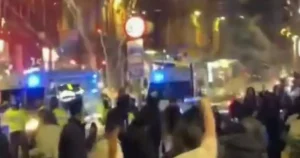
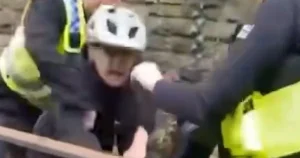

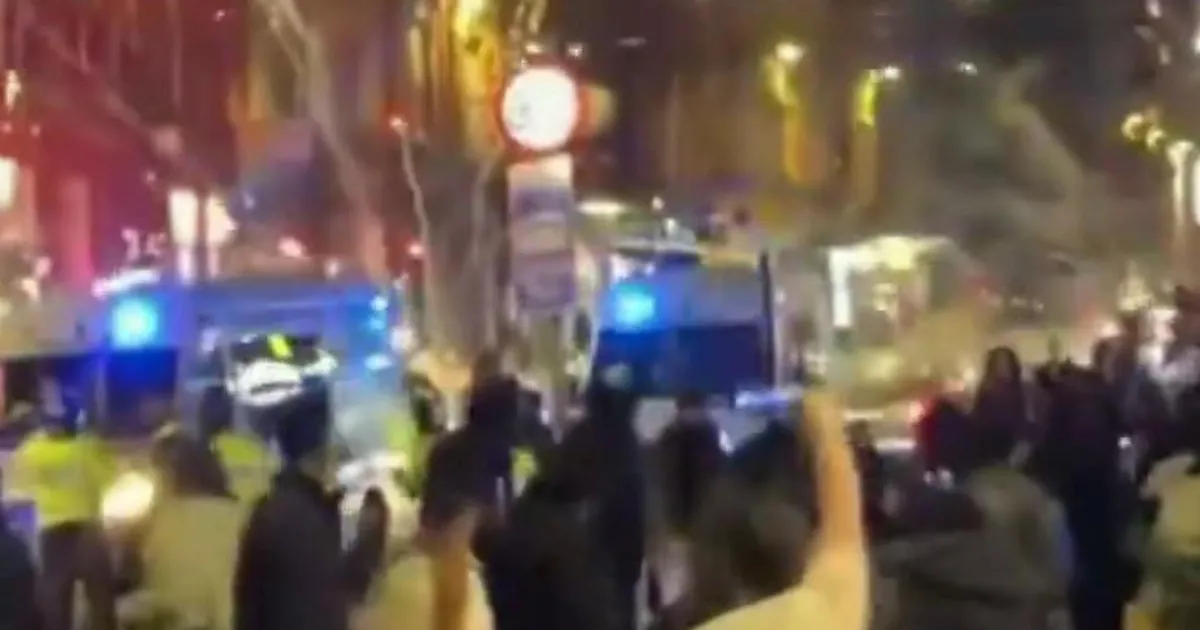
Halloween in Birmingham was supposed to be a night of playful frights, glittering costumes, and the kind of harmless scares that make the season so beloved. Instead, the city centre became the setting for a far more dangerous kind of chaos, one that left witnesses shaken and police scrambling to contain a crowd that had turned a festive evening into something resembling a battlefield. Seven people were arrested after revellers launched fireworks directly at officers on the streets of Birmingham, transforming a night of fun into what one onlooker bluntly described as a “war zone.” The arrests, made by West Midlands Police, involved young people aged between 15 and 26, all of whom remained in custody following the disorder. The incident unfolded around New Street and the surrounding thoroughfares, where crowds of Halloween partygoers had gathered, only for the evening to spiral into scenes of panic and fear. Witnesses reported fireworks exploding in close proximity to pedestrians, with rockets careering through the air at street level, sparking screams and scattering families. The contrast between the expected joy of Halloween and the reality of a city centre under siege could not have been starker. What should have been a night of sticky sweets, shared laughter, and spooky storytelling became a memory of fear for many, a cautionary tale of how quickly collective excitement can curdle into collective danger. For the officers on the receiving end, it was also a moment of real peril, as they were forced to stand between the public and a barrage of fireworks, trying to keep the peace while projectiles were being launched in their direction. The atmosphere, as one witness noted, was pure mayhem, with no visible injuries reported but a widespread sense that someone, somewhere, was bound to be hurt.
The fear felt by those caught up in the chaos was captured vividly in the words of eyewitnesses, whose accounts painted a distressing picture of what it was like to be in the middle of the mayhem. One onlooker told reporters that they did not see anyone get hurt, but they would have been amazed if nobody was injured, because fireworks were exploding right next to people in the street. The same witness summed up the scene with a single, piercing word: “mayhem.” Another person, posting on social media, described the terrifying experience of emerging from Digbeth to catch a train at Grand Central station, only to be confronted with fireworks everywhere. They wrote of children screaming, panic spreading through the crowd, and security guards locking the doors in response, a move that, while intended to protect people, only heightened the sense of alarm. The phrase “absolute jokers” was used in that post, a mixture of anger and disbelief that such recklessness could ruin the night for so many. A further message expressed heartfelt sympathy for anyone who might have been hit, with the writer lamenting that it was petrifying that people could not even enjoy Halloween without something kicking off. These are not the voices of distant observers; they are the voices of ordinary people trying to navigate a public space that suddenly turned hostile. Parents holding children’s hands, teenagers in costume, workers heading home, and revellers hoping to let off steam were all caught in the same unsettling whirlwind. The social media posts, with their raw immediacy, showed how a single night of antisocial behaviour can ripple through a community, leaving behind not just physical risk but emotional aftershocks.
In response to the escalating disorder, West Midlands Police moved swiftly to assert control, deploying a Section 60 order that remained in force into the early hours of the morning. This powerful legal measure allowed officers to stop and search anyone in the affected area without the need to establish reasonable grounds for suspicion, a clear indication of how seriously the authorities viewed the threat. The decision to impose such an order was not taken lightly; it reflected the urgent need to prevent further violence and to sweep the streets for weapons and fireworks that could be used against the public or the police. Altogether, seven individuals were detained, their ages spanning from a 15-year-old to a 26-year-old, and they were all held in custody as investigations continued. The police force, for its part, stressed that it had planned for a challenging weekend, with Chief Superintendent Tom Joyce explaining that a robust plan had been in place specifically to deal with any disorder. He highlighted that the Section 60 powers were part of that plan, giving officers the ability to act decisively and proactively rather than waiting for incidents to escalate. Joyce emphasised that the safety of communities was paramount, and that the force would do everything in its power to ensure that safety was protected. His words also carried a sharp warning: misusing fireworks is not merely a bit of fun, it is dangerous, illegal, and can lead to fines, arrests, and criminal charges. The police, he added, were working closely with local partners to respond to reports of antisocial behaviour and to keep communities safe. It was a message intended for both the public and the offenders, a reminder that while Halloween may be a time for mischief, there is a hard line between playful trick-or-treating and criminal behaviour.
The legal context surrounding fireworks makes the actions of those arrested all the more serious. In the United Kingdom, fireworks are prohibited in public areas, including streets and parks, unless they are part of a professionally organised event for which a licence has been granted and safety measures have been put in place. This restriction exists for good reason: fireworks are explosive devices that can cause severe burns, eye injuries, and even death when mishandled, and their use in crowded urban environments multiplying the risks exponentially. When a firework is launched at a police officer or into a crowd of pedestrians, it ceases to be a festive gesture and becomes a weapon. The people involved, some of them barely of an age to understand the full consequences of their actions, may have seen the night as a chance to be daring, to push boundaries, or simply to join in what they perceived as a bit of mischief. But the potential outcomes were terrifying: a rocket striking a child’s face, a sudden explosion triggering a stampede, a fire sparked in a shop or a petrol station, a police officer injured in the line of duty. The fact that no serious injuries were reported owes much to fortune as much as to any sensible behaviour by the crowd. The law, therefore, stands as a necessary guardrail, and the police’s willingness to use Section 60 powers shows that they are prepared to treat such behaviour with the seriousness it deserves. For those who defend such actions as harmless fun, the testimony of the witnesses and the fear in the children’s screams is a powerful counterargument. Fun does not require the evacuation of a railway station, the locking of doors, or the imposition of emergency policing powers.
Beyond the immediate drama, the incident raises larger and more uncomfortable questions about how such disorder takes hold, and what kind of culture allows it to flourish. Halloween has long been a night when communities tolerate a higher level of boisterousness, with pranks and spooky theatrics accepted as part of the tradition. But in recent years, there has been a growing unease about the way some people use the occasion to engage in behaviour that is less innocent and more reckless, fuelled perhaps by social media attention, peer pressure, or simply a desire to cause chaos. Birmingham is not the first city to experience fireworks being aimed at emergency workers, and it will not be the last, but that does not make the pattern any less alarming. The witnesses’ reactions, especially the heartbreaking observation about being unable to enjoy Halloween without something kicking off, speak to a broader societal fatigue. People are tired of having their public spaces held hostage by a minority who treat risk as a joke and other people’s safety as an inconvenience. The emergency services, too, are stretched thin, and every call about a firework being launched at an officer is a call that cannot be answered somewhere else. The seven arrests may bring a sense of justice to some, but they also serve as a reminder that the roots of such behaviour are complex: groups of young people, some still children, making catastrophic choices in the heat of a chaotic night. It is easy to condemn, and certainly the condemnation is deserved, but there is also a deeper need for prevention, for teaching young people about the real consequences of their actions, and for creating environments where the thrill of the night does not have to be found in danger.
As Birmingham reflects on a Halloween that will be remembered for all the wrong reasons, the challenge now is to reclaim the occasion from the small minority who sought to spoil it. The police have promised to remain vigilant, and the use of Section 60 powers sends a clear message that disorder will not be tolerated. But lasting safety will require more than just enforcement; it will require the cooperation of parents, schools, community leaders, and ordinary citizens who must all play a part in shaping the values of the next generation. Fireworks, when used properly and in the right settings, are a beautiful spectacle, capable of lighting up the sky with wonder and joy. But in the hands of the careless, they are nothing more than weapons of fear, and that misery was on full display in Birmingham last night. The seven people in custody are facing the consequences of their actions, but the wider community is also left with a sense of loss, because a night that should have been filled with laughter and delight was instead filled with terror and anger. There is hope, though, in the voices of those who spoke out, in the security guards who locked the doors to protect the public, in the officers who stood their ground, and in the witnesses who cared enough to express their fears. The story of Birmingham’s Halloween is not just a story of chaos; it is a story of a community shaken out of its comfort zone and forced to confront what happens when fun is allowed to go too far. With care, education, and a shared commitment to respect, future Halloweens can be returned to the children and families for whom the holiday was always intended, a time for laughing rather than screaming, for safe scares rather than real ones. Until then, the memory of those fireworks bursting in the crowded street, and the sound of children crying in the panic, must stand as a reminder of how fragile public safety can be, and how easily a celebration can turn into a nightmare.