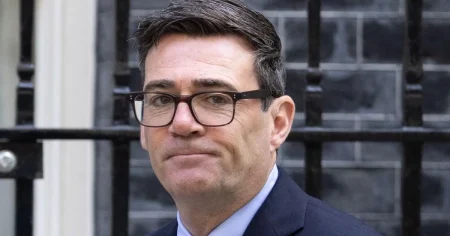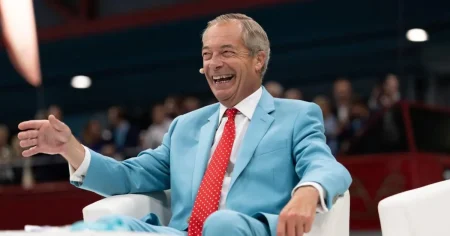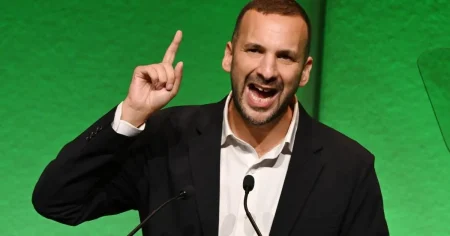


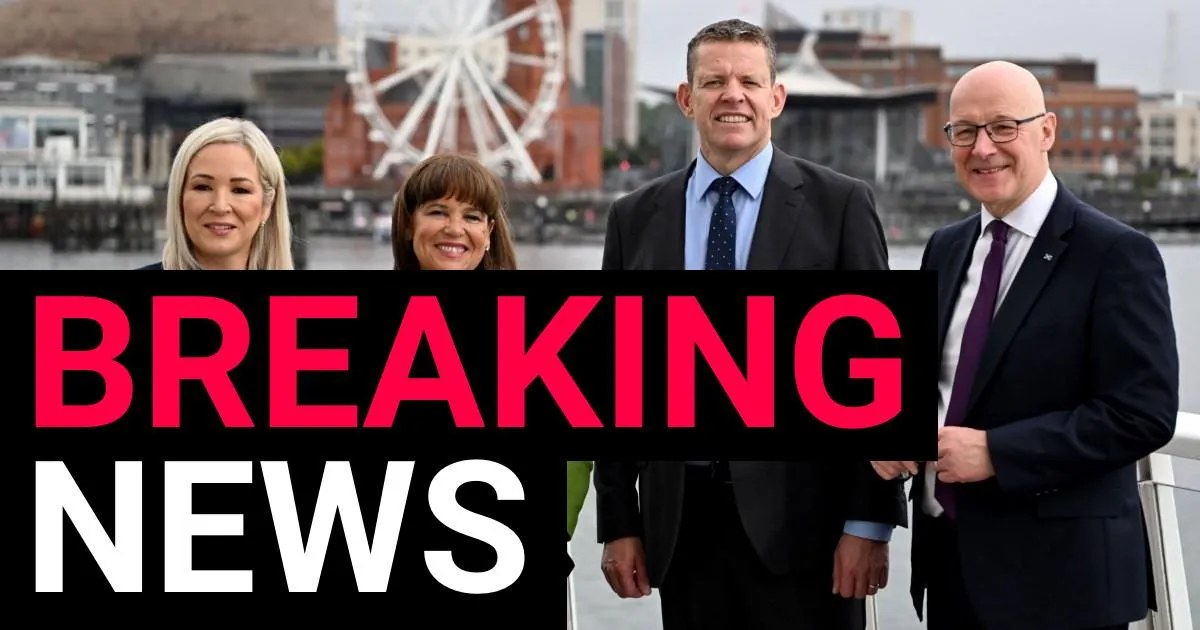
On a grey morning in Cardiff, something historically unusual happened. The leaders of Scotland, Wales and Northern Ireland gathered around a table and signed a joint declaration that, on the surface, was modest diplomatic language about cooperation. But underneath the formal wording lay a much bigger signal: all three of them want, in the long run, to leave the United Kingdom. Scottish First Minister John Swinney, Welsh First Minister Rhun ap Iorwerth and Northern Ireland First Minister Michelle O’Neill met for what was described as an unprecedented summit. It was the first time that the largest parties in all three devolved parliaments had explicitly made separation from the UK part of their political identity and electoral mandate. Sinn Fein’s president, Mary Lou McDonald, was also present in the room, a reminder that O’Neill’s leadership is rooted in a tradition that has never accepted the partition of Ireland. The meeting itself was relatively quiet, the kind of event that produces a lot of handshakes and carefully staged photographs. But the symbolism was enormous. Imagine three neighbours, each in a separate flat in the same building, deciding to hold a meeting about how they might one day own their own homes. That is roughly what happened in Cardiff. For people who have followed British politics for decades, the image of these three leaders together was not just striking; it would have been almost unthinkable a generation ago. The devolved institutions were created, after all, as a way of holding the Union together, not taking it apart. Yet here were the people who run those institutions, using their platform to call for the very opposite. The meeting was described as unprecedented because it genuinely was. Never before had the first ministers of Scotland, Wales and Northern Ireland gathered specifically to advance a shared independence agenda. There have been bilateral meetings, informal chats, and plenty of speeches, but this was different. This was a formal, public, joint statement of intent. And no matter how many caveats and qualifications were tucked into the small print, the headline was clear: the leaders of three out of the UK’s four nations have concluded, in different ways and at different speeds, that the Union no longer serves them.
The document they signed is officially called a memorandum of understanding. In the world of politics, that phrase can mean anything from a binding treaty to a wish list written on a napkin. In this case, it sits somewhere in between, but leaning heavily toward the symbolic. The three leaders agreed that each of their nations has the right to determine its own future, through democratic means and in accordance with the wishes of its people. That sentence may sound like a standard democratic principle, but in the context of the United Kingdom, it is quietly radical. It challenges the idea that sovereignty rests only with the Westminster Parliament, the traditional cornerstone of the British constitution. The memorandum goes further. It declares that for people watching across these islands, and around the world, there could be no clearer sign that Westminster’s time is coming to an end. That is not the language of cautious administration. That is the language of a movement. The document also says that there is a better way: nations working together as equals, sharing ideas and expertise, and building relationships based on mutual respect and common interests. This is careful, positive phrasing. It is designed to reassure people that independence does not mean isolation or hostility. The leaders are not framing themselves as angry separatists who want to tear down walls. They are framing themselves as modern, outward-looking democrats who simply believe that the United Kingdom is no longer the right vehicle for their nations’ futures. The memorandum insists that momentum is behind their movements and that constitutional change is coming. That word, momentum, is important. It suggests a sense of historical inevitability, as if the tide of events is already moving in their direction. Whether that is true is another matter entirely, but the confidence is deliberate. Political movements rarely admit to uncertainty, especially when they are trying to persuade their own supporters that the long wait for change is almost over. The memorandum is essentially a statement of faith as much as a statement of fact. It is rooted in the belief that the Union is not permanent, that it was created at a particular moment in history, and that it can therefore be unmade at another moment.
To understand why this meeting matters, it helps to look at how each nation arrived at this point. Scotland’s independence movement is the most familiar. The Scottish National Party has dominated Scottish politics for over a decade, and the 2014 referendum, which ended with a vote to remain in the UK, has never really settled the question for many nationalists. John Swinney, the current First Minister, is a veteran of that movement, and he has spent years arguing that Brexit changed everything, dragging Scotland out of the European Union against its will. In Northern Ireland, the situation is different. The Good Friday Agreement created a power-sharing system in which unionists and nationalists govern together, and Michelle O’Neill’s position as First Minister is itself a milestone. For the first time, the holder of that office comes from a party whose ultimate goal is a united Ireland. O’Neill does not speak about leaving the UK in the same way Scottish nationalists do, because her party’s vision is not an independent Northern Ireland but a reunified Ireland. Still, for the purposes of this memorandum, the direction of travel is the same: away from the United Kingdom. Wales is the newest convert. Plaid Cymru’s victory in the Welsh elections in May meant that, for the first time, the largest party in the Senedd was a party committed to Welsh independence. Welsh nationalism has often been seen as the quiet cousin of Scottish and Irish nationalism, more focused on language, culture and recognition than on constitutional rupture. But that has been changing. The Welsh independence movement has grown in confidence, and Rhun ap Iorwerth, the new First Minister, has made clear that he sees independence as a realistic ambition. The fact that these three leaders can now stand together is a reflection of how much the political landscape has shifted in a relatively short period. It is also a reminder that the United Kingdom is an asymmetric state. England is by far the largest part, but it is only one part. When the other three parts all have leaders who reject the status quo, the idea of the Union as a settled, comfortable arrangement becomes harder to maintain. People in England may not think about the Union very often, but the people who run Scotland, Wales and Northern Ireland clearly do. They think about it constantly. And now they have decided to coordinate their thinking.
And yet, for all the bold language, the real-life impact of this memorandum is limited. It does not call for immediate referendums on independence. It does not set a timetable. It does not create a joint campaign organisation. It does not even call for a single, coordinated vote across all three nations. Instead, it says that each nation will determine its own future in its own way and in its own time. That is a carefully constructed sentence, one that allows each leader to go back to their own parliament and claim victory without making any concrete promises. The memorandum refers to strengthening cooperation between the parties and identifying practical areas where they can work together. Those are vague phrases, the kind of diplomatic mush that means very little on its own. There is no mention of a joint currency, or border arrangements, or how an independent Scotland would relate to an independent Wales. There is no detailed blueprint for anything. In that sense, the document is more like a manifesto of shared intentions than a practical plan of action. It is a bit like a group of friends deciding they want to go on a long journey together, but not yet agreeing on the destination, the route, the budget or the date of departure. The only thing they really agree on is that they want to leave the place where they currently live. That is not nothing, but it is also not everything. The leaders are clearly aware that independence is not going to happen tomorrow, or even next year. They know that referendums require the consent of the British Government, which is emphatically not interested in granting them. They know that public support for independence fluctuates, and that in Wales, in particular, it remains well below a majority. So the memorandum is best understood as a way of keeping the flame alive, of building a sense of common purpose among movements that might otherwise drift apart. It is also a way of creating pressure. By standing together, the three leaders hope to make the issue of constitutional change unavoidable, to force Westminster to at least acknowledge that the question will not simply go away.
The most provocative part of the memorandum is its direct challenge to the British Government. It calls on Westminster to prepare for, plan and facilitate constitutional change in each jurisdiction. That is a remarkable demand. Asking a government to prepare for its own dissolution is not the sort of thing that tends to happen voluntarily. Governments do not usually spend their time drawing up roadmaps for their own replacement. The British Government’s position, at least publicly, is that the Union is stronger than ever and that talk of independence is a distraction. It is not going to respond to this memorandum by setting up a commission on how to leave. But the leaders are not really expecting that. What they are doing is trying to shift the terms of the debate. They want to normalise independence, to make it seem like a legitimate, respectable future option rather than a fringe fantasy. They want to move the conversation from whether the Union will end to how it might end, and on what terms. That is a subtle but important shift. In politics, the questions you ask often matter more than the answers you receive. Once the idea of constitutional change becomes a matter of planning, of logistics and negotiation, it stops being a fantasy and starts becoming a policy option. The memorandum also uses language that is designed to appeal beyond the core nationalist vote. It talks about mutual respect, common interests, equality and cooperation. It is not a document written in the language of grievance, even if grievance lies beneath it. It is written in the language of optimism, of a future in which smaller nations can thrive as equals, freed from the shadow of Westminster. That is a powerful message, especially for younger voters who feel less attachment to the Union than their parents and grandparents did. It is also a message that resonates well beyond the UK. There are separatist movements all over Europe, and many of them will be watching what happens in Scotland, Wales and Northern Ireland with great interest. The leaders know this. Their statement specifically mentions people watching around the world, an acknowledgement that their struggle is not simply a domestic matter. They are playing to a larger audience, hoping that international attention will add pressure and legitimacy to their cause.
So what does this all mean in practice? For now, very little changes. The governments of Scotland, Wales and Northern Ireland will continue to do the everyday work of running schools, hospitals and transport networks. The memorandum will sit in a filing cabinet somewhere, occasionally quoted at party conferences and in speeches. The British Government will ignore it, or dismiss it as posturing. The Union will continue to exist, at least for the foreseeable future. But politics is not always about immediate results. Sometimes it is about creating the conditions for future change, about normalising ideas that were once considered impossible. The Cardiff summit did that. It put the leaders of three nations in the same room, with the same broad ambition, and it produced a document in which they all agreed that their nations have the right to determine their own futures. That may sound obvious, but in the context of the United Kingdom, it is a radical statement. The Union has always relied on a certain degree of consent, but it has also relied on the assumption that the Union itself is permanent. This memorandum challenges that assumption directly. It says, in clear terms, that the leaders of Scotland, Wales and Northern Ireland do not accept the permanence of the Union. They believe it is changing, and they want to be part of that change. Whether they will succeed is impossible to say. History is full of movements that seemed unstoppable and then faded away. It is also full of moments when an old order collapsed surprisingly quickly. The Soviet Union seemed permanent until it was not. The British Empire seemed permanent until it was not. The European Union seemed permanent until Brexit, and then it was not. The leaders in Cardiff are betting that the United Kingdom is next. They are not asking for permission. They are building alliances, shaping narratives and preparing the ground. The memorandum is a small step, but it is a step in a direction that would have been unthinkable a few decades ago. For ordinary people, the immediate effect is likely to be invisible. There will be no new policies, no new money, no change in daily life. But the conversation has changed. A document signed by three first ministers, in which they describe Westminster’s time as coming to an end, is not something that can simply be ignored. It is a marker, a signal, a piece of political groundwork. The future is never written in advance, but sometimes it is prefigured in documents like this one. History rarely begins with a bang. More often, it begins with a memorandum, a meeting, a moment. On a grey morning in Cardiff, that moment happened.