
1. The Quiet Street and the Sudden Vanishing
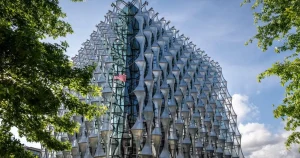
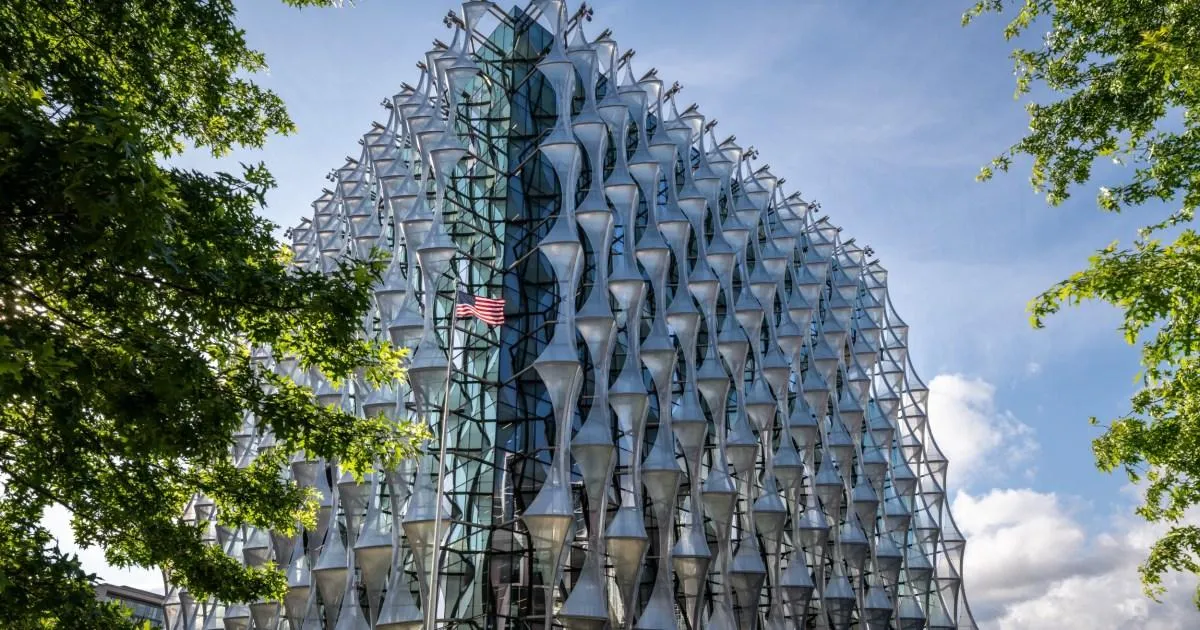
On a humid late-August morning in Putney, a leafy residential corner of southwest London known for its riverside pubs, Victorian terraces, and young families pushing prams toward Wimbledon Common, the ordinary rhythm of life was broken by something that looked, to anyone watching, like a scene from a high-stakes thriller rather than an everyday diplomatic matter. Neighbours later described seeing vehicles with official plates clustered outside a modest flat building near the High Street, and a handful of serious-looking men moving quickly through the entrance. There was no siren, no shouting, no visible scuffle—just a swift, coordinated operation that, within a matter of minutes, had accomplished its objective. Inside that flat lived a man who, according to reports, was attached to the United States Embassy in Nine Elms. By the time the morning clouds had burned off over the Thames, he was gone. Not merely from his flat, but from the country entirely. The following day, and the days after, would bring a torrent of uncomfortable questions to the doors of both the Metropolitan Police and the British government: How could a foreign diplomat facing allegations of possessing indecent images of children be extracted from British soil so quickly, so quietly, and so completely outside the knowledge of the very police force responsible for protecting children in the capital? The answer, according to news reports, is that the operation was conducted not with British consent, but in the shadows—and that the man was flown back across the Atlantic before London’s police were ever informed. It is the kind of story that makes the abstract concept of diplomatic immunity feel terrifyingly real, and it has left a trail of anger, confusion, and discomfort running through Westminster and Scotland Yard alike.
2. The Extraction and the Silence
The details, pieced together from The Sun’s reporting and subsequent official acknowledgements, paint a picture that many legal experts have described as breathtaking in its audacity. On August 25, authorities acting on behalf of the United States raided the diplomat’s flat in Putney and removed him. The man was not arrested by British police, because no British police were present. He was not questioned by British detectives, because no British detectives had been told he was there under suspicion. Instead, he was rushed out of the flat, put on a flight, and returned to the United States—allegedly without a single call being made to the Metropolitan Police, the Home Office, or any other UK law enforcement body. The legal reality is that US officials hold no powers of arrest on British soil. Extradition treaties, mutual legal assistance agreements, and the careful protocols of international diplomacy exist precisely to prevent such unilateral actions. Yet, if reports are accurate, the ordinary machinery of justice was bypassed entirely in a matter that goes to the very heart of child protection. The failure to alert British authorities matters not only as a procedural violation, but because of what it implies about transparency and accountability. When allegations involve children, the public expects every safeguard to be honoured. Instead, the operation unfolded with the secrecy of an intelligence manoeuvre, leaving British ministers to piece together what had happened from press reports and late-night calls. That a foreign nation would remove a suspected individual from UK jurisdiction without any prior consultation has been described in private by Whitehall insiders as a serious breach of trust. It is one thing for the United States to recall a diplomat for consultation; it is quite another to storm a flat, spirit the man out, and only inform the local police after the fact, as if the UK’s sovereignty were little more than an inconvenience.
3. A Wider Investigation and the Shadow of Another Suspect
What makes the case even more unsettling is the context in which it emerged. According to reports, the diplomat’s removal was not the result of an independent British investigation into his own activity, but came to light amid an inquiry into another person based in the United States. The precise relationship between that individual and the diplomat remains unclear, and officials have been reluctant to say more while the American investigation is still active. However, the broad implication is that US authorities, while investigating someone else, uncovered information that led them to the Putney flat—and then decided, for reasons they have not fully explained, to take matters into their own hands. The Met Police eventually issued a careful, almost clinical statement noting that on Tuesday, August 25, US authorities made them aware of an investigation being conducted by the Americans into suspected offences in London relating to indecent images of children. The statement continued: “We continue to liaise with them regarding this matter.” The passive phrasing cannot hide the awkwardness: the police learned about the investigation after the suspect had already been removed from their jurisdiction. For anyone concerned about the safety of children, this raises deeply uncomfortable questions. If the allegations are true, the diplomat is accused of possessing material that fuels the abuse of minors. Crimes like these demand the most serious and meticulous investigative response, particularly when the suspect is a person with diplomatic status, because such cases are fraught with legal complexities and the risk that immunities could allow someone to evade justice. The fact that the suspect is now back in the United States does not mean he is beyond the reach of the law—American authorities can and do prosecute their own citizens for crimes committed abroad—but it does mean the British legal system has been cut out of a process that directly concerns offences allegedly committed in London. Victims and advocates for survivors have long argued that offences involving indecent images of children are not victimless crimes; each image represents a real child somewhere being harmed. The handling of this case, with its whisper-like secrecy and jurisdictional gymnastics, feels like a betrayal of that understanding.
4. Westminster’s Wake-Up Call
The political shockwaves were immediate. Home Secretary Shabana Mahmood, a rising figure in the Labour government with a reputation for serious, measured governance, is said to have become personally involved, taking part in crisis meetings with senior Scotland Yard officers as the full facts slowly came into focus. The very phrase “crisis meetings” suggests a situation that goes far beyond routine diplomatic irritation. It suggests an event that undermined the relationship between British law enforcement and a close ally, and that has forced ministers to confront an uncomfortable reality about how the United States operates within their borders. A UK government spokesperson, speaking with the careful restraint of someone navigating a highly sensitive international incident, said: “We expect all foreign diplomats in the UK to abide by our laws, in the same way we expect all UK diplomats to do so when posted overseas.” The spokesperson then added, “As a US investigation is ongoing, it would not be appropriate to comment further at this stage.” The statement is a model of diplomatic brevity, but between the lines, there is a clear edge. The expectation that diplomats abide by local laws is a fundamental principle of the Vienna Convention on Diplomatic Relations. Yet here, on the surface of it, a diplomat has been extracted from the host country without the host country’s knowledge, precisely to avoid the normal operation of British law. The irony would be amusing if the subject matter were not so grave. Ministers are now understood to be pressing the US Embassy for a full account of what happened, including the exact timeline, the legal basis for the operation, and whether any attempt had been made to contact the Foreign Office or the Home Office in advance. Officials have reportedly been left frustrated by the lack of clarity, and there is a growing determination in Westminster to ensure this becomes a test case for how such matters are handled in the future.
5. The Embassy’s Carefully Chosen Words
For its part, the United States Embassy in Nine Elms issued a statement that managed to acknowledge the seriousness of the allegations while saying almost nothing of substance. A spokesperson told The Sun: “We are aware of allegations concerning an individual assigned to the Embassy. The United States government expects all personnel to adhere to the highest standards of conduct, and we take these allegations seriously.” On its face, the statement sounds appropriately solemn. But in the context of the reported events, it reads less like a commitment to justice and more like a defence mechanism. If the diplomat was removed so hastily that even the local police were not informed, the statement’s claim to take the allegations seriously rings a little hollow. “The highest standards of conduct” is a phrase routinely used by institutions facing scandal, and it often stands in direct opposition to the conduct that prompted the scandal. The Embassy has not denied the sequence of events reported in the press, nor has it offered a detailed explanation of the operation. What makes the whole affair so damaging for the so-called special relationship is that the United States has, in recent years, positioned itself as a leader in the fight against child exploitation, with federal agencies devoting enormous resources to tracking down offenders across borders. To learn that US officials allegedly chose to bypass the normal channels in a case on foreign soil is a profound disappointment to those who believe in rule-of-law cooperation. It also undermines the shared purpose of protecting children, because secrecy and unilateral action are the enemies of coordinated enforcement. If the roles were reversed—if a British diplomat suspected of such offences were quietly lifted out of Washington by UK authorities without telling the FBI—there would be an international outcry. The asymmetry is difficult to overlook.
6. The Larger Questions That Remain
Beyond the immediate diplomatic fallout, this incident forces a broader reckoning with the nature of diplomatic immunity and the accountability of those who enjoy it. Diplomatic immunity exists for a reason: to allow diplomats to perform their duties without fear of harassment or political manipulation. But it has always existed alongside an understanding that serious crimes must not be allowed to hide behind that shield. When a diplomat is accused of possessing indecent images of children, the offence strikes at the most vulnerable members of society, and the public rightly expects no tolerance. The fact that the suspect in this case is now in the United States does not mean justice is impossible. It does mean, however, that the case will be handled under American jurisdiction, and it remains to be seen whether British authorities will be granted access to the evidence, the reasoning, and the full truth of what happened. There are also unanswered questions about the man himself: What was his role at the Embassy? Was he covered by full diplomatic immunity or only consular immunity? How long had British authorities been unaware of the allegations? And perhaps most troublingly, was there a moment during the planning of the operation when someone in Washington decided that telling London was too risky, too slow, or too likely to complicate things? Until those questions are answered, the case will leave a stain on the trust between two allies. The people of Putney, the parents in London, and indeed the wider British public are left to wonder what this means for their safety and their confidence that their police force will always be the first to know when an alleged crime is being investigated on their streets. The response from the British government has been firm in rhetoric, but actions will speak louder. There is a deep need now for transparency, for a clear commitment that no foreign power will again be allowed to snatch a suspect from British soil without consent, and for the continued pursuit of justice for the children who appear in those devastating images. In the meantime, the silence from the missing diplomat, the careful statements from officials, and the quiet, angry ripple of meetings in Westminster serve as a reminder that whilst diplomatic negotiations are usually conducted in calm and confidentiality, they are not meant to conceal crimes. Some doors, once opened quietly, should never be quietly closed again.