


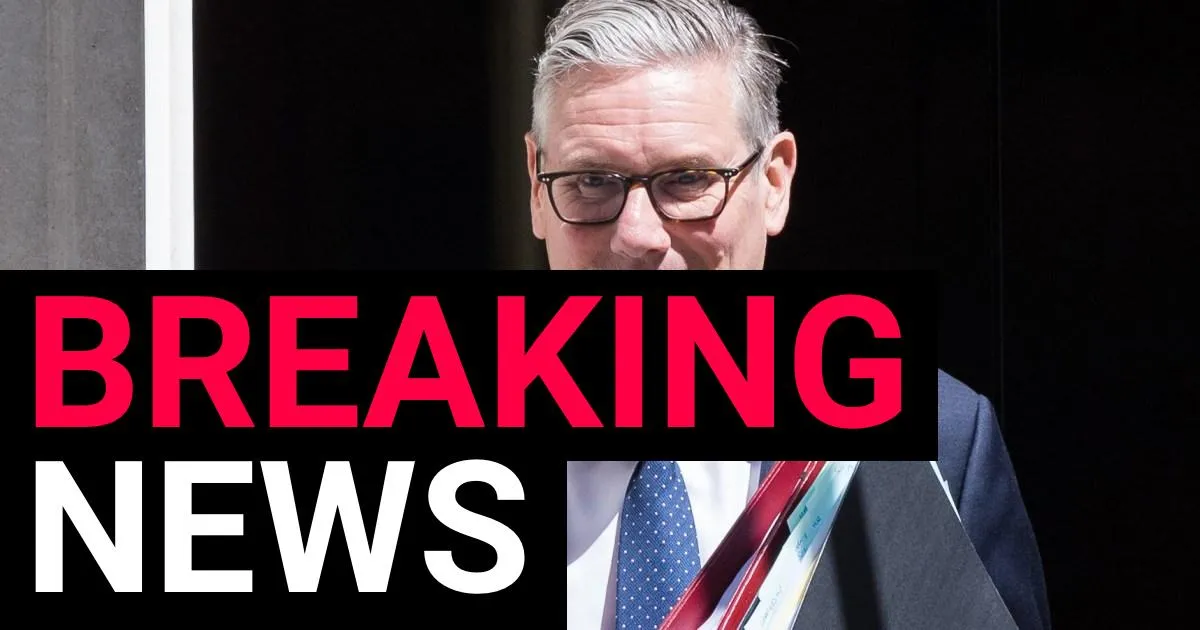
Sir Keir Starmer, the former Prime Minister who stepped down in July after a period of intense scrutiny and mounting criticism of his leadership, has now confirmed he will also leave Parliament. In a quiet but significant announcement made through his local newspaper, the Camden New Journal, Starmer said it was time to “pass the baton to a successor” in his north London constituency of Holborn and St Pancras. The decision will trigger a by-election in a seat that has been his political home for years, and it brings a definitive end to an era in British politics that has seen more turbulence than many could have imagined. Starmer’s resignation as Prime Minister had already reshaped the country’s political landscape, but this latest move carries a deeply personal weight. He is not simply leaving Downing Street; he is leaving the institution that gave him a platform for national leadership. For a man who entered politics with a reputation as a serious, steady-handed lawyer and later became the face of a government, this departure marks the closing of a chapter that began long before he took the highest office in the land.
In his statement, Starmer was careful to frame his next chapter not as a retreat from public life, but as a deliberate turn toward the issues he believes matter most. He said he intends to focus on international affairs, including defence, security, trade and technology, in what he described as a “fast-changing world.” This is a natural fit for a former Prime Minister, whose stature on the global stage remains significant even after leaving office. But he also spoke with genuine feeling about a cause he says has been close to his heart for decades: combating violence against women and girls. “That is an issue that matters to me hugely,” he said, adding that it is work he started long before becoming an MP and is keen to continue long after. It is a deeply human admission, one that reveals a politician who, beneath the policy briefs and parliamentary battles, still carries a personal mission. By pairing the global with the deeply local, Starmer is signalling that his post-Parliament life will not be defined by the controversies of his premiership, but by the values and commitments that first drew him into public service. For supporters, this will be a reassuring note; for critics, it may seem like a convenient reframing of a difficult political legacy.
The timing of the announcement has naturally raised eyebrows. A spokesperson for Starmer had previously insisted that he would serve out the remainder of his term as MP for Holborn and St Pancras, even after his resignation as Prime Minister. That pledge has now been overturned, and Conservative Party chairman Kevin Hollinrake was quick to seize on the reversal. He called it “fitting that his final act as a Member of Parliament is yet another U-turn,” a pointed jab that echoes the broader criticism Starmer faced throughout his premiership. Hollinrake also warned that the decision would lead to a “costly by-election for taxpayers” at a time when Andy Burnham and John Healey, key figures in the current government, are reportedly plotting tax rises on hardworking families across the country. Whether or not that criticism lands fairly, it underscores the political stakes of this moment. By-elections are never just local events; they are national barometers, and every party will be watching the Holborn and St Pancras result with more than passing interest. The fact that this will be the sixth UK Parliamentary by-election of the year only adds to the sense of a political system in constant motion, with each contest carrying its own unique story and its own potential for upset.
Indeed, the run of by-elections this year has already produced a remarkable streak of unpredictability. Every single one so far has been won by a different party, a striking testament to the volatility of the current political mood. The Green Party made history by winning their first ever Westminster by-election in the previously Labour-held seat of Gorton and Denton in February, a result that sent shockwaves through the established parties. In June, the Conservatives managed to beat the SNP in Aberdeen South, proving that even in Scotland, no seat can be taken for granted. Andy Burnham, Starmer’s successor as Prime Minister, won his own by-election in Makerfield, cementing his mandate and entering Parliament for the first time in his new role. Reform leader Nigel Farage held onto his Clacton seat, demonstrating the staying power of his political brand, while the SNP retained the Arbroath and Broughty Ferry constituency. Each of these results tells a different story, but together they paint a picture of a country that is restless, fragmented, and open to change. Against that backdrop, the contest in Holborn and St Pancras is shaping up to be anything but a foregone conclusion, even in a seat that has been solidly Labour for years.
Potential candidates are already circling, and the early signs suggest a lively and unpredictable race. Green Party leader Zack Polanski, who currently serves on the London Assembly, has previously expressed more than a passing interest in Starmer’s seat. In fact, he tied that interest directly to the then-Prime Minister, telling the BBC last year, “It would be very tempting to take Keir Starmer down.” Those words now take on a new resonance, as Starmer prepares to vacate the seat entirely. Meanwhile, the ever-present novelty candidate Count Binface has hinted that he might take a swing at the constituency, fresh off a strong showing in Clacton last month, where he won more than 9,400 votes against Nigel Farage. In a characteristically deadpan post on Bluesky, he wrote, “Can’t get a moment’s peace on this bloody planet.” It is a lighthearted comment, but it reflects the broader truth that by-elections often attract a colourful mix of serious contenders, protest votes, and political outsiders. The presence of figures like Polanski and Binface suggests that this race will not be a quiet, rubber-stamp affair, but rather a contest that could capture the national imagination, especially with the Labour Party desperate to hold onto a seat that has become symbolic of its recent struggles and its hopes for renewal.
Looking at the electoral arithmetic, it is easy to see why the by-election could be competitive. Starmer won a majority of more than 11,500 votes at the 2024 general election, with independent activist Andrew Feinstein finishing second and the Green Party in third. That majority, however, was a shadow of the 27,763 votes he commanded in the 2019 general election, a dramatic reduction that reflects the erosion of Labour’s dominance in the area. The trend continued at a local level: in May’s borough elections, Labour lost 17 seats on Camden Borough Council, though they managed to remain in overall control with 30 seats. The Green Party, meanwhile, gained 10 seats for a total of 11, and the Liberal Democrats added six to reach 10, leaving the council chamber far more fragmented than it once was. These numbers suggest that Holborn and St Pancras is no longer the safe Labour fortress it once appeared to be. Voters are shifting, allegiances are changing, and the next by-election will be a real test of whether the party can hold its ground. For Starmer, though, the immediate future lies elsewhere. He leaves Parliament with a promise to keep working on international affairs and on the fight against violence against women and girls. It is a quiet exit for a man who once stood at the very centre of British power, but it is also a reminder that politics is not always about the loudest moments. Sometimes, it is about the quiet decision to step aside and let someone else carry the baton forward.