
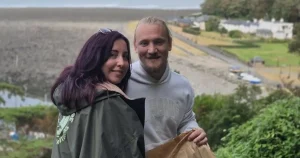

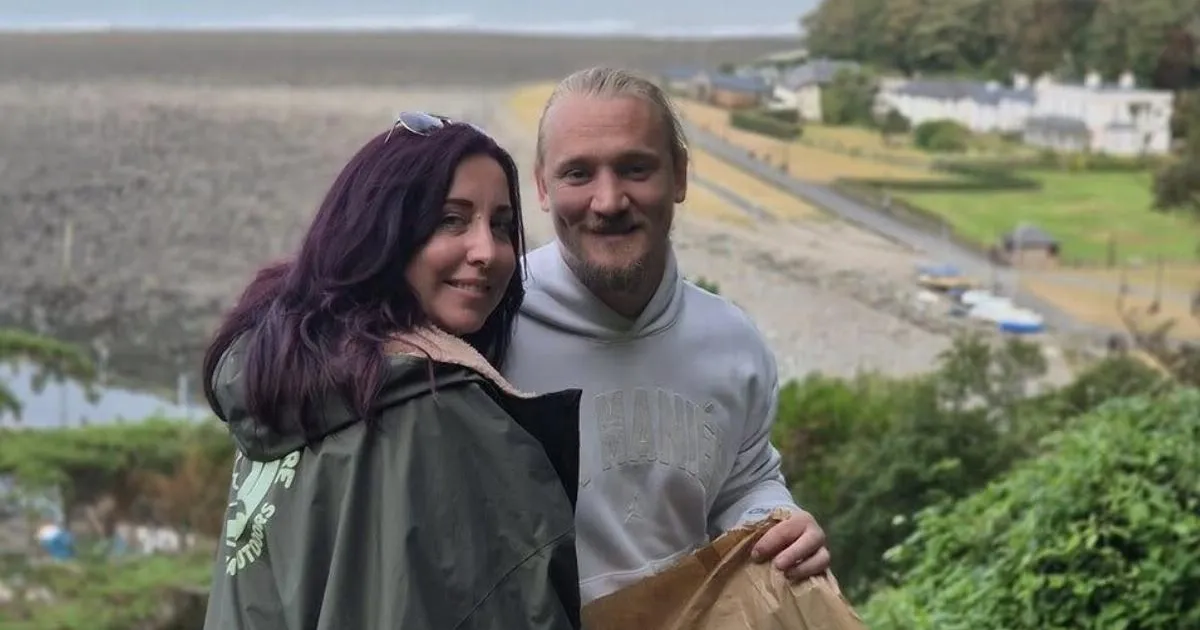
Leanne Gregory had spent her whole adult life loving Nathan Gregory, and he had spent his loving her back. They met as children in infant school, became a couple at fourteen, and grew into the kind of partnership that friends and neighbours looked at with quiet admiration. Twenty-two years after that first childhood connection, they were still inseparable—married for nearly a decade, raising two sons, and looking forward to their tenth wedding anniversary in December. To celebrate early, they booked a family trip to the Bahamas, a place of pillowy beaches and translucent sea, far from their home in Stapleford, Nottinghamshire. The trip was meant to be full of simple joys: watching the boys splash in the water, feeling the sun after an English winter, taking a moment as a couple to honour the life they had built. On Tuesday morning, on the island of Bimini, it turned into every parent’s worst nightmare. A strong riptide caught the two boys and began pulling them out into open water. Leanne, thirty-six, and Nathan both ran in after them without a second thought. The whole ordeal happened in less than ten minutes—from the moment the boys were swept away to the moment Leanne was pulled from the water. She had been sorting out towels and bags on the beach while her children snorkelled in the shallows, never imagining that the calm sea could turn so suddenly. Leanne did everything she could to save her sons. The boys were rescued, but Leanne was pulled from the water unresponsive. Despite Nathan’s desperate attempts to revive her on the sand, she never regained consciousness. She was later pronounced dead at a hospital, leaving a husband and two children to face a world without her. For Nathan, the woman who died was not just a mother or a wife; she was the purest person he had ever known, the foundation of his family, and the girl he had been lucky enough to love since before he could even understand what love meant.
Before the water turned, there had been no sign of danger. The family had been laughing on the beach in Bimini, a tiny slice of paradise in the Bahamas. The boys, young and full of energy, had gone into the shallow water to snorkel, their heads bobbing above the surface as they peered down at the fish and coral. Leanne and Nathan were a little further back, sorting out towels and bags, perhaps chatting about the day ahead. It was the kind of ordinary morning that makes a holiday feel magical. Then the riptide arrived. What seemed like a safe, gentle patch of sea turned suddenly into a conveyor belt dragging the children away from the shore. The boys were in real trouble, and their parents did not hesitate. Leanne surged into the water, fighting the current to get to them. Nathan was close behind. In the desperate minutes that followed, Leanne gave everything she had to her sons. She was strong, determined, and utterly focused on making sure they lived. They did live. Both boys were brought back to safety, but the sea had taken too much from her. When Nathan finally reached Leanne, she was unresponsive. He laid her on the sand and began CPR, pumping her chest and breathing for her, pleading with her to come back. She never did. Emergency responders took her to hospital, where she was sadly pronounced dead. The Royal Bahamas Police Force later confirmed that an autopsy would be carried out, though foul play is not suspected. For Nathan, the memory of those ten minutes remains a blur of panic, love, and helplessness—the moment he realised that his wife, the mother of his boys, was not going to open her eyes again. He has since returned with his sons to their family home in Stapleford, Nottinghamshire, a place now filled with the painful quiet of a missing voice.
Speaking from the shattered remains of his family’s life, Nathan found the strength to put his loss into words. He told the BBC that Leanne was his childhood sweetheart and his soulmate, the person he had been with since he was fourteen years old. He had known her, he said, since infant school—a lifetime that now felt both impossibly long and painfully short. In his tribute, he said, “There are no words I can use to describe Leanne. She was the purest of people, the most generous, kind and beautiful person who ever walked the earth. She was the perfect mother. The perfect wife. The foundation of our entire family.” Their relationship, he said, was perfect. That word distilled the depth of his grief: they had built something rare, something worth saving, and now half of it was gone. Nathan spoke of the pain of losing her as unimaginable, but he also made a point of calling her a hero in life and in death. It was her courage, after all, that had brought their boys back to land. He has vowed to remain strong for his boys, even as he tries to process a grief that feels like a physical weight. In the midst of his own trauma, he also expressed gratitude to Royal Caribbean and Virgin Airlines, saying they had been absolutely incredible and made an impossible journey home so much easier. Such grace, in the face of such devastation, is a mark of the man Leanne chose to build her life with. The couple had spent twenty-two years together, and although that time was nowhere near long enough, it had been filled with the kind of steady, unshakable love that most people only dream of.
In the days since the tragedy, an entire community has rallied around the Gregory family. A GoFundMe page set up to support Nathan and his sons in the aftermath of Leanne’s death had already raised nearly £9,000, with donations flowing in from people who never met her but were moved by her bravery. The money will help with funeral costs, with practical support, and with the long road of grief that lies ahead. In Stapleford, the local community has been struggling to make sense of the loss. Richard MacRae, who represents Stapleford North at Broxtowe Borough Council, spoke for many when he said: “It’s heartbreaking when something tragic happens and people have got young kids involved. It is just a different level. My thoughts and prayers are with the family and friends and the wider community.” The Foreign, Commonwealth and Development Office also confirmed that it was in contact with the local authorities and providing support to the family, a small but crucial reminder that even in the most remote corner of the world, help can arrive. The Royal Bahamas Police Force said an autopsy would be conducted to establish the exact circumstances of her death, while adding that foul play is not suspected. No one who knew Leanne needed an investigation to tell them what kind of woman she was; the way she died, after all, was simply the echo of the way she had always lived—selflessly, instinctively, with a love so deep that it had no room for fear.
Every parent knows the specific terror of losing sight of a child in water. The mind takes a split second to process, and then the body moves before thought can even form. For Leanne Gregory, that split second cost her everything and gave her sons everything. In the roiling chaos of the Bahamas surf, she made a choice that was not really a choice at all. Her children were in danger, so she went in. She did not pause to consider the strength of the current or the risk to herself. She did not weigh her life against theirs. She simply became a wall between them and the sea. That is the kind of love that does not announce itself with words; it announces itself with action. Nathan’s description of Leanne as a hero in life and death captures something essential about her character. She was, by all accounts, a woman who gave herself away generously in the small moments—a warm presence at the school gate, a steady hand in the home, a friend who noticed when someone needed help. Her heroism on that Tuesday morning was not out of character; it was an extension of who she had always been. For her two boys, the grief will be complicated. They will grow up with the knowledge that their mother saved them, and they will also grow up missing her at every milestone, every birthday, every ordinary afternoon. There will be days when that knowledge feels like a burden, and days when it feels like the greatest gift a mother could ever give. Nathan has promised to be strong for them, to carry the memory of Leanne forward, and to make sure they know how much she loved them. It is a promise made in the middle of the worst pain imaginable, and it is exactly the kind of promise she would have made herself.
The Gregory family’s trip to the Bahamas was supposed to end with sun-kissed faces, a plane ride home, and a hundred photographs to keep on the fridge. Instead, it will end with an empty seat at the table, a mother missing from future school plays, and a husband trying to learn how to live with half his heart. There are no words that can make this better, no gesture large enough to fill the space Leanne Gregory leaves behind. But there is also no erasing what she did. Because of her, her sons are alive. Because of her, Nathan still has his children to hold. Because of her, the family she built will continue, even as it grieves. Nathan has said that she was the foundation of their entire family, and in many ways she still is. The courage she showed in the water, the love she poured into every day of her life, the tenderness with which she raised her boys—these things do not disappear when a body fails. They live on in her children’s eyes, in the lessons Nathan will teach them, in the stories that will be told at family gatherings for years to come. The community has already begun to honour her, with donations, prayers, and quiet acts of support. The world is a little dimmer without her in it, but it is also brighter for having held her, even for thirty-six years. Leanne Gregory died a hero, but she lived a hero too—as a wife, as a mother, as the childhood sweetheart who never stopped believing in the power of love. Her anniversary was not spent in the way she had imagined, but it was spent in the arms of the people she loved most in this world, and that love will never fade.