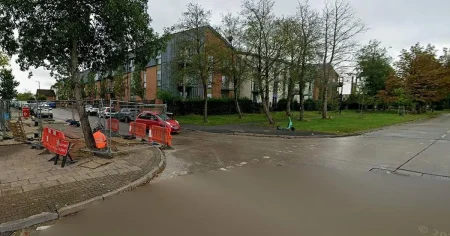


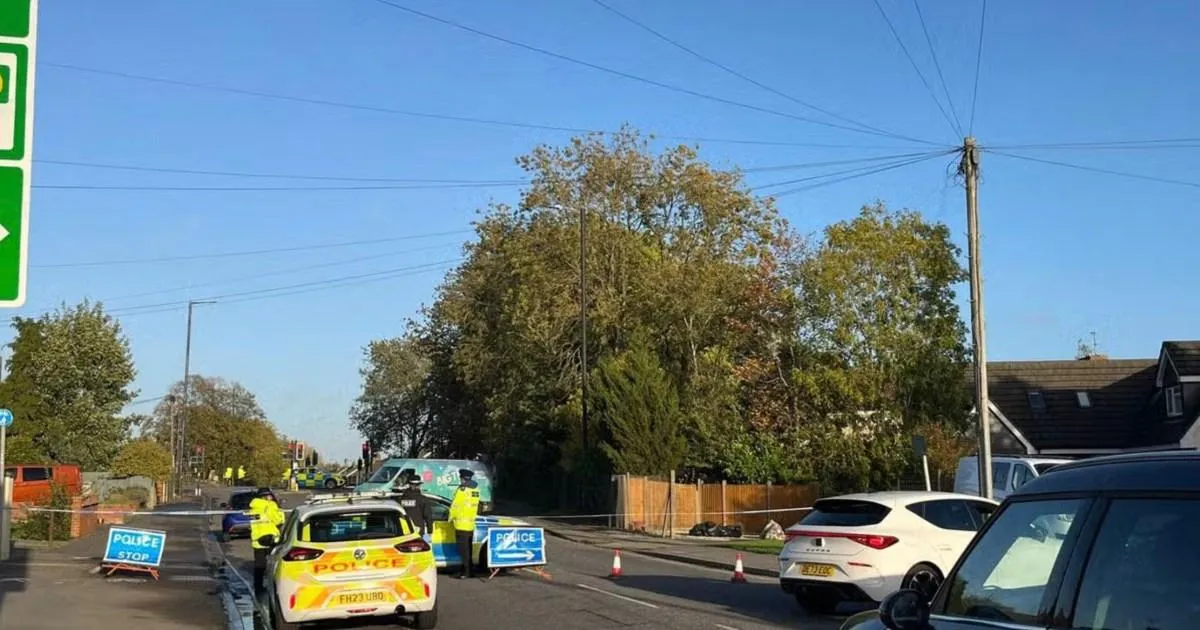
In the quiet, pre-dawn hours of Sunday morning, what began as a police pursuit through the streets of south Bristol turned into a tragedy that no family should ever have to endure. A white Nissan Juke was being followed by officers when it collided with a black Audi S3 on the A37 Wells Road, at the junction with Airport Road and Wootton Park, shortly after 4am. When emergency services arrived at the scene, they found a teenage boy, a front-seat passenger in the Nissan, who had been killed on impact. The night air, once still and calm, was suddenly filled with sirens, flashing lights, and the jagged remains of two cars. In that moment, a life was extinguished, and an entire community was changed forever. It was not just a collision on paper; it was a human being, a child, someone’s son, someone’s friend, someone with hopes and dreams and a future that will never be fulfilled. The roads were likely quiet at that hour, the darkness masking the horror that was about to unfold. But for those involved, the sun would not rise on an ordinary morning. It would rise on a day defined by shock, grief, and countless unanswered questions.
The circumstances surrounding the crash are now under scrutiny, and the investigation has only just begun. The police had been chasing the white Nissan Juke through the southern part of Bristol when the vehicle crashed into the black Audi S3. Two other teenagers who were in the Nissan were also injured and taken to hospital, along with the driver of the Audi. Fortunately, their injuries were described as non-life-threatening, a small mercy amid the devastation. But for one family, there was no such relief. A teenage boy, whose name has not yet been released, died at the scene. The enormity of that loss is difficult to comprehend. He was not simply a victim in a news report; he was a young person with a life full of moments, ordinary and extraordinary, that will now never come to pass. The people who loved him will be left with memories, photographs, and the painful knowledge that they will never see him walk through the door again. And in the aftermath of the crash, another teenage boy, just 17 years old, was arrested on suspicion of causing death by dangerous driving. He had been treated in hospital for his injuries before being discharged and taken into police custody. This arrest does not mean guilt, but it signals that this tragedy is also the beginning of a complex legal process, one that will seek to determine exactly what happened and who is responsible.
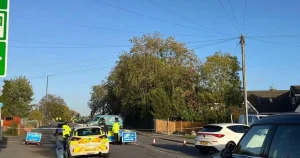
Behind the professional statements and official procedures are human stories, raw and unrelenting. The family of the boy who died has been informed, and they are being supported by specialist officers from Avon and Somerset Police. Those words, “specialist officers,” may sound clinical, but in reality, they mean trained men and women who have to knock on a door in the early hours and deliver the kind of news that shatters a home. They see the grief explode, hear the cries, and stand by as the world stops for a family in a way that no one is ever prepared for. The pain is immeasurable, and it will not fade quickly. A child is not supposed to die before their parents. A life is not supposed to be cut short on a road in the middle of the night. As the morning unfolded, the A37 Wells Road was closed, cordoned off as investigators worked meticulously to piece together the events that led to the crash. Motorists were diverted, traffic was disrupted, and the area became a scene of forensic examination. The road did not reopen until after 4pm on Sunday, a reminder that the investigation was thorough and the aftermath extensive. But for those bereaved, the road will never truly reopen. It will forever be the place where their loved one’s life ended.
Because the death occurred following contact with police, the case has been automatically referred to the Independent Office for Police Conduct, or the IOPC. This is standard procedure, but it is also a crucial part of ensuring accountability and transparency. An IOPC spokesperson confirmed that a mandatory referral had been received from Avon and Somerset Police, noting that the collision involved two vehicles driven by members of the public. They extended condolences to the boy’s family and friends, acknowledging the depth of the tragedy. The IOPC is now assessing the circumstances and will decide whether a full independent investigation is required. This process is essential, not only for justice, but for public trust. When a police pursuit ends in death, it is vital to examine whether proper protocols were followed. Was the chase necessary? Were there alternative ways to intervene? Could this death have been prevented? These are the questions that will be asked in the coming weeks and months. It is a painful and necessary reckoning. The police are meant to protect lives, and when a pursuit ends in such tragedy, there is an unavoidable weight of responsibility. The public will look to the IOPC to conduct a thorough, fair, and transparent inquiry, not just for the sake of procedure, but for the sake of a family that deserves answers.
In the wider context, this tragedy is a reminder of how fragile life can be and how quickly everything can change. Teenagers out in the early hours, perhaps seeking adventure, perhaps just being young, suddenly caught in a chain of events that spiraled beyond anyone’s control. A police car lights up behind a Nissan; a driver makes a decision; a chase begins; and in a split second, lives are irreversibly altered. The boy who died was a passenger, not the driver, which adds another layer of tragedy to the story. He was someone who trusted another person’s driving, someone who never imagined that an ordinary ride would be his last. His death leaves a hole in the lives of everyone who knew him. Friends will grapple with the shock of losing someone their own age. Schoolmates will carry memories of a presence that will now be absent from classrooms and hallways. Parents will have to learn to navigate a world without their child in it. Social media will fill with tributes, candles, and heartfelt messages, but no amount of words cannot fill the silence left behind. The loss of a young person is always uniquely painful because it represents so much potential, so many hopes, so many future moments that will never happen.
As the investigation continues and the legal process moves forward, a community is left to grieve. The 17-year-old arrested in connection with the crash will face the consequences of his actions, should he be found responsible, but nothing will bring back the boy who lost his life. The Audi driver and the other passengers will carry physical scars, and likely emotional ones, for years to come. The police officers involved must contend with the knowledge that a pursuit they were part of ended in death. And the wider public is left with the uncomfortable reality that these tragedies are not just statistics; they are human stories, full of complexity and pain. We must not forget that behind every headline is a family waking up to a nightmare, a mother and father who will never hear their child laugh again, and friends who will forever wonder what could have been. It is easy to judge, to place blame, to demand answers, and indeed, those answers are important. But first, there must be compassion. At its core, this is not a story about police policy or legal procedure; it is a story about a young life lost far too soon and a community refusing to let that life be forgotten. In the coming weeks, the facts will emerge, and someone will be held accountable. But for the family at the center of this sorrow, the only thing that matters is the empty chair at the dinner table, the silent phone, and the heartbreaking reality of saying goodbye. Our hearts go out to the boy’s family and friends, and to all those whose lives have been touched by this terrible event. They deserve nothing less than the truth, and they deserve all the compassion we can offer.