

It was the news no family ever wants to receive, yet after days of clinging to hope, it was sadly the confirmation that many had feared. The body of an elderly man has been recovered from the waters near Largs, a coastal town in the Firth of Clyde, bringing a heartbreaking end to a desperate search that had captured the attention of local communities and ferry passengers alike. The man has been identified by authorities as 82-year-old Jim Withers, a pensioner from Johnstone in Renfrewshire, who was reported missing after boarding a Calmac ferry bound for the Isle of Arran. The discovery was made on Sunday, October 25, off the beach at Largs, and while formal identification is still to take place, police have informed Mr Withers’ family of the development. For those who had been following the story, the news felt like a quiet, solemn conclusion to a frantic and emotional few days in which rescue teams battled difficult conditions and loved ones prayed for a miracle. The incident unfolded during a period of severe weather caused by Storm Boelo, which had already brought chaos and destruction to parts of the UK, and now, tragically, appeared to have claimed another life in the cold, unforgiving waters off Scotland’s west coast.
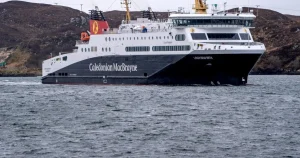
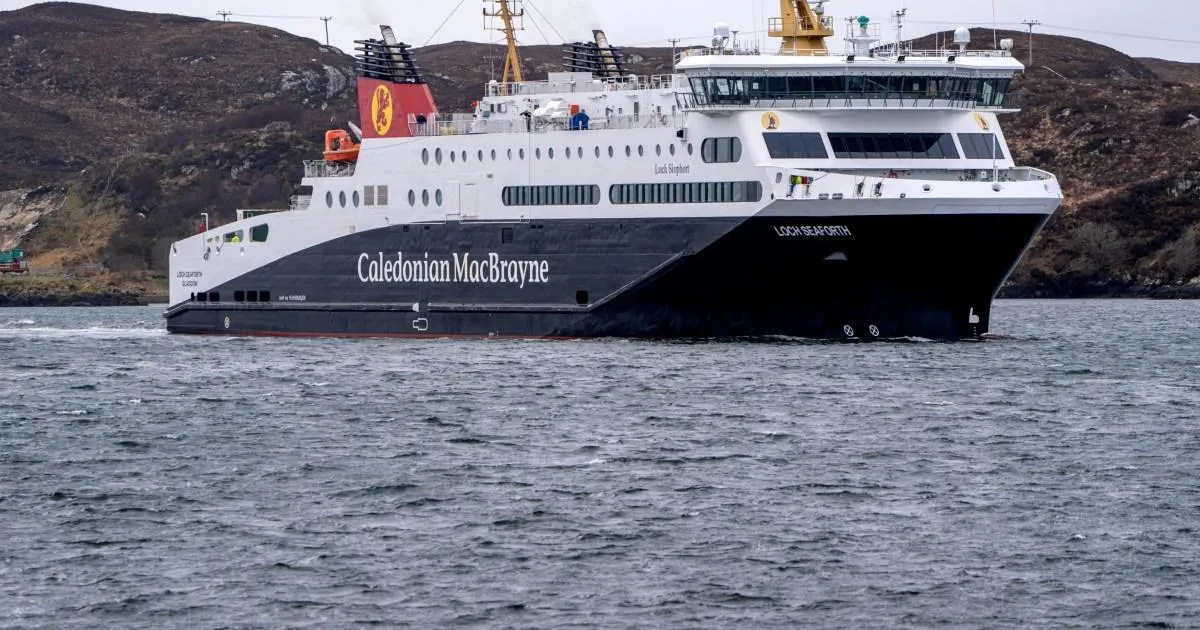
The ordeal began on Friday, October 18, when Mr Withers was reported to have gone overboard from a ferry operating between Ardrossan in North Ayrshire and the Isle of Arran. The vessel, the MV Caledonian Isles, was operated by Caledonian MacBrayne, the lifeline ferry service that connects Scotland’s island communities to the mainland. In the midst of the storm, the sea was rough and conditions were treacherous, making the initial moments after the report particularly urgent. Coastguards immediately launched a major search and rescue operation, dispatching two helicopters, a fixed-wing coastguard aircraft, multiple RNLI lifeboats, and specialist rescue teams to comb the waters. The search stretched through the night and into the early hours of the following Monday, but despite the exhaustive efforts of those involved, no trace of the pensioner was found at the time. At 4.55am on Monday, the coordinated search was officially called off, a decision that must have been devastating for the family, who had already reported him missing from his home in Johnstone. The suspension of a search is never an easy choice, but it is one that reflects the reality of the sea; after a certain point, the chances of survival diminish, and the operation shifts from rescue to recovery. Yet for the family, the uncertainty remained unbearable, and they were left waiting, hoping, and dreading in equal measure.
Then, on Sunday, October 25, police received a report that would bring their wait to an end. A body had been found in the Largs beach area, a stretch of shoreline that sits on the edge of the Firth of Clyde, not far from where the ferry route passes. Officers arrived at the scene, and the recovery was made under the careful supervision of emergency services. Police Scotland confirmed that formal identification had yet to take place, but they had already informed Mr Withers’ family, a deeply painful moment that signalled the tragic end of their search. In a statement, Police Scotland said: “On Sunday, October 25, we received a report of the body of a man having been found in the Largs beach area. Formal identification is yet to take place, however the family of 82-year-old Jim Withers, who was reported missing from Johnstone, have been informed. The death is not being treated as suspicious and a report will be submitted to the Procurator Fiscal in due course.” Those words, while measured and procedural, carry an immense weight for everyone connected to the story. The fact that the death is not being treated as suspicious offers some clarity, but it also reinforces the tragic nature of the incident; no foul play, no mystery, just a terrible accident compounded by the power of the sea. The Procurator Fiscal will now review the circumstances, a standard process in Scotland for unexpected deaths, before any formal conclusions are reached. For now, the community, the crew, and the family are left to process what has happened.
Behind the police statements and official procedure, there was a man with a life, a history, and people who loved him. Jim Withers was 82 years old, an age at which many would expect a quiet, peaceful retirement, not a tragedy in the cold waters of the Clyde. He lived in Johnstone, a town in Renfrewshire that has seen its share of hard times but remains a close-knit community where everyone knows everyone. When news of his disappearance spread, it must have sent a ripple of shock through his neighbourhood. A missing person report had been filed earlier, after he was unaccounted for, and the concern of those who knew him only grew with each passing day. The details of why he was on the ferry that day have not been publicly confirmed, but it is possible he was making a trip to the Isle of Arran, perhaps to visit friends, enjoy the scenery, or simply to take a day out. The trip from Ardrossan to Brodick is one of the most scenic ferry journeys in Scotland, with views across the water to the mountains of Arran. But on that day, the weather turned, and what should have been a routine crossing became something far darker. Caledonian MacBrayne, the ferry operator, issued its own brief statement in the aftermath, saying: “CalMac and the crew from MV Caledonian Isles are assisting Police Scotland and HM Coastguard with an ongoing enquiry regarding a missing person.” It was a carefully worded response, but it hinted at the distress felt by the crew, who would have been confronted with the horror of a passenger going into the water and the helplessness of trying to respond in such conditions.
The human cost of this tragedy extends far beyond the headlines. For the family of Jim Withers, the past week has been an agonising blur of fear, hope, grief, and unanswered questions. They have had to endure the cruel limbo of not knowing, the days spent waiting for news while the search continued and then was called off, and the crushing finality of a phone call from the police. No amount of preparation can soften such a blow. The sudden loss of a loved one is always devastating, but when it happens in circumstances like these, far from home, in stormy weather, and after a public search, the pain can feel even more acute. There is also the impact on the wider community. The crew of the MV Caledonian Isles returned to work after the incident, forced to carry the memory of what had happened alongside the normal routines of sailing and docking. The coastguard teams and RNLI volunteers who spent hours scouring the waves in difficult conditions did so with professionalism and dedication, but such operations leave their own mark on those who take part. They are people with families of their own, who understand that behind every report is a human story. The passengers who were aboard the ferry that day may also carry the trauma with them, remembering the sudden bustle of activity, the announcement, the lowering of lifeboats, and the hope that perhaps their fellow traveller would be found alive. There is a particular kind of sorrow that comes from a search that ends not with rescue, but with a recovery, and the emotional toll ripples outward in ways that are not always visible.
This tragedy also sits against the backdrop of a storm that had already left its mark on the country. Storm Boelo had brought heavy rain, powerful winds, and widespread disruption across the UK, with roads flooded, power lines down, and trees uprooted. In one separate incident, a driver in his twenties became another victim of the storm when a tree crushed his car in London, a shocking loss of life that highlighted the ferocity of the weather. Entire communities were submerged, thousands of homes were left without electricity, and travel was thrown into chaos. In the midst of all this, the disappearance of Jim Withers was a stark reminder that storms are not just an inconvenience; they are a genuine threat, especially to the vulnerable. The sea, already unpredictable, becomes a far more dangerous place when the wind howls and the waves rise. It is perhaps impossible to know exactly what happened on that ferry, whether Mr Withers slipped, whether a sudden movement of the vessel caught him off guard, and whether he was overcome by the cold before anyone could reach him. What is clear is that his final hours were spent in one of the most beautiful yet formidable landscapes in Britain, and that his passing has left a void in the lives of those who knew him. As the community in Johnstone, the ferry crews, and the emergency services begin to come to terms with what has happened, there will also be a quiet determination to remember him not just as a victim, but as a person. A husband, a father, a grandfather, a friend, an 82-year-old man who may have simply been trying to enjoy a day out in the Scottish islands. In the coming weeks, there will be tributes, flowers, and messages of condolence, but above all, there will be the quiet reminder of how precious and fragile life can be. The sea that gives the islands so much of their beauty and character can also take what is most treasured, and in the wake of this tragedy, the waters of the Firth of Clyde feel a little colder, and the memory of Jim Withers will linger for a long time to come.