

There are stories that stop you cold, and this is one of them. In the quiet, unremarkable setting of El Bacho, a small district in Argentina’s Santiago del Estero province, a ten-year-old girl’s childhood has been violently fractured in a way that no medical report, court ruling, or news headline can fully capture. Police have arrested a 33-year-old man, the girl’s stepfather, on suspicion of sexually abusing her. The abuse only came to light in the most harrowing way imaginable: the child was taken to a local hospital because she complained of stomach pains, and doctors delivered a devastating, almost surreal diagnosis. She was six months pregnant. The girl, whose identity has been protected, is not a statistic, not a footnote, not a distant case study. She is a child who should have been worrying about schoolwork, friendships, and playground games, not the terrible weight of adult violence and its consequences. The alleged perpetrator was lodged in her own home, the very place where she should have felt safest, and the betrayal cuts so deep that it is hard to find language strong enough to describe it. As the details emerge, they demand not just outrage but a painful reckoning with how such suffering can remain hidden, even from those who are closest.
The sequence of events leading to the discovery reads like a nightmare wrapped in the ordinary rhythms of daily life. At first, there was nothing dramatic, no visible injury, no confession, no obvious sign that something unspeakable was happening behind closed doors. The little girl began to feel unwell, complaining of pains in her stomach and chest, the kinds of aches that any child might have. Her mother, presumably trying to do the right thing, took her to Hospital de Transito Colonia Dora in Santiago del Estero, a place where one expects reassurance and treatment, not catastrophe. But when medical staff examined the child, they found something that completely rewrote the meaning of her symptoms. She was already in an advanced stage of pregnancy, roughly six months along, a fact so incongruous with her age and her body that it seems almost incomprehensible. The hospital staff’s suspicion was reportedly heightened when the mother mentioned that her daughter had not had a period in some time. What might have been dismissed as a hormonal irregularity or a digestive problem became an unmistakable, horrifying truth. For a ten-year-old, pregnancy is not a normal biological possibility; it is an alarm bell that screams of sexual abuse, coercion, and an adult’s unspeakable betrayal. The medical exam did not just reveal a physical condition. It revealed a hidden crime and a long, agonizing ordeal that the child had been carrying alone.
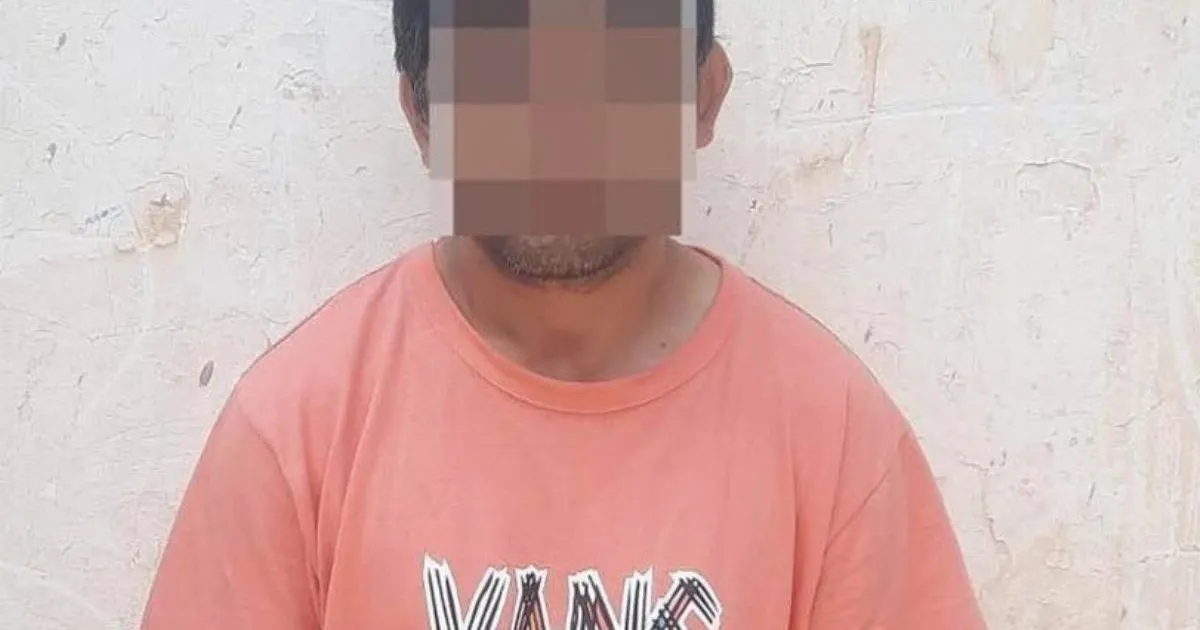
Once the truth emerged, the machinery of law enforcement moved quickly, though it could never undo the years of harm. Police sources confirmed to local media that the child had been subjected to sexual relations with her stepfather at the family home, and officers subsequently arrested the 33-year-old suspect at the same house where the alleged abuse reportedly took place. They also seized his mobile phone, a detail that raises the grim possibility that investigators are examining digital evidence for more crimes, more victims, or a record of the abuse itself. The arrest is a necessary step toward accountability, but it also underscores a brutal irony: the person entrusted with a role of care and protection is now the person in handcuffs. The home, once the backdrop for family life, has become a crime scene. The man who allegedly committed these acts is now facing the weight of the law, and yet the true weight will continue to fall on the shoulders of a ten-year-old girl whose childhood is gone. She will have to navigate pregnancy, trauma, recovery, and the impossible question of what comes next, all while the world around her tries to process the same shock. For now, the legal process may provide some sense of justice, but no sentence can restore what was stolen from her, and no verdict can give her back the innocence that was so cruelly taken.
Perhaps the most heart-wrenching layer of this story involves the victim’s grandmother, who has spoken publicly about her own fears and their tragic origins. In an interview with local media, the grandmother said she had warned her daughter, the girl’s mother, about the danger of leaving the little girl alone with her stepfather. She explained that the man, who had met her daughter over the phone, could not be trusted. That warning was not born of paranoia or prejudice; it was born of personal experience. The grandmother herself had been sexually abused when she was eight years old. She knew, in a way that only a survivor can, what predatory adults look like, how they groom, how they manipulate, and how they position themselves to gain access to vulnerable children. And she voiced that knowledge, trying to protect her granddaughter with the wisdom of lived trauma. Yet despite her warning, the abuse still happened. That is not her fault, nor is it the mother’s fault in any absolute sense, because the blame belongs entirely to the abuser. But the grandmother’s story reveals something deeply painful about intergenerational trauma: the wounds of abuse do not simply heal and disappear. They echo forward, and sometimes, even when survivors try to break the cycle, the system and the people around them fail to act in time. The grandmother recognized the danger, but recognition without intervention could not stop a manipulative adult who was already entrenched in the family’s daily life.
Equally disturbing is the reaction of the girl’s teacher, who expressed shock that the victim had never shown any outward signs of distress. In a statement to reporters, the teacher described the girl as quiet and diligent, someone who did her homework and never caused trouble. She said she had never noticed strange behavior, never witnessed a meltdown, never heard a complaint about her stepfather. This is a common and tragic reality in cases of child sexual abuse. Abusers deliberately groom their victims into silence, and victims often develop coping mechanisms that make them seem fine, calm, or even unusually compliant. A quiet child is not necessarily a healthy child. A child who never makes a fuss may be a child who has learned that making a fuss is dangerous, or that no one will believe her, or that the best way to survive is to disappear into the background. This is not a failure of the teacher, who clearly cared, nor is it a failure of the school itself. It is a failure of the broader adult world to recognize that abuse often lives in the silences, in the unremarkable, in the very ordinariness that makes predators so successful. Teachers and school staff are often the most likely people to see vulnerable children regularly, but they need training, resources, and support to see beyond the surface and to ask the questions that feel uncomfortable.
This case, for all its specific horror, is not an isolated tragedy. Around the world, children are abused in their own homes by people they know and love, and the abuse continues because it is hidden in plain sight. The pregnancy of a ten-year-old girl is not just a medical emergency; it is a moral indictment of every system that claims to protect children. It forces us to ask hard questions: How many other children are suffering silently right now? What happens when a grandmother’s warning is too vague to act on, when a school’s observation is not enough, when a doctor’s knowledge is not matched by the family’s understanding? The answer is not to assign blame to the victims or their families, but to strengthen the safety nets around them. We need to listen to survivors, and to those who suspect abuse, with more seriousness. We need to educate children about bodily autonomy and consent in age-appropriate ways, so they know that no adult has the right to touch them in secret. We need to support families with mental health services, social workers, and safe housing options, because poverty and isolation often make it easier for abusers to operate. And we need to look at the case of this little girl in Santiago del Estero and demand that her story lead to change, not just headlines. Her life is forever altered, but she is still a child, and she deserves a future in which she is believed, protected, and helped. In the end, the only meaningful response to this horror is a fierce, collective determination that no child should ever have to endure such betrayal again.