


Paragraph 1
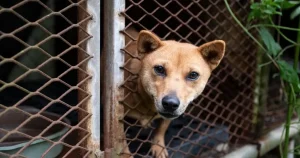
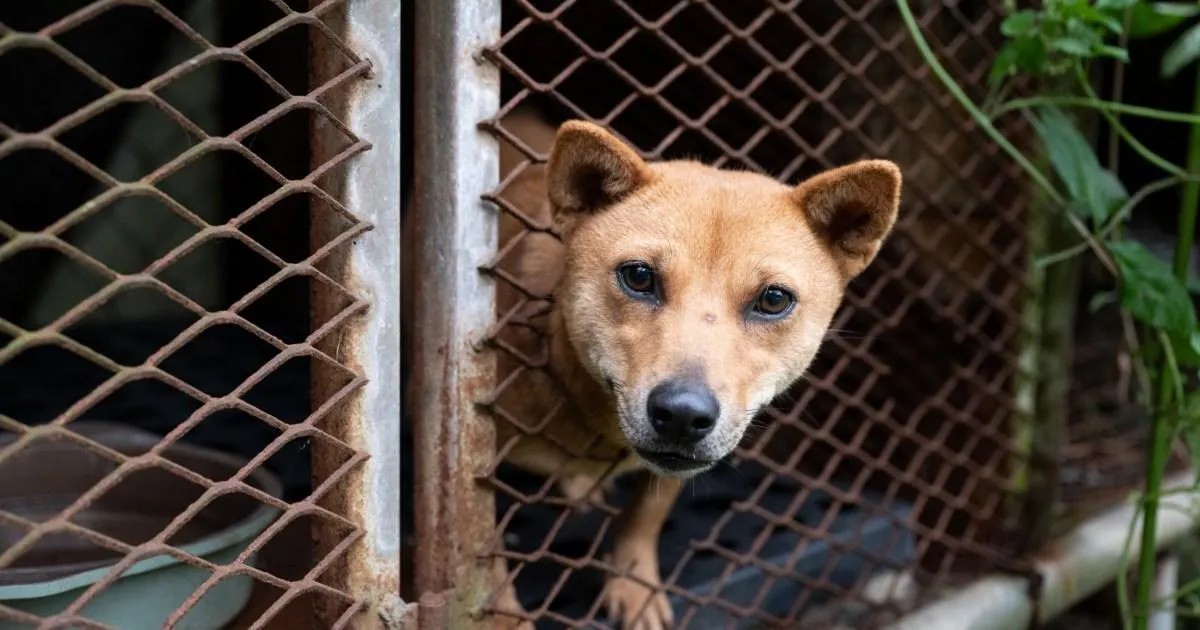
For Sangkyung Lee, the moment never gets old. There is something profound about reaching through the bars of a rusted, filthy cage, extending a hand toward a frightened dog, and watching suspicion slowly give way to a tentative sniff. In recent months, those moments have come in rapid succession, as Humane World for Animals Korea carried out what may be its last large-scale rescue from South Korea’s collapsing dog meat industry. The ban on breeding, slaughtering, and selling dogs for human consumption is set to take effect in February 2027, and Lee, the campaign manager for the animal welfare organization, has been standing in the muck of farms that have operated for decades, coaxing survivors into freedom. “It was an amazing feeling to get these dogs out of their filthy cages, never to be confined ever again,” he says. “At the same time, it’s heartbreaking to know that these dogs are among the last survivors rescued from this cruel industry.” That mixture of relief and grief defines the final chapter of an industry that has tortured countless animals in the shadows of a rapidly changing society. The rescue at the Gangjin farm, a site hidden between rice paddies on the southwestern tip of South Korea’s coast, was both a triumph and a reminder of how much suffering had been allowed to persist for so long. For twenty years, that farm had operated with almost no public awareness, its rusty cages stacked in neat rows, its wire floors cutting into the paws of dogs who had never known grass. When the rescue team arrived, they were greeted by a cacophony of barking, by tails wagging nervously, by eyes that had learned to expect nothing but hunger and fear. Yet instead of another day of neglect, the dogs met people who had come to take them away, to break the cycle, to offer them a future that extended beyond the next meal and the inevitable final journey to a slaughterhouse.
Paragraph 2
The Gangjin farm was not an anomaly; it was a monument to a painful history. At its peak, it held a thousand dogs, and its owner was brazen enough to drive through the surrounding countryside with a loudspeaker, asking locals to sell him their unwanted pets. Hundreds of animals passed through those gates every year, bound for electrocution and then for restaurant tables, where their bodies were flogged as a culinary tradition. The farm was so hidden, so unremarkable from the outside, that passersby would never have guessed what lay at the end of the dirt track. Wendy Higgins, director of international media relations at Humane World for Animals, described the scene as an “utter hell for dogs.” At the end of one row of rusted cages lay a dog skeleton, the floor beneath it littered with collars, syringes, and jaw bones. There were large vats of rotting duck heads, food that was both insufficient and grotesque. The dogs themselves were malnourished, with sore paws from balancing on metal wires, their bodies bearing the scars of years of neglect. Dog meat has been part of South Korea’s culinary history for generations. Bosintang, meaning “soup good for your body,” became a common dish after the Korean War, when meat was scarce and people looked for ways to restore their strength. Summer was peak season, with diners, typically elderly, seeking the soup’s supposedly restorative properties. The economics of the industry were stark: in July, dog meat cost about £45 per kilogram, more than double its winter price of £17. At the time of the ban’s passage, there were nearly six thousand dog meat businesses in the country, including more than fifteen hundred farms, over two hundred slaughterhouses, and thousands of restaurants and traders. For the animals trapped inside that system, the numbers were not statistics; they were a sentence. Every year, millions of dogs were born into concrete cages, fed just enough to survive, and killed at a fraction of their potential lifespan, their existence reduced to a commodity. The campaigners who walked through the Gangjin farm understood that better than anyone. They could not unsee the skeleton, the syringes, the desperation in the dogs’ eyes. But they could also see that the industry was dying, and that they were witnessing the last breaths of a practice that South Korea was finally ready to abandon.
Paragraph 3
The turning point came in 2024, when South Korea’s National Assembly passed a landmark law banning the breeding, slaughtering, and sale of dogs for human consumption. The law was not simply a piece of legislation; it was a cultural declaration. More than nine in ten South Korean adults said they had no interest in eating dog meat, and the shift in public sentiment had been building for years alongside growing pet ownership and generational change. Under the new law, anyone who butchers a dog faces up to three years in prison or a fine of about £16,000. The ban does not take full effect until February 2027, giving those in the industry time to transition, but the trajectory is already clear. Eight in ten dog farms have closed since the law was passed, their owners either exiting the trade or finding other ways to make a living. Yet the rescue effort has barely scratched the surface of the animals left behind. Only 0.3 percent of the dogs still living on meat farms have been rescued, a number that reveals how enormous the remaining challenge is. Julie Sanders, director of End Dog and Cat Meat at Humane World for Animals, acknowledges that a few farms will likely continue operating illegally even after the ban takes effect. But she also expresses confidence in the authorities’ commitment to finding them and shutting them down. “There is a real sense of momentum to get rid of this industry and embrace dogs as friends, not food,” she says. That momentum is not just about enforcement; it is about changing the way people see animals. For decades, dogs on meat farms were invisible, hidden from the urban middle class, tucked behind rice paddies and down narrow roads. The ban has forced the country to look at them. The rescues, the photographs, and the stories have made it impossible to pretend that the dogs are not individuals with personalities, fears, and capacity for love. The Gangjin farm’s seventy survivors became symbols of that transformation, their filthy cages dismantled, their future rewritten. But the work is not finished, and the campaigners know that every dog left behind is a life that may still be lost.
Paragraph 4
The seventy dogs rescued from the Gangjin farm were a study in diversity: a German shepherd, corgi mixes, a husky mix, spitz mixes, and Korean Jindos, all crowded into cages that had never been cleaned properly. Some were young, others old, but all had known the same bleak routine of waiting. They were the fortunate ones, the last survivors of a farm that had once processed a thousand dogs a year. The owner of the farm agreed to relinquish them to Humane World for Animals and vowed not to sell dog meat again. It was a small victory, but it was also a profound one. The dogs were malnourished, sore, and terrified, but they were alive, and they would never see a slaughterhouse. Their journey, however, was not over. After the rescue, they were to be flown to the United States and Canada, where they would be put up for adoption. They would learn to walk on grass, to sleep in warm homes, to trust human hands for reasons other than fear. For the rescuers, saying goodbye was bittersweet. They had pulled the dogs from the brink, but they could not keep them all, and they could not help but think of the thousands who had come before, who had passed through the same cages and met violent ends. Wendy Higgins described the haunting thought that follows every rescue: “I wish we had discovered this place sooner and we could have saved more lives. That thought always haunts me.” It is the burden of rescue work, the knowledge that for every dog saved, there are countless others who were not. Yet the survivors carry with them the proof that change is possible. They are not abstract causes; they are individuals with names and personalities, with quirks and fears and the capacity to heal. In the midst of the grim discovery at Gangjin, the rescuers found moments of connection, the nervous sniff of a hand, the tentative wag of a tail, the quiet recognition that after years of neglect, someone had finally come. Those moments did not erase the horror, but they gave it meaning. The dogs would not just survive; they would live.
Paragraph 5
The campaigners are careful not to blame the people of South Korea for eating dog meat, and their empathy is part of what makes their work so powerful. Wendy Higgins draws a comparison to the average British consumer, who has never set foot inside a factory farm and yet still eats meat, dairy, and eggs. The dog meat industry was not born out of cruelty alone; it was born out of poverty, scarcity, and tradition. The men and women who raised dogs for slaughter were often poor, scraping together a living in a rural economy that offered few alternatives. Blaming them would only deepen the divisions that make change harder. Instead, the animal welfare movement has focused on shifting the center of gravity, changing laws, changing public perception, and offering pathways out of the industry. The fight in South Korea is part of a larger global struggle. Millions of dogs are killed each year for their meat in Cambodia, Vietnam, and Indonesia, and Higgins hopes that governments elsewhere will follow South Korea’s lead. The passage of the ban is proof that cultural traditions can evolve, that a country can honor its past while building a more compassionate future. It is also proof that animal welfare is not a luxury of the wealthy; it is a moral imperative that can take root anywhere. The rescuers understand that systemic change is messy and slow, that some farms will go underground, and that some animals will slip through the cracks. But they also understand that every victory matters, every farm closed is a small wound healed, every dog saved is a life that mattered. They do not romanticize the work. They know that the dog meat industry will still see canines as produce, as products to be bought and sold, as bodies to be consumed. But the Gangjin dogs are no longer part of that worldview. To the people who pulled them from their cages, they are not produce; they are individuals with names and stories.
Paragraph 6
In the end, the story of the Gangjin dogs is not just a story about a ban or a policy or an industry in decline. It is a story about the human capacity to change, to look at a culture with clear eyes and still find the courage to make it better. The campaigners who walked through that farm carried with them the weight of what they had seen. They carried the skeleton, the collars, the syringes, the rotting duck heads, and the memory of barking dogs who had been forgotten by the world. But they also carried hope. They looked at the nervous canines and saw Prince and Coco, Nara, Lola, Ranger, Julie, Patches, and Oreo. They saw lives that mattered, not because they were useful to humans, but simply because they were lives. When Higgins thinks of the awful deaths the dogs would have had if the rescue had not come, she cries. The tears are not a sign of weakness; they are a sign of how deeply she cares. And that care is the engine of change. It is what drives people to spend their careers in filthy cages, to plead with farm owners, to fly dogs across the world in search of loving homes. It is what makes the difference between simply passing a law and actually transforming a society. The ban on dog meat in South Korea will not undo the pain of the millions of dogs who died before it was passed. It will not erase the silence of the dogs who never got a name. But it will ensure that the next generation of dogs in South Korea will never know the horror of a wire cage. It will ensure that children will grow up seeing dogs as family members, not as food. The Gangjin farm is closed now, its cages dismantled, its dogs scattered across the globe, learning to trust again. For Sangkyung Lee, for Wendy Higgins, for everyone who worked to make that moment possible, the feeling is both amazing and heartbreaking. It is amazing to see justice finally arrive. It is heartbreaking to know that it arrived too late for so many. And yet, as the survivors settle into their new lives, they carry with them the quiet proof that love, patience, and persistence can overcome even the darkest corners of human cruelty. The dogs are free. And so, in a way, are the people who saved them.