


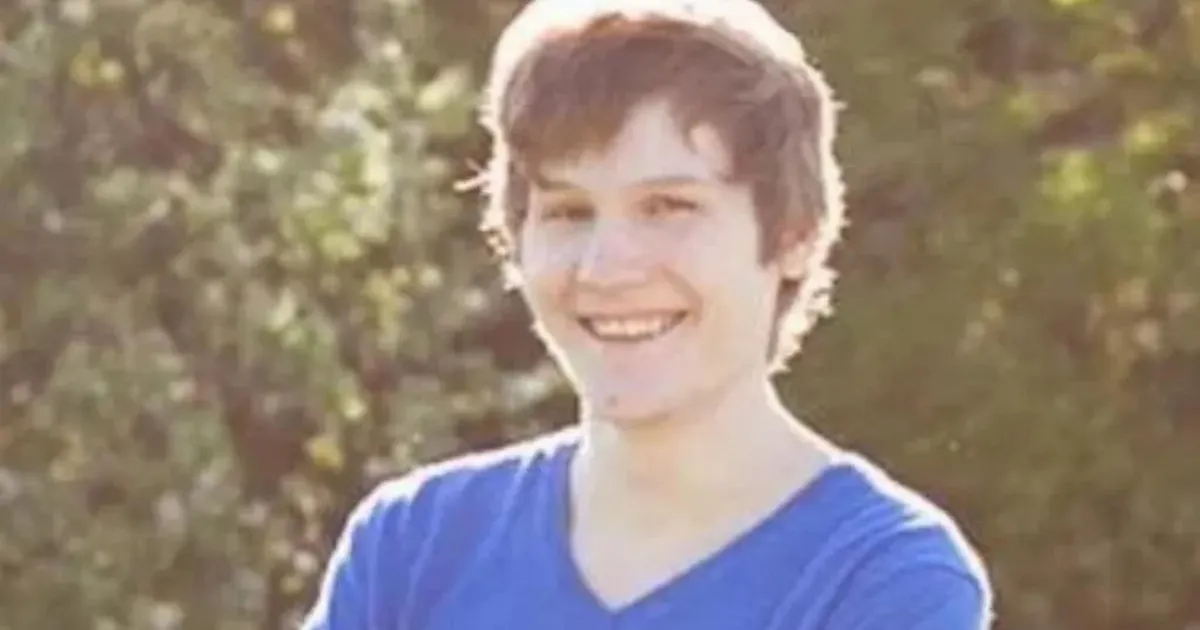
On an unassuming Tuesday in the small Bavarian village of Breitbrunn am Chiemsee, the kind of place where life usually moves in quiet, predictable rhythms, the silence was shattered by the sound of sirens. Emergency services were called to a residential property after reports of a fire in the attic, and what they found there would soon send shockwaves far beyond the village borders. The body was identified as Manuel Otto, the creator of the iconic mobile app Stick Run, a game that had been played by more than 43 million people around the world. But the full horror of the situation did not stop at a tragic death. News rapidly emerged that Manuel had been livestreaming on Twitch, the popular streaming platform where he had shared parts of his life with fans, and that he had taken his own life while the broadcast was live. The gaming community, and especially the young people who had grown up with his game, was left reeling. Here was someone who had brought so much joy, so much playful distraction, so many hours of simple fun to millions, and yet he had been carrying a pain so deep that it ultimately overwhelmed him. The tragedy felt impossible to comprehend, not only because of its suddenness, but because it came from a man who had built his life around creativity and connection. The same digital world that allowed him to reach millions of players also became the stage for his final, heartbreaking act.
The details of the incident are as painful as they are difficult to untangle. After emergency teams arrived at Manuel’s property and brought the fire under control, the true nature of the situation began to emerge. Twitch, the streaming platform on which the tragedy unfolded, acted quickly to remove the footage from its site, but for those who had watched, the damage was already done. Some of those viewers were young fans who had tuned in expecting to see a game, a conversation, perhaps a moment of light entertainment. Instead, they witnessed something unspeakably dark. Twitch later issued a short statement saying, “What took place is horrible, and the mental health and wellbeing of our community matters deeply to us. We encourage anyone who may be struggling to seek support.” Those words were necessary, but they also felt hollow in the face of such an event. No statement can erase the memory of watching a person vanish in real time. No policy can undo the confusion and grief felt by a generation of young players who suddenly found themselves confronting questions about life, death, and suffering. Manuel’s colleagues, too, were left in a state of shock, trying to process the loss of someone who had been not only a professional partner but also a friend. The grief was raw, public, and profoundly human, and it became clear very quickly that this was not just a story about a game developer. It was a story about someone who had given so much to the world and had been unable to accept the same kindness from himself.
To understand the weight of this loss, it is necessary to remember what Manuel Otto actually created and what it meant to the millions of people who played his game. He was only fourteen years old when he designed Stick Run, a game that looked deceptively simple but became a cultural touchstone in the mobile gaming world. Players guided a stick figure as it sprinted forward, jumping over obstacles, sliding under barriers, and trying to survive as the speed increased and the patterns became more challenging. There were no flashy graphics, no complicated storylines, no in-app purchases designed to squeeze money out of impatient children. There was just a stick figure, a running animation, and a nearly hypnotic rhythm that invited players to try again, fail, and try again. That simplicity was the genius of it. It was accessible to anyone with a smartphone, and it became a beloved pastime for children and adults alike. For many, Stick Run was not just a game; it was a memory of passing a phone back and forth with friends, of trying to beat a high score on a long car journey, of feeling that small thrill when the little stick figure slid under a block at the very last second. And knowing that this game was made by a teenager made it even more inspiring. Manuel was proof that a great idea could come from anywhere, that a kid with a computer and a spark of imagination could touch the lives of tens of millions. His success was a dream realized, and yet it also became a kind of cage. The public celebrated the game, but few knew the person behind it—and fewer still knew how much he was struggling.
In the days following his death, the tributes began to pour in, and none were more heartfelt than those from the people who had worked closest with him. Manuel’s colleagues released a statement filled with sorrow, writing, “It is with a heavy heart that we confirm and announce the passing of our creator, developer, and fellow Stick Runner, Marc-Manuel Alexander Otto.” There is something deeply moving in the choice of words. They called him by his full name, Marc-Manuel, as if to remind the world that he was more than a brand or a founder. They called him a “fellow Stick Runner,” a title that captured the way he saw himself in relation to his community. He was not someone who stood above his players, dictating trends and counting downloads. He was someone who ran alongside them, shared in their struggles, and understood the joy of the game from the inside. His team’s tribute was not the language of a corporate press release; it was the language of grief. It spoke of a friend, a mentor, a creative spirit who had poured himself into his work and who had been loved in return. They also acknowledged, with heartbreaking honesty, that Manuel had “appeared to take his own life” during the livestream, confirming what everyone had feared. There was no comfortable way to say it, no way to soften the truth. The person they had worked with, laughed with, and built something special with was gone. And as the tributes multiplied online, every message was a small reminder that while the game had reached millions of players, only a handful of people had truly known the man behind it.
This tragedy forces a broader conversation about mental health, especially among the creators who fill our digital lives with entertainment. On platforms like Twitch, there is an unspoken pressure to appear energetic, grateful, and endlessly positive. Streamers are expected to show up regularly, perform consistently, and interact with their audiences as though every day is a good day. The result is a strange and often exhausting paradox: people can be surrounded by viewers, commenters, and followers, and still feel completely alone. Manuel’s death, broadcast live to a screen full of usernames, is the most painful possible illustration of that isolation. He was not invisible; he was watched by many. But being watched is not the same as being seen, and being visible is not the same as being held. Twitch’s message encouraging anyone who is struggling to seek support was important, but it also highlights how much more needs to be done. Platforms must do more than remove harmful content after the fact; they must build real systems of care, clear hotlines, and live intervention tools that can help someone in crisis before it is too late. More importantly, communities must learn to look beyond the performance. The people who entertain us, who make us laugh, who create the games we love, are human beings first. They can be tired. They can be sad. They can be struggling in ways that no emoji or status update will ever reveal. It is not enough to simply say that mental health matters; we have to prove it by checking in on the people around us, by asking real questions and listening to real answers, and by making sure that no one has to suffer in silence.
In the end, what remains is the game and the memory of the person who made it. Stick Run will likely continue to be downloaded and played, its simple stick figure still running, still jumping, still sliding through a world of obstacles that change and shift and never stop coming. There is a strange symbolism in that image: a small, drawn figure, constantly in motion, facing challenges that seem designed to trip it up, yet always moving forward. Manuel Otto created that figure when he was just fourteen years old, and in some ways, he put a piece of himself into it. The stick runner never gives up, even when the next obstacle feels impossible. But Manuel, the human being behind the creation, reached a point where he could not keep running. His death is not a lesson and it is not a metaphor; it is a real and tragic loss. It is a loss for his family, his friends, his colleagues, and for the millions of players who grew up with his game. It is also a reminder that we can never truly know what someone else is carrying. The brightest smiles often hide the heaviest burdens, and the people who bring the most light into our lives may be living in the darkest shadows themselves. If Manuel’s story can do anything, let it encourage us to be gentler with one another, to pay attention to the quiet signs, to reach out to those who might be struggling, and to remember that help is always available. He gave the world a game that brought joy to millions. The least we can do is make sure that the people who create such joy know they are not alone.