

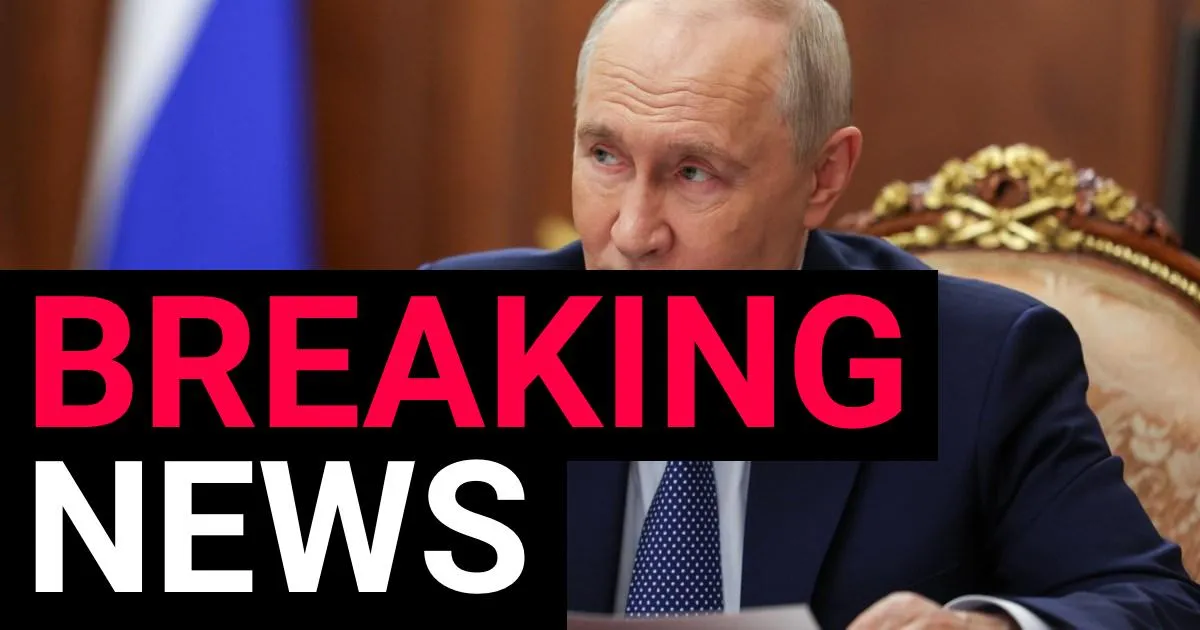
1. After months of deadlock, bloodshed, and diplomatic paralysis, a quiet but significant signal has emerged from Moscow: Vladimir Putin has agreed, at least in principle, to sit back down at the negotiating table with Washington and Kyiv. The Kremlin’s foreign affairs adviser, Yuri Ushakov, confirmed that the Russian president is willing to resume talks after November 10, with the stated aim of ending the war in Ukraine. It is not a ceasefire yet, not a peace treaty, not even a formal commitment—but it is the first crack in the wall of refusal that has defined much of the past several years. For the millions of Ukrainians who have lived through air raid sirens, power cuts, and the constant ache of loss, the news arrives like a distant rumble of thunder: something is changing in the air, even if no one knows whether the storm will pass or simply shift direction. The announcement also carries a distinctly political undertone. Donald Trump, who has repeatedly promised to end the war quickly, has been pushing Kyiv to make a deal. Putin, in turn, has publicly thanked Trump and his envoy, Steve Witkoff, for their efforts. What all of this means in practical terms remains unclear, but the very fact that negotiations are being discussed again—openly, with names, dates, and frameworks—marks a departure from the long, bitter silence that followed the full-scale invasion. For ordinary people, the word “negotiations” is both a lifeline and a warning. It offers the possibility of an end to the horror, but it also raises the terrifying question: at what cost, and whose sacrifice will be written into the fine print?
2. The details of the proposed talks, as described by Ushakov, are as ambitious as they are vague. The focus, he said, will be on “building a security system for Russia and Ukraine after the conflict ends.” That phrase is a diplomatic mouthful, but it speaks to a deeper truth: this is not just about stopping the shooting. It is about what comes after—the architecture of safety, the guarantees, the borders, the alliances, the painful compromises that will define the next generation of European security. For Ukraine, a “security system” must mean real, enforceable protections against future Russian aggression. For Russia, it means some form of recognition and reassurance that NATO’s eastward expansion will not reach its borders. For Washington, it means finding a way to declare victory without abandoning Kyiv entirely. These are not small questions, and they cannot be solved in a single three-hour meeting. But the fact that they are now on the table, according to the Kremlin, suggests that both sides are at least willing to talk about the shape of the world after the war, rather than simply trading artillery fire and accusations. The involvement of Trump is crucial here. He has long styled himself as a dealmaker, someone who can cut through bureaucracy and hostility with sheer personality. Whether that style translates into a durable peace is another matter entirely. But the choreography is unmistakable: Putin thanking Trump, Trump pushing Zelensky, Witkoff shuttling between capitals—this is a negotiation being built around personal relationships as much as national interests. And in a conflict that has already cost tens of thousands of lives, the prospect of leaders finally speaking to each other is at least a flicker of humanity in a landscape of ruins.
3. Perhaps the most surreal moment of this new diplomatic push came when Steve Witkoff, Trump’s envoy, looked at Vladimir Putin and told him he was a humanitarian. “You talk so much about my president, President Trump, being the humanitarian. You are, you are humanitarian also, sir, and I salute that. I commend you.” The words hung in the air, a strange and uncomfortable compliment delivered in the middle of a war that has seen entire cities flattened and families torn apart. For many observers, the scene was jarring—an American official saluting the man who ordered the invasion, who has been accused of war crimes, who presides over a government that has bombed hospitals, schools, and apartment blocks. But Witkoff’s words were not accidental. They were part of a deliberate attempt to soften the atmosphere, to appeal to Putin’s ego, to create a sense of mutual respect that might make compromise easier. Whether that approach is naive or shrewd depends on whom you ask. Diplomats often say that you catch more flies with honey than with vinegar, and in the high-stakes world of international negotiation, flattery can be a tool. But there is also something deeply unsettling about hearing the word “humanitarian” applied to a leader whose military has caused so much suffering. The three-hour conversation, which the Kremlin described as substantive, was likely a mix of grand declarations, personal jabs, and careful probing—the kind of talk that happens when two powerful men are trying to decide whether they can trust each other enough to make a deal. For Witkoff, the mission was simple: keep Putin engaged, keep him talking, and keep the door open for Trump to claim credit for ending the war. For Putin, the conversation was an opportunity to test the waters, to see how far the new American administration is willing to go to secure a deal.
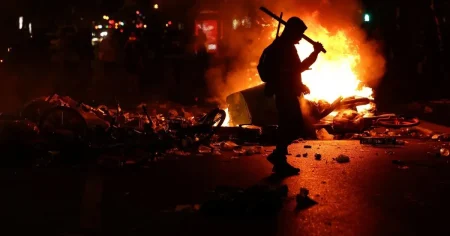
4. While the diplomats talk, the war continues. The same week the Kremlin announced Putin’s willingness to negotiate, images emerged of an oil terminal burning in Saint Petersburg following an air attack. People stood on the streets, watching orange flames leap into the night sky, their faces lit by a fire that was both far away and dangerously close. The attack was a reminder that no corner of this conflict is truly safe, and that the war has a way of reaching even those who thought they were out of range. For Ukrainians, the strikes are a daily reality—a constant drumbeat of explosions, drones, and missiles that have turned ordinary life into a survival exercise. For Russians, the war has also begun to creep home, with attacks on infrastructure, economic hardship, and the quiet fear that comes from living in a country whose leadership has bet everything on a military campaign that was supposed to be over in a few weeks but has dragged on for years. The human cost is staggering. On both sides, families have lost fathers, mothers, sons, and daughters. Cities like Bakhmut, Mariupol, and Avdiivka have become synonyms for destruction. Millions of people have been displaced, their homes reduced to rubble, their futures uncertain. And yet, life goes on in strange, stubborn ways. People still go to work, still send their children to school, still fall in love, still laugh at bad jokes, still hope. That is the human spirit that negotiators so often forget when they talk about “security systems” and “post-conflict frameworks.” They are not just drawing lines on maps; they are deciding the fate of real people, with real dreams, who want nothing more than to live in peace.
5. Volodymyr Zelensky, for his part, has been characteristically blunt about what he believes is necessary to end the war. In a recent interview with Fox News, the Ukrainian president said that freezing the conflict is the “minimum required from Russia to end the war.” He did not speak of total victory or the full restoration of all territory, at least not as an immediate goal. Instead, he offered a pragmatic, almost weary assessment: “Right now, we have to freeze, and I think this is the real way to end this war.” For a leader who has become a global symbol of defiance, those words are striking. They suggest a recognition that Ukraine cannot fight forever, that the sacrifices demanded of the Ukrainian people have reached a breaking point, and that some form of ceasefire along the current lines may be the only realistic path forward. But freezing the conflict is not the same as ending it. A frozen war is a war that could restart at any moment, a wound that has been bandaged but not healed. Zelensky knows this. He has always insisted that any peace must include security guarantees from the West, commitments that would prevent Russia from simply catching its breath and attacking again in a few years. The question is whether those guarantees will be strong enough to give Ukrainians real confidence, or whether they will be vague promises that look good on paper but disappear when the first tank rolls across the border. For now, Zelensky seems to be walking a tightrope—trying to keep his nation united, trying to keep Western support alive, and trying to prepare his people for the possibility that the war will end not with a triumphant parade, but with a painful, imperfect compromise.
6. What happens next is anyone’s guess. The announcement that Putin has agreed “in principle” to resume talks is not a breakthrough; it is an opening. The path from that opening to a real peace is littered with obstacles—distrust, broken promises, territorial disputes, the question of Ukraine’s NATO membership, the fate of Russian oligarchs and sanctions, the enormous task of rebuilding a shattered country, and the profound psychological scars left by years of violence. There is also the unpredictable nature of the key players. Trump is mercurial, driven by instinct and the desire for a legacy. Putin is patient, calculating, and willing to wait out his enemies. Zelensky is passionate, embattled, and answerable to a people who have already given so much. In the coming weeks, the world will watch to see whether the talks after November 10 produce something real or dissolve into another round of diplomatic theater. The stakes could not be higher. For every hour that passes without a deal, more lives are lost, more cities are damaged, more hatred is sown. And yet, there is something almost hopeful about the fact that they are talking at all. After all the bloodshed, after all the speeches and sanctions and drone strikes, the idea that two sides can still sit in a room and speak to each other is a testament to the stubborn belief that words can sometimes succeed where weapons have failed. Whether that belief is justified will become clear in the days and weeks ahead. For now, the world holds its breath, caught between fear and hope, between the memory of war and the fragile possibility of peace. And for the ordinary people caught in the middle—the refugees, the soldiers, the mothers, the children—the sound of negotiations is not just politics. It is the sound of a door creaking open, just a crack, letting in a sliver of light.