

At first glance, it might be tempting to dismiss Amin Belechguer as a young man whose love of speed simply spiraled out of control. But the evidence in his case tells a darker, more deliberate story. The 29-year-old motorcyclist, from Poynders Gardens in Clapham, was jailed for four years at Maidstone Crown Court after pleading guilty to 21 counts of dangerous driving. He had used his high-powered Kawasaki Ninja, bought for around £19,500, to turn public roads into his own private playground across Kent, Essex and London. Far from being a momentary lapse in judgment, his driving was a sustained and calculated pattern of law-breaking, recorded in high definition by the GoPro camera attached to his helmet or bike. The footage showed him travelling at speeds of up to 189mph—more than three times the national speed limit—performing wheelies, ignoring red lights, riding on pavements and screaming through town centres and motorways as if he were competing in a video game. In one infamous moment, he tried to provoke police into chasing him, slowing down and waving at officers as he pulled out in front of their patrol car. His arrogance, in the end, became his undoing: the very camera he used to document his exploits also gave prosecutors an overwhelming case and sent him to prison.
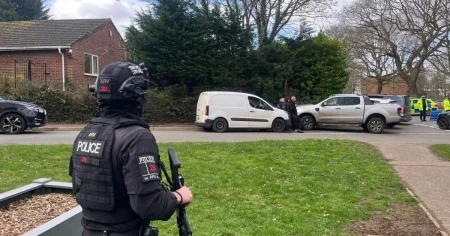
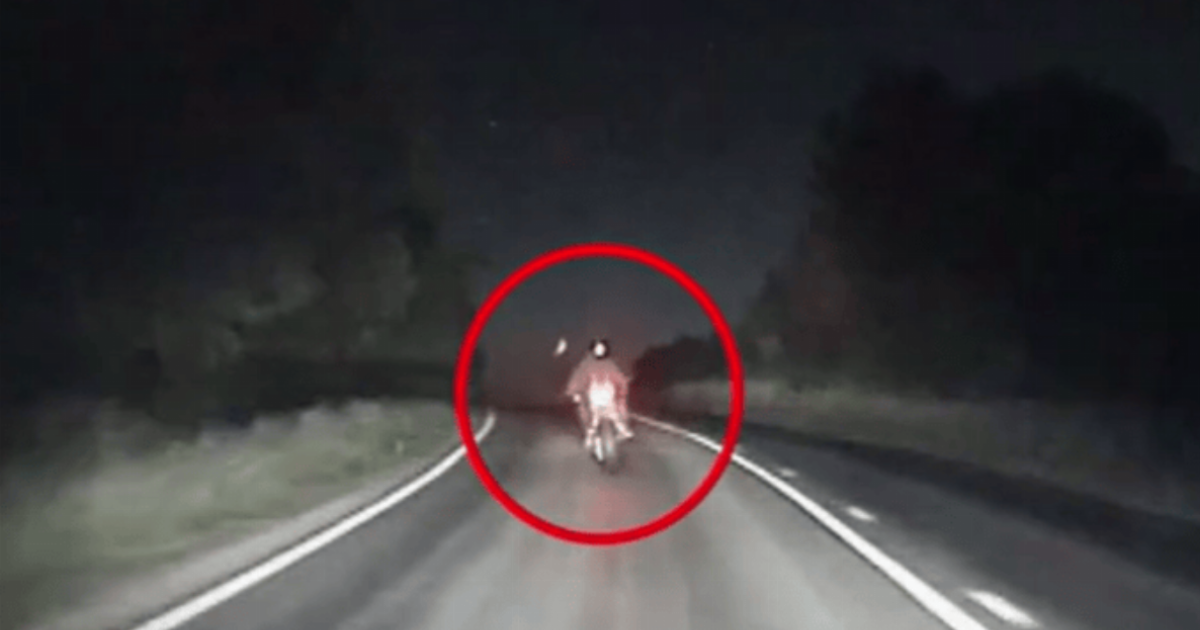
The incident that finally led to his arrest took place on the night of 27 June 2025. Shortly before 11pm, police patrols were making their way along the A20 Ashford Road towards Maidstone when they spotted Belechguer riding at speed without a registration plate. They were initially heading to a separate emergency, but Belechguer made sure he was impossible to ignore. He pulled out in front of the patrol car, then slowed down and waved, deliberately goading officers into launching a pursuit. It was as if he were daring them to try to catch him. When the chase began, he showed no regard for his own safety or anyone else’s. On a single carriageway with speed limits varying between 40 and 60mph, he sustained speeds of more than 130mph, crossing solid white lines into oncoming traffic over the blind brow of a hill. That kind of manoeuvre is a recipe for a catastrophic head-on collision. Officers, aware that continuing to chase him might endanger the public even further, had to make the difficult decision to break off the pursuit. But they did not simply let him go. A stinger device was deployed in his path, shredding his tyres and bringing his deadly ride to an abrupt end. Even then, Belechguer did not simply surrender. He tried to manoeuvre away, crashed into a hedge, and was eventually tackled and arrested by officers. His GoPro was still recording, capturing the chaotic final seconds of a ride that could easily have ended in a funeral rather than a court appearance.
Once Belechguer was in custody, the full extent of his recklessness began to emerge. The motorcycle, his mobile phone and the GoPro camera were all seized at the scene. When officers reviewed the digital evidence, they discovered that this was not an isolated incident. Belechguer had filmed himself riding dangerously over a period of time and in multiple locations across Kent, London and Essex. The recovered footage painted a horrifying picture: he travelled at more than double the posted speed limit on motorways and through town centres, performed wheelies at high speed, failed to stop at red lights and rode along pavements where pedestrians might be standing. At his maximum recorded speed of 189mph, he would have been travelling the length of a football pitch in just over a second. Human reaction time alone would not have been enough to avoid a collision. It is not hard to imagine the devastating consequences that could have unfolded—a child stepping out from between parked cars, a family crossing a road, a sleepy driver changing lanes. Any one of those scenarios could have left multiple people dead. The camera made the prosecution’s job much easier. Faced with such clear, damning evidence, Belechguer pleaded guilty to all 21 counts of dangerous driving. His defence could not argue that he had made a simple mistake. This was a deliberate, sustained and arrogant choice to treat public roadways as a private racetrack.
The legal outcome was decisive. At Maidstone Crown Court on Wednesday, Belechguer was sentenced to four years in prison. The judge also imposed a 10-year driving ban, which will take effect upon his eventual release, and ordered the permanent confiscation of his motorcycle. For a man who had spent much of his adult life enjoying the freedom and excitement of high-performance machines, the loss of the Kawasaki Ninja must be a significant blow. The bike, worth roughly £20,000, will never return to the streets. Belechguer will now have to spend years behind bars, without a licence, with a serious criminal record and with the stigma of having been jailed for dangerous driving. At 29, he will still be young when he leaves prison, but his life will be permanently altered. More importantly, his absence from the road will make the streets safer. The sentence sends a clear message to others who might be tempted to use public highways as their own private racetrack: if you record your crimes and put the public at risk, you will be caught, prosecuted and punished. It is a sobering reminder that the law treats reckless driving not as a harmless thrill, but as a serious crime with consequences that can last for decades.
The police response to the case was professional and quietly determined. Investigating officer PC Daniel Goodman explained the difficulty of the situation in a statement after the sentencing. “Officers worked swiftly when presented with the opportunity to arrest a dangerous motorist,” he said. “Despite having to terminate a pursuit due to the dangerousness of Belechguer’s driving, teamwork saw his vehicle brought to a stop and secured his arrest. Not only did Belechguer drive at triple the speed limit in some instances, but he demonstrated little regard for basic road safety when he failed to adhere to road markings, signage, and traffic lights.” Those words capture a reality that many officers face every day. Police cannot always chase a motorist at 189mph—to do so would put the public at even greater risk. Instead, they must rely on tactics such as stingers, intelligence, CCTV and the sometimes baffling vanity of offenders who record their own crimes. In this case, the combination of those methods worked. The successful arrest and prosecution may also bring some comfort to the many innocent road users who unknowingly shared the streets with Belechguer during his reckless rides. They will never know how close they may have come to tragedy, but the closure of a conviction and a prison sentence helps to restore a sense of order and justice.
Perhaps the most troubling question raised by the case is simple: why would anyone do this? Belechguer’s decision to film himself, to goad the police, and to ride at nearly 200mph suggests a dangerous blend of ego, boredom and misguided thrill-seeking. He was not fleeing from armed robbers or racing to a hospital; he was driving dangerously for the sake of it. Somewhere along the way, he appears to have forgotten that a motorcycle is not just a toy, and that a road is not a stage. Every person he passed had a life, a family and a future. A crash at 189mph does not leave room for second chances. This case should be a warning to every rider and driver who believes they are invincible. The desire for excitement is human, but it must be channelled into safe spaces such as race tracks—not into the streets where children walk, grandparents cross the road, and parents drive their children home. Belechguer will now have years in prison to reflect on the choices he made. His bike is gone, his licence is gone, and his reputation is in tatters. The real tragedy is that it almost took innocent lives before he was stopped. For society, the hope is that the sentence serves as a deterrent. For Belechguer, the hope is that he emerges from prison with a deeper understanding of the value of human life. Speed is not courage. Recklessness is not skill. The roads belong to everyone, and they demand respect.