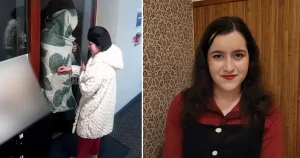


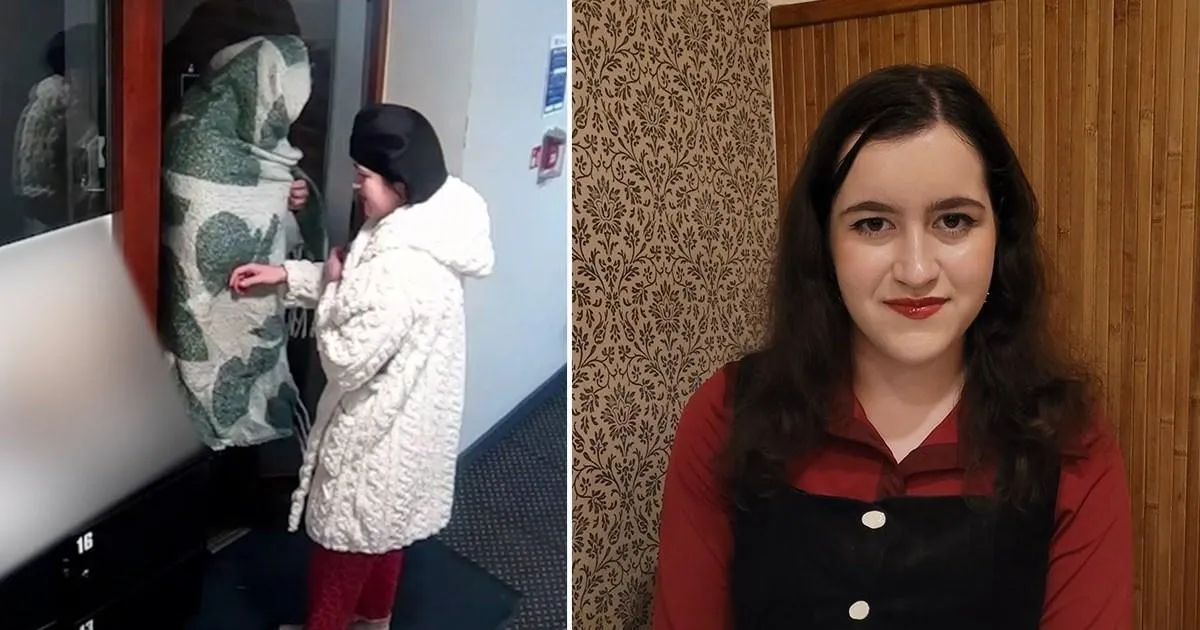
Carla Georgescu was 19 years old. She was a clinical psychology student at the University of Central Lancashire, living in university accommodation in Preston, with a family in Romania, a mind full of questions, and a future that seemed full of possibility. On the night she died, she was packed and ready to fly home the next day. She had plans to meet a new boyfriend. She had dreams that had nothing to do with her stepfather, Nathan Owens. But Owens, 34, is accused of ending all of that in the most brutal way imaginable. Prosecutors at Preston Crown Court told jurors that Owens drove more than 100 miles through the night to her halls of residence because he knew it was his “last chance to catch her” before she left the country. Once there, they say, he subjected her to a fatal sexual attack and strangled her with a leather belt. The phrase that has come to define this case is one of terrible simplicity: Carla “paid with her life” for “daring to say no.” The words are a stark reminder that this was not a random burglary or a street attack by a stranger. It was a killing allegedly committed by a man who should have been one of the safest people in her life. He was her stepfather. The betrayal at the heart of this case is almost unbearable, and it makes the tragedy not only a criminal matter but a deeply human one. A young woman who should have been looking forward to seeing her family, introducing a new relationship, and continuing her studies was instead silenced forever, not by a stranger but by a man who claimed to love her. The courtroom proceedings are a search for justice, but no verdict will bring Carla back. What the trial can do is expose the truth: the obsession, the violence, and the warning signs that were so carefully hidden.
The obsession, as described by the prosecution, was not a sudden snap of madness. It was a long, growing, terrifying fixation that turned Carla into an object in her own home. Jurors heard that Owens was “sexually fixated” on Carla and that her death was the culmination of what prosecutors called an escalating “one-sided sexual obsession.” The evidence painted a picture that is hard to read without anger and sorrow. Owens secretly took hundreds of photographs of Carla going about ordinary household tasks, often dressed in pyjamas, underwear, or a vest top. She was not posing for them; she was simply living her life, unaware that every small movement was being captured by a man who should have been protecting her. Even more disturbing, the court heard that Owens used technology to create so-called deepfake pornographic images of Carla, placing her face into explicit material she had never consented to. And then there was the effigy. Owens is said to have made a doll-like figure, dressed it in Carla’s own nightdress, and filmed himself having sex with it. It is almost impossible to comprehend the psychological world behind such an act. It speaks of a man who was not merely attracted to Carla, but who was rehearsing, in some dark and distorted way, a fantasy that was becoming increasingly dangerous. While Carla studied, packed, laughed with friends, and looked forward to her trip to Romania, her stepfather was building a secret shrine of sexual obsession around her. The prosecution’s description of the relationship as “one-sided” matters because it restores the truth: Carla did not encourage him, did not invite him, did not even know the depth of what he was doing. She was simply a young woman trying to live, and her very existence was enough to feed a fantasy that would end in murder.
The final night of Carla’s life was shaped by a simple piece of news: she was due to fly to Romania the next day. She may have been excited, nervous, busy packing clothes, thinking about the boyfriend she was planning to meet. For Nathan Owens, however, that news set something in motion. The prosecution argued that he knew this was his last chance to get to her before she slipped beyond his reach. So he drove more than 100 miles through the night to her accommodation in Preston. The journey was long, but the purpose, according to the prosecution, was clear. Owens was “determined to satisfy his sexual needs, come what may.” Those words strip away any suggestion of spontaneity or remorse. They describe a man who made a deliberate choice, in the dark hours of the night, to travel across the country with the intention of forcing himself on a girl who had refused him. What happened inside Carla’s flat remains known only to two people: Carla, who can no longer speak, and Owens, who chose not to. The prosecutor, Nicholas Lumley KC, told the jury that only one person in the courtroom knew the truth of what happened in that room, and that person was sitting in the dock. It is a chilling image. Somewhere in that small space of time, a young woman’s life was taken, and a leather belt became the instrument of her death. The prosecution suggested that Owens may have tied the belt around her neck in an attempt to make her death look like suicide. But as Lumley pointed out, Carla was someone who wrote and drew extensively to express her emotions, and yet she left no note behind. “It’s almost as if being strangled to death wasn’t quite her idea,” he said. The irony was deliberate, and it carried the weight of truth: Carla had not given up on life. She had been making plans, not saying goodbye.
During the closing speech, the prosecutor turned directly to the heart of the case. He asked Owens, in front of the jury, whether he had treated Carla “like a doll, like one of your effigies” and then killed her because she “dared to say no.” The question is both an accusation and a psychological portrait. It suggests that Carla’s refusal was not simply a rejection but an act of defiance that Owens could not tolerate. For a man who had created an effigy in her likeness, who had photographed her without her knowledge, who had built a secret sexual fantasy around her, the real Carla standing in front of him and saying “no” was an intolerable break with the fantasy world he had created. In that world, she was passive, controllable, silent. In the real world, she was a young woman with her own plans, her own body, her own choices. And those choices included leaving the country and meeting another man. The prosecution’s case was that Owens could not let her go. He could not accept that she was not his. So he destroyed her. The belt, the staging, the attempt to make her death look like suicide—they all point to a calculated effort not only to kill but to obscure the truth. But the truth was written in Carla’s life, in the drawings and writings she left behind, in the evidence of her ambition, her relationships, and her voice. She was not someone who silently slipped away. She was someone who expressed herself, who reached out, who processed her emotions through art and words. The absence of a note was not a sign of despair; it was proof that her death was not caused by her own hand. It was caused by the hand of a man who saw her as a possession.
Owens has denied murder, strangulation, and GBH. Under the law, he does not have to prove anything. The prosecution must prove his guilt, and he has the right to remain silent. But when the prosecution case concluded, his legal team offered no defence case. He chose not to enter the witness box. The judge, Mr Justice Jacobs, made sure that Owens’s barrister understood what that meant: jurors could draw “such inferences as appear proper” from his failure to give evidence. John Elvidge KC confirmed that Owens had been advised of that risk. In his closing speech, Lumley addressed the silence directly. “It’s his right to sit there and for the prosecution to prove his guilt,” he said. Then he added: “Well, we have.” Those words must have echoed through the courtroom. There was no alternative explanation, no claim that Carla consented, no story of an accident, no expression of grief or regret. There was only silence. For the jury, that silence is not necessarily a verdict in itself, but it is a powerful part of the broader picture. The man who made the 100-mile journey, who took the secret photographs, who made the effigy, who is accused of strangling a 19-year-old girl with a belt, had nothing to say to the court. He listened from the dock as the prosecution laid out a case built on evidence, and he offered no answer. The right to silence is a cornerstone of justice, but in a case like this, it leaves an emptiness that is hard to ignore. It leaves the jury, and the public, with only one story: the prosecution’s story of a man whose obsession turned lethal when a young woman said no.
As the trial continues, the legal process will move toward its inevitable conclusion. The jury will retire to consider the evidence, and Nathan Owens will learn whether his silence was enough to save him. But beyond the verdict, there is a human story that deserves to be remembered. Carla Georgescu was not just a victim. She was a student of the human mind, someone who wanted to understand people even as the people around her failed to protect her. She was a daughter, a friend, a young woman with a ticket home and a new love waiting for her. She wrote and drew to make sense of her emotions, which is the very opposite of someone who would choose to leave without a word. Her death has become a case file, a court report, a set of photographs and legal arguments. But the hope is that the jury will see the person behind the evidence, and that the justice system will give Carla the dignity she was denied in her final moments. Cases like this also carry a wider warning. They remind us that violence against women often begins not on the street but in the home, not with strangers but with those who know them best. It begins with control, with surveillance, with the steady erasure of a woman’s autonomy. Nathan Owens may or may not be guilty in the eyes of the law, but the trial has already revealed how easily a young woman’s freedom can be taken away by someone who believes he owns her. Carla dared to say no. She paid with her life. The least we can do is tell her story, listen to the evidence, and make sure her voice is not silenced again.