
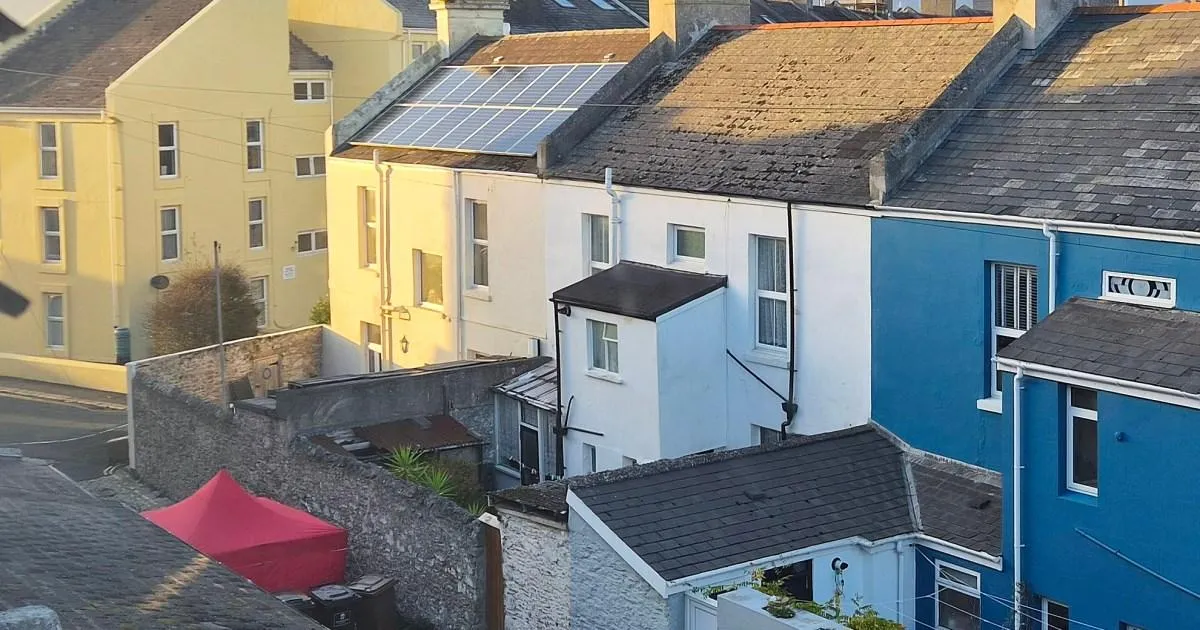
The morning had not yet broken over the West Hoe area of Plymouth when the quiet rhythm of the city was shattered by an urgent call for help. At 6:30am on Wednesday, paramedics arrived in a service lane off Grand Parade, a narrow, unremarkable passage lined with wheelie bins awaiting collection. It was there that they found a man, seriously injured and unresponsive, in circumstances that remain deeply troubling. Despite their best efforts and the desperate rush of medical intervention, the man was pronounced dead at the scene. What should have been an ordinary start to another day had become the beginning of a murder investigation, with the area sealed off by police tape and the sudden, grim presence of a red forensics tent rising from the alleyway. In the photographs from the scene, that tent stands starkly against the muted colours of the surrounding buildings and the familiar street furniture of everyday urban life—a vivid reminder that violence can reach into the most ordinary of places. The wheelie bins, so mundane and unremarkable, have now become silent witnesses to an unexplained death, and the service road itself has been transformed into a careful, solemn crime scene. For the residents of the nearby Garden Crescent and the wider West Hoe community, the news has landed with the force of disbelief, because this is not a place where such things are supposed to happen. It is a coastal neighbourhood, known for its sea air and residential calm, not for red tents and murder investigations. Yet here they are, confronted with a reality they never expected, all because a man was found in a manner and in a location that no one could have anticipated.
As the morning light grew stronger, the full weight of the situation became clearer. The man, who has not yet been publicly identified, was found seriously injured in that narrow service lane off Grand Parade. The exact nature of his injuries and the cause of his death have not been revealed, leaving a vacuum of information that is both understandable and unsettling. For now, the victim is more than a name—he is someone’s son, brother, father, friend, colleague—a person whose life ended in a place where people usually take out the rubbish and walk their dogs, not where life comes to a violent conclusion. The decision to treat his death as a murder investigation signals that police believe there is intent, that another person was involved, and that somewhere in Plymouth there is someone who knows what happened. The red forensics tent, erected by officers, is a visual shorthand for the painstaking work that will happen over the coming days: teams of specialists will examine every inch of the alleyway, looking for fibres, fluids, footprints, anything that might tell the story of what occurred in the hours before the discovery. The cordon remains in place, and road closures along Grand Parade and Garden Crescent add to the sense of disruption and unease. Local residents have woken up to find their streets blocked, their routines interrupted, and a police presence far greater than they have ever seen. The investigation is in its earliest stages, but it is already moving at what the officer leading the inquiry describes as “a significant pace,” as detectives race to establish the circumstances surrounding the man’s death.
Detective Inspector Chris Lithgow, who is leading the investigation, has made an urgent appeal to the public, asking anyone who was in the area of Grand Parade and Garden Crescent between 6pm on Tuesday 20 October and 6:40am on Wednesday 21 October to come forward. That twelve-hour window is considered crucial, the missing piece of a puzzle that police are trying to assemble from the scattered fragments of evidence. In that period, someone may have seen something—a figure moving in the dark, a vehicle lingering where it should not have been, a noise that made them pause for just a moment before they carried on with their lives. The Detective Inspector’s words are careful, measured, but they carry an underlying urgency. He is particularly keen to hear from anyone with CCTV, dashcam, or doorbell footage from the area during those critical hours. In an age where so many homes and cars are equipped with cameras, there is every chance that a small, unremarkable recording has captured what happened. It could be a neighbour’s doorbell camera, a passing vehicle’s dashboard camera, or a shop’s security system—any of these could hold the key to unlocking the mystery. The appeal is not just for witnesses in the traditional sense, but for devices that have been silently watching. And alongside the appeal for footage, there is a plea for the public to refrain from speculation, especially on social media, where rumours can spread quickly and cause further harm to the victim’s family and friends. The police understand that people are anxious and curious, but they are asking for patience and trust in the investigation.
But while the investigation focuses on the how and the why, we must also remember the who. Behind every crime scene photograph is a human being, a life that was lived and now suddenly lost. The man discovered in that service lane did not wake up that morning expecting to die. He had a history, a home, people who cared about him. Somewhere in Plymouth, there is a household that has not yet received the news in the full, devastating clarity, or perhaps they have already been told and are now trying to process the impossible. For them, the wait for answers is a special kind of torment. Every detail that police release, every appeal issued, is not just procedure—it is a small step toward the closure that the victim’s loved ones desperately need. And for the wider community, the shock is equally profound. West Hoe is not the kind of place where red tents appear in alleys. It is the kind of place where people know their neighbours by name, where children play near the water, where the sound of the sea is a constant backdrop to daily life. To see that calm shattered is to feel that safety is an illusion. Neighbours will gather on the pavement, speaking in hushed tones, trying to make sense of the improbable. The police, understanding this, have promised an ongoing presence in the area, and are encouraging anyone with concerns to speak with officers at the scene. That reassurance matters, because in the wake of violence, the community needs to be reminded that they are not alone, that answers are being sought, and that justice will be pursued with determination.
The appeal for information is built on the understanding that no detail is too small. The police have directed anyone with relevant information, images, or footage to report it via the Major Incident Public Portal or by telephone on 101. These channels are designed to make it as easy as possible for the public to help, and every piece of information, no matter how insignificant it may seem, is part of the larger puzzle. Perhaps someone saw a car door closing in the middle of the night. Perhaps someone heard raised voices but thought better of interfering. Perhaps someone’s dashcam captured a figure walking away from the service lane at a pace that was slightly too fast. Had they acted on their instincts, they could have prevented a death; now, they can still help catch a killer. The police are not asking for judgments, only for facts. They want to know what people saw, when they saw it, and what they heard. The twelve-hour window between Tuesday evening and Wednesday morning is the focus, but that does not mean that anything before or after is irrelevant. In a case like this, the smallest observation can be the difference between an arrest and a cold case. The investigation is still young, and the officers involved are determined to give it the time, resources, and attention it deserves. Detective Inspector Lithgow has made it clear that more information will be released as and when it becomes possible, but for now, the public’s role is to watch, to remember, and to speak. There is a killer somewhere, perhaps close by, perhaps already becoming nervous as they see the cordon and the forensics tents and the police presence on the evening news. That killer may be trying to convince themselves that they have got away with it, but they cannot account for every camera, every witness, every small detail that they failed to notice. The sweep of the investigation is wide, and it is only a matter of time before the pieces come together.
In the end, this is a story about the fragility of life and the resilience of a community that has been forced to confront something terrible. The red tent will eventually come down. The cordon will be lifted. The road will reopen, and the wheelie bins will be collected as they always were. But the memory of what happened on that quiet service lane will remain, etched into the collective consciousness of Plymouth. A man died there, alone, in a place that was never meant for such tragedy. His family will carry that grief for the rest of their lives, and they will carry the unanswered questions with it. The police will not rest until they have done everything in their power to find the person responsible and bring them to justice. There is a deep human need to understand why, to look for meaning in the senseless, and that need is what drives the investigation forward. Every officer working on this case knows that they are searching for more than evidence—they are searching for truth for the victim, for his loved ones, and for a community that has been shaken. In the meantime, the rest of us can only watch, and wait, and hope. We can hope that the person who knows something finds the courage to speak. We can hope that the footage exists and is found. We can hope that the red tent gives way to answers, that the silence is followed by justice, and that a grieving city can begin the slow process of healing. Because in the end, this is not just about a man who was found in a wheelie bin. It is about a life that mattered, a death that demands explanation, and a community that refuses to look away.