
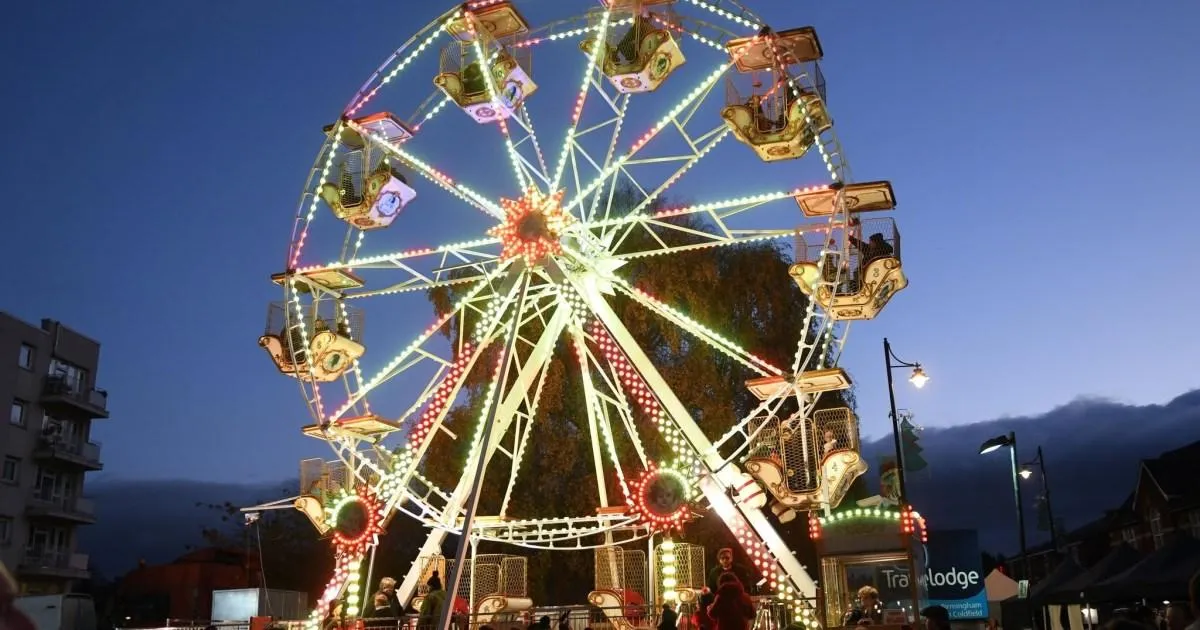
There is a particular kind of magic that arrives with the first fluttering fairy lights, the scent of mulled wine drifting through a crisp winter evening, and the sound of carol singers warming up their voices under a canopy of stars. For the past fifteen years, the village-like suburb of Boldmere, tucked away on the outskirts of Birmingham in the heart of the Midlands, has been home to exactly that kind of enchantment. Its annual Christmas Festival has become far more than a simple cluster of wooden stalls selling handcrafted gifts and roasted chestnuts; it has served as a seasonal heartbeat for the entire community. It is where families have made traditions, where children have sat on Santa’s knee, where local bakers have sold their first batches of gingerbread, and where neighbours who might otherwise walk past one another without a second glance have gathered to share warm drinks and warmer laughter. But this year, that familiar, comforting glow seems to be flickering out. After the local council voted against continuing its funding, organisers have been forced to announce that the festival, once a bright and reliable feature of the county’s festive calendar, will not be going ahead—leaving locals heartbroken, angry, and puzzled in equal measure. The news has landed like a lump of coal in the stocking of an entire neighbourhood, and many residents are openly wondering whether the spirit of generosity and togetherness that defines this time of year has been abandoned by those entrusted to protect it.
The reaction from the community was swift, emotional, and unmistakably personal. Within hours of the announcement, the festival’s social media pages became a shared space for collective grief and disbelief, with locals trading memories and expressing their disappointment in ways that echoed familiar holiday refrains. One resident wrote simply, “Scrooge is alive and well,” a sentiment that seemed to capture the blunt sense of betrayal felt across the area. Another, perhaps reaching for a relatable lyric from a beloved Christmas classic, asked, “Don’t they know it’s Christmas time at all?” The irony of the question was not lost on anyone; at what other time of year are communities supposed to come together, to look after one another, to celebrate the simple pleasures of being warm and welcome amidst the dark cold months? A third comment, clearly from a small business owner, struck a particularly poignant chord: “Gutted about this! The Boldmere summer and Christmas festivals are generally my favourite event to bring my business to! Great day always! Such a shame.” That last comment spoke volumes about the connection between the festival and the livelihoods of independent traders, crafters, and families who relied on these events not merely for income, but for a sense of purpose and belonging. For many, the festival was not just an afternoon out; it was a platform, a showcase, a celebration of everything that made Boldmere special. Losing it felt like losing a part of the neighbourhood’s identity.
To understand the depth of feeling, it helps to look at the practical realities behind the festive magic. According to the organisers, the festival costs approximately £24,000 to stage each year. Of that, around £14,000 is generated through its own stalls, activities, and food vendors—a testament to the event’s enduring popularity and ability to sustain itself through the winter economy. But that still leaves a shortfall of approximately £10,000, which must be sourced from somewhere. Determined not to let the festival slip away without a fight, the organisers, a volunteer-led community interest company called Boldmere Futures CIC, approached Sutton Coldfield Town Council to request the remaining funds. Yet rather than finding an open door and a sympathetic ear, they were reportedly “weren’t offered a penny.” The council’s formal reasoning, delivered with a chilly pragmatism that seemed to disregard the festival’s emotional weight, was that the event was “not financially sustainable.” To Paul Long, chairman of Boldmere Futures CIC and a man who has devoted years to keeping the community’s spirit alive, that explanation felt like an excuse rather than a genuine justification. He was blunt in his frustration: “Unfortunately, we are dealing with politicians rather than professional funders and so it doesn’t matter how good our bids for funding and the outcomes we deliver are.” His words carried the unmistakable tone of a man who had watched his efforts repeatedly dismissed by those he felt should have been championing them. He went on to suggest that the town councillors “have always been jealous of the community we have built up in Boldmere,” and that despite his team’s track record, they have “now hit a brick wall.” It is a painful end for an event that began fifteen years ago under the then Boldmere Traders’ Association, and Long’s warning was stark: “unless we can find alternative funding, then this is a goodbye from the Christmas Festival.”
Beyond the raw emotion, though, lies a deeper concern about the health and future of the high street itself. Long was careful to frame the festival not as a luxury, but as a lifeline. “This is a big blow for our high street that relies upon events like this to remain open,” he said, and the words ring true at a time when town centres across the country are struggling against online shopping, rising rents, and changing consumer habits. High streets survive because they become destinations, not just places to buy things, and events like the Boldmere Christmas Festival are precisely what transforms an ordinary collection of shopfronts into a genuine community hub. The festival, Long explained, “was always an opportunity for members of the public to have some fun together as a community, for local businesses to sell their artisan products and for new businesses to try out a low-cost artisan market stall.” In other words, it was an economic engine wrapped in tinsel. It helped small enterprises test the waters without massive risk, allowing bakers, candle makers, jewellers, and artists to find customers who might return to their workshops for years to come. It also brought people into the area from far beyond its usual catchment. One resident noted in response to the news: “Very disappointing and short-sighted of Sutton Town Council. Boldmere is a thriving high street, and they should support it with engagement activities like these. It’s not just for Boldmere residents; people from all over Sutton attend.” That final point is important: the festival was not a private gathering for a handful of locals, but a destination event that drew visitors from across the wider region, filling not only the market stalls but also nearby cafés, pubs, and independent shops.
Yet even in the midst of this gloom, the story is not entirely without hope. In true community spirit, residents have already begun brainstorming practical ways to fill the financial void left by the council’s refusal. Some have suggested crowdfunding campaigns, noting that if enough people across Sutton and Birmingham each contributed just a few pounds, the shortfall could be met in a matter of days. Others have proposed local businesses stepping in with sponsorship packages, seeing it as a smart investment that would bring customers through their doors during the vital Christmas trading period. There have been ideas for fundraisers, charity auctions, school competitions, and even a sponsored community sing-a-long to raise money and awareness. The tone of these suggestions is not one of hopelessness, but of determination. If the council will not help, many seem to be saying, then we will do it ourselves. This is a community that has grown accustomed to pulling together, and the festival’s cancellation has sparked a renewed appreciation for what it has meant to them. As the festive season approaches, there is something quietly powerful about watching a group of ordinary people rally around the one thing that makes their high street feel alive in the winter months. The Christmas market was never just about the presents, after all; it was about the experience, the warmth, the sense of belonging that cannot be measured in pounds and pence. And that sort of value, as the organisers have pointed out, is not something that appears on a council’s balance sheet.
The question now is whether a solution can be found before the season slips away. Sutton Coldfield Town Council, for its part, has taken a somewhat distant posture, stating simply that “the decision to cancel the Boldmere Christmas Festival is a matter for the organisers, Boldmere Futures CIC.” It is a response that feels more like a closing of the door than an invitation to dialogue, and it has done little to reassure those who feel abandoned by their elected representatives. But perhaps the council’s stance does not have to be the final word. Around the country, during these final weeks of the year, people are searching for something to hold onto—a sense of connection, a reason to feel hopeful, a small moment of brightness in an increasingly uncertain world. The Boldmere Christmas Festival offered all of that, and more, for fifteen beautiful years. To let it fade away because of a ten thousand pound gap feels less like prudent financial management and more like a failure of imagination. Scrooge may be alive and well in the corridors of local government, but so, too, is the collective will of a community that refuses to accept the death of its favourite tradition without a fight. The magic of Christmas has always come from somewhere deeper than the bottom line, and if that magic can still be summoned from the kindness and stubbornness of ordinary people, then perhaps the festival still has a chance. Whether the joy of Boldmere’s Christmas Festival can be saved remains to be seen, but one thing is certain: if it does return, it will not be because of any grant or policy, but because enough people simply refused to let the lights go out.