
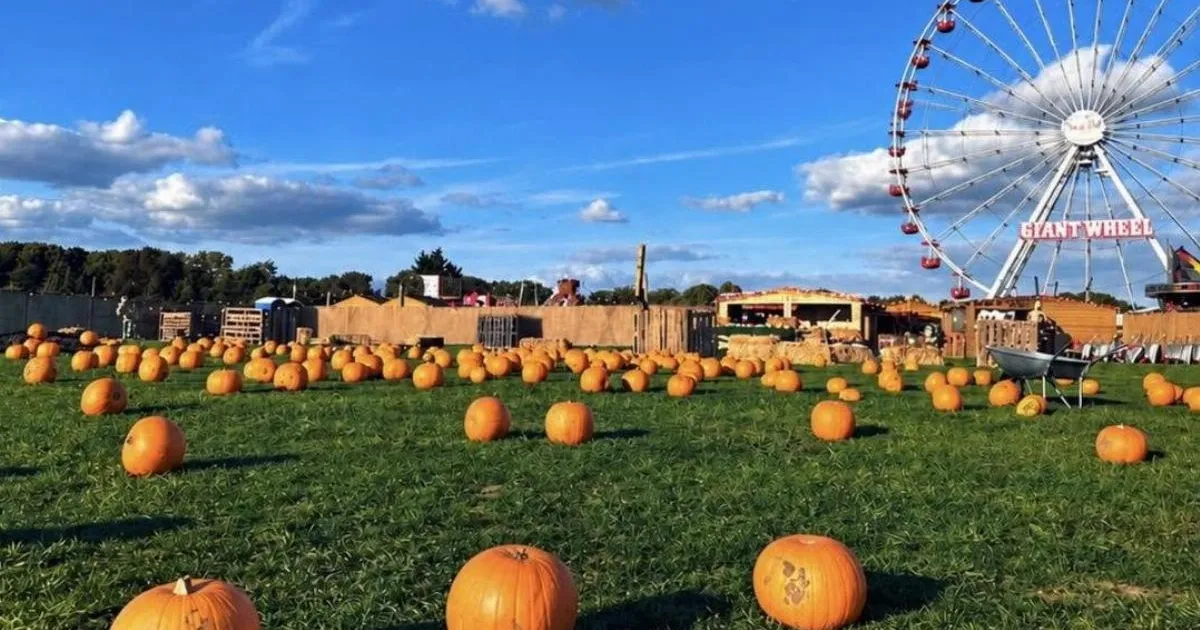
There is a certain magic that arrives with autumn: the crisp bite in the air, the golden afternoons, the promise of Halloween on the horizon. For families across the UK, that magic often takes the form of a visit to a local pumpkin patch. You imagine walking through a golden field, children squealing with joy as they hunt for the perfect pumpkin, warm cider in hand, the smell of straw and spice lingering in the breeze. That was the dream on offer at the Suffolk Pumpkin Patch in Barton Mills, near Bury St Edmunds. The organisers had plastered social media with a gleaming, AI-generated vision: hundreds of bright orange pumpkins, an “unreasonable amount of pumpkin-flavoured everything,” and what looked like a picture-perfect family day out. But when visitors actually arrived, the dream crumbled faster than a soggy biscuit. Instead of a magical autumnal wonderland, they found what one attendee, Alex Dodman, described as “the UK’s most depressing pumpkin patch.” The reality, he said, looked as though someone had simply “chuck[ed] a load of Tesco pumpkins in a field,” with sparse, scattered gourds, questionable Halloween decorations, and a metal fence ringing the whole melancholy scene. The gap between the poster and the actual patch was so wide, so absurd, that people started doing double-takes and reaching for their phones to share, in disbelief, what they had actually paid to see.
Dodman’s experience, which he shared online, struck a chord with many because it laid bare the quiet heartbreak of a family day out that goes wrong. He explained that he had paid £19.52 just to walk into the pumpkin field. That fee was separate from the food stalls, the bar, and the funfair ride, which were free to access. And that was only the beginning. Once inside, he was confronted with odd displays, broken pumpkins, and mini-golf games that appeared to be out of order or simply not working. Some of the pumpkins on display were damaged, cracking under the weight of too many disappointed footsteps. He paid an extra £5 for a pumpkin to take home, bringing his total outlay to a little over £24 for the privilege of being underwhelmed. To be fair, Dodman himself acknowledged that the entrance fee for a family of five, plus the cost of rides and stalls, was on the “cheaper side” compared to similar Halloween events he had seen online. But the cost wasn’t really the issue. It was the feeling of being sold a vision that didn’t exist. He wasn’t even angry, he said. He felt a strange, weary empathy for the organisers and vendors. Organising an event like this costs a bomb. Food van rates are through the roof. Small businesses are struggling. He understood that. And yet, understanding the economics didn’t make the experience any less bleak. It just made it sadder. There is something almost poetic about the image of a family standing in a muddy field, clutching a single Tesco pumpkin, trying to find the magic their children had been promised.
The inevitable comparison, of course, was to the infamous Glasgow Willy Wonka experience. That event, which went viral in 2024 for all the wrong reasons, became a cultural shorthand for overhyped, deeply disappointing spectacles. An AI-generated poster had promised a dazzling chocolate fantasy; the reality was a concrete warehouse, a handful of sad decorations, and children crying in confusion. The Suffolk Pumpkin Patch was perhaps not as absurdly chaotic as that infamous event. There was a bar, there were food stalls, and there was at least the promise of a funfair ride. But the “Willy Wonka vibes” were unmistakable. It has become the perfect way to describe any experience where the marketing clearly outran the actual production. Social media has made it increasingly easy for small businesses and large corporations alike to paint a picture of perfection, and increasingly painful when the curtain is pulled back. We have all been lured somewhere by a glossy Instagram post, a beautifully filtered photo, or a copywriter’s poetic description, only to find ourselves standing in a gravel car park wondering where we went wrong. The AI poster had promised “hundreds of pumpkins” and an “unreasonable amount of pumpkin-flavoured everything.” What visitors found was a field with some pumpkins, a few questionable decorations, and a vibe that was less festive and more existential. It was, to put it mildly, a very human disappointment.
But there is another side to this story. The organisers, far from being heartless villains or lazy scammers, came forward to defend themselves in a way that complicates the narrative. In response to the online criticism, they explained that they are a small family-run business. “We aren’t a big company with endless amounts of money,” they said. They acknowledged the question that so many visitors were asking: “Why do you charge an entrance fee to the pumpkin patch?” Their answer was heartbreaking in its honesty. Every morning, after a busy day welcoming families, they wake up to the sight of deliberately smashed pumpkins, damaged displays, and unnecessary mess. They described it as a “heartbreaking sight,” especially at an attraction designed for families. Why any adult would think it is acceptable to deliberately smash pumpkins at a family event is a question that says more about the vandals than the patch. The entrance fee, they implied, was partly a way of covering the costs of constant destruction, not a cynical money-grab. This small family business was stuck in a vicious cycle. Disappointing experiences can lead to frustration, which can lead to poor behaviour, which leads to even higher costs and more restrictions, which leads to even more disappointment. Dodman himself seemed to sense this. He didn’t blame the organisers or vendors. He blamed the system, the rising costs, the brutal economics of trying to create a little autumnal joy on a shoestring. That does not excuse a genuinely sad experience, but it does add a layer of nuance that a viral headline often lacks.
Amid all the mockery, there were voices of quiet dissent. Some reviews praised the patch as a “great afternoon out.” One family was “pleasantly surprised” that it cost just over £30 for four adults and four children to attend. In an era where a trip to the cinema can easily cost £60 and a theme park is a small mortgage, that is not nothing. It is entirely possible that the Suffolk Pumpkin Patch was a victim of bad weather, bad luck, and unrealistic expectations rather than outright neglect. As the caption in the original article noted, organisers can plan a pretty pumpkin patch, but they cannot plan for the weather. A sudden storm can turn a beautiful autumnal site into a sea of mud and misery. Pumpkins, left outside for weeks, can rot or crack in the cold. Children, running wild with excitement, can knock down displays and damage produce. The photos shared by the company itself show a patch with rows of straw, hay bales, pumpkins arranged in clusters, and the kind of rustic charm that works on a sunny Saturday afternoon. Maybe the experience was not uniformly dismal; maybe it depended on the day, the weather, the mood of the children, and the expectations of the parents. Social media tends to amplify the loudest outrage, but it does not always reflect the silent enjoyment of those who simply had a good time and moved on. For every family that felt cheated, there may have been another who thought the whole thing was charming, quirky, and well worth the price of a slightly wonky pumpkin.
In the end, this story is about more than a soggy field in Suffolk. It is about the fragile magic of seasonal events and the impossible pressure we place on them. We want every experience to be perfect, to be photogenic, to live up to the dreamlike promises of a thousand curated feeds. When it doesn’t, we feel deceived, and sometimes rightly so. But the era of the AI-generated poster has created a strange new reality where businesses feel they must promise the moon just to get people through the gate. The result is a continuous cycle of hype and disappointment. Yet, there is something deeply human about this whole situation. We have all had the day out that didn’t quite work. We have all stared at a venue and thought, “Well, this isn’t what I paid for.” And we have all, eventually, been able to laugh about it. The parents who trudged through the Suffolk Pumpkin Patch with their children, making the best of a bad situation, will probably tell this story for years. They might even tell it with fondness, because the worst family disasters often become the best family memories. The pumpkins may have been smashed, the games broken, and the decor questionable. But in the strange alchemy of family life, the memory of the “world’s most depressing pumpkin patch” may just become the thing that brought everyone closer together. That is the real Halloween magic: not the perfect patch, but the perfectly imperfect story we share. And for the small family business still trying to clean up the mess, there is hope that next year will be better, that the weather will hold, and that the pumpkin patch will finally live up to the dream.