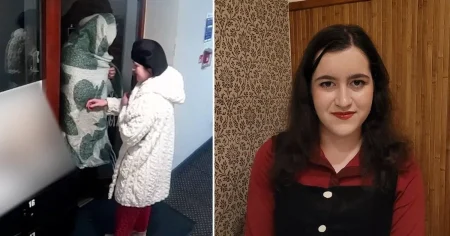


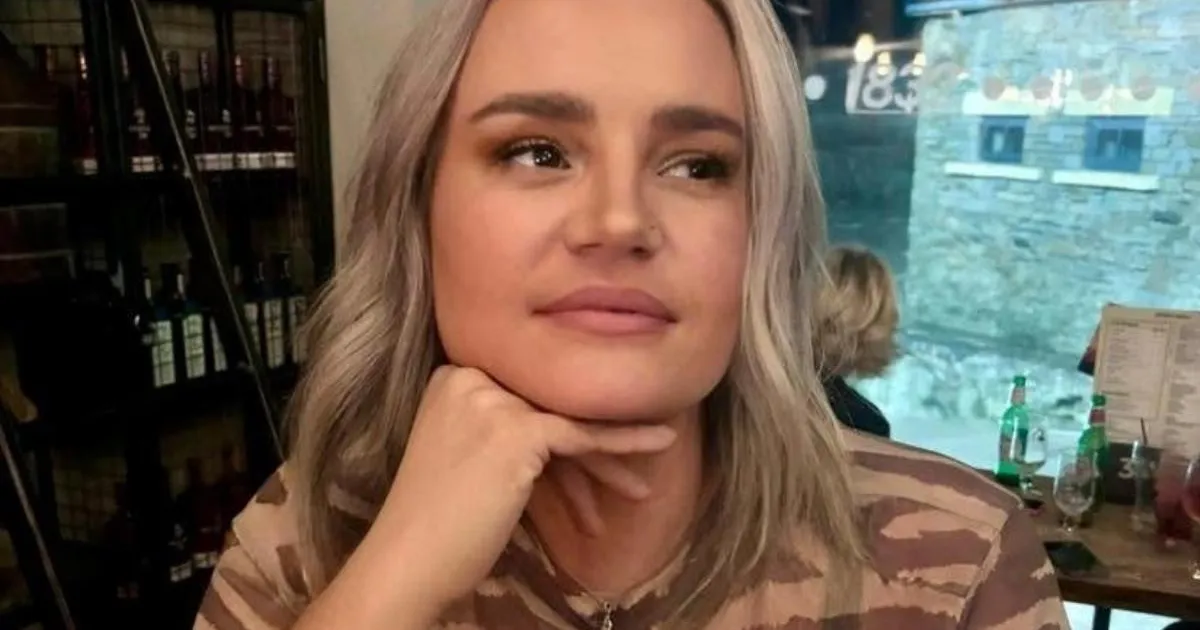
On the afternoon of Monday, October 19, the town of Bridgend was shattered by a tragedy that began with a desperate phone call and ended in the loss of a beloved mother. Eleanor Barnfield, 47, known to her closest friends and family as Ella, was found collapsed at the wheel of her car after crashing into a wall on Coity Road. Emergency services were initially called to what seemed to be a road traffic collision shortly after 12:43 pm, but they soon discovered a far more horrifying truth. Eleanor had suffered puncture wounds that were completely unrelated to the crash. She had been stabbed before she ever got behind the wheel. She had managed to dial 999, her voice full of fear and pain, but the call was cut off. With her life slipping away, and reportedly told that an ambulance would be a long time coming, she made a split-second decision that would come to define the final act of her life: she got into her car and tried to drive herself to safety. She covered only about 300 yards before her injuries overwhelmed her, causing her to veer off the road and slam into a wall. She was rushed to hospital, but nothing could be done to save her. Later, a 61-year-old man from Bridgend was arrested on suspicion of murder and taken into police custody. The first photograph of Eleanor, released by South Wales Police, shows a woman with a gentle, warm smile, a face full of kindness and light. It is a face her family described as belonging to the bravest person they have ever known. In the days that followed, that image would become a symbol of a life stolen too soon, a cherished mother whose last act on earth was an instinct to survive.
No tribute can ever capture the full magnitude of a loss like this, but Eleanor’s family came close. In a heartbreaking statement released after her death, they said: “Mum was the kindest, most loving, bravest person in the world. She meant everything to us and will be forever loved and missed deeply by her devoted family and friends. She was our rock.” To be called a rock by your children is to know that you were their shelter, their stability, their refuge in a world that often feels chaotic. Eleanor clearly held that role with grace and strength. The nickname Ella suggests a closeness, a warmth, a familiarity that only the loved and trusted earn. She worked for Valleys to Coast housing, an organization dedicated to providing homes and support to people across the Bridgend area. On the day she died, she was making a house visit to a retirement complex. That detail is unbearably poignant. Eleanor spent her professional life caring for other people, often vulnerable people, the elderly, the isolated, those who needed help navigating the system. She went into homes where residents trusted her, welcomed her, relied on her. She was not a distant employee sitting behind a desk; she was on the front line of compassion. Her family’s words, read through tears by those who loved her, remind us that behind every headline there is a real person, one whose absence will be felt in ordinary moments forever, in empty chairs, unread messages, and memories that now carry both love and loss.
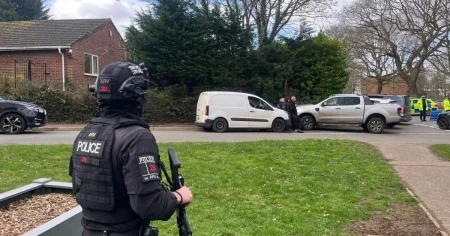
In the aftermath of her death, a harrowing sequence of events has begun to emerge. Eleanor was making what should have been a routine visit when she was attacked inside the retirement complex. She suffered stab wounds, injuries that would later be described as puncture wounds unrelated to the collision. Somehow, despite the severity of what had happened, she was able to call 999. The call, however, was abruptly cut off. According to neighbours, Eleanor was then told that there would be a long wait for an ambulance. It is almost impossible to imagine what must have gone through her mind in those moments. Perhaps she sat alone, bleeding, listening to the silence, waiting for the sound of sirens that never came. Perhaps she looked down at her phone and realized that help was still too far away. What is known is that she made a choice no one should ever have to make: she got into her car and drove toward the help she so desperately needed. She managed to travel roughly 300 yards before her body finally gave out. Her car crashed into a wall on Coity Road, and that crash is what first alerted the emergency services. But when police arrived, they knew immediately that this was no ordinary accident. The wounds on Eleanor’s body were not from the collision; they were from a weapon. The suspect, a 61-year-old man from Bridgend, later barricaded himself inside his room at the retirement complex. According to locals, armed police swooped on the scene, their presence in a quiet residential complex terrifying residents who had already been shaken by violence just footsteps away. People were displaced from their homes while officers worked to bring the situation under control. The suspect was eventually arrested without further harm to anyone else. But for Eleanor, it was too late. She had died from her injuries, leaving behind a family in pieces and a community searching for answers.
The police response has been marked by both sorrow and determination. Chief Superintendent Jason Rees of South Wales Police issued a statement that tried to balance condolence with reassurance. He said: “Our thoughts remain firmly with Eleanor’s family. I want to assure the community that teams of detectives and specialist staff are investigating. We appreciate the patience and support of residents, especially those displaced following the incident. Local communities may notice an increased police presence as our investigation continues.” The mention of displaced residents is a reminder that the shockwaves of violence reach far beyond the victim. Elderly people who called the retirement complex home were forced to leave their rooms, their familiar spaces, while armed officers moved through the building. The fear they experienced is not something they will easily forget. The sight of police in tactical gear, searching for a man barricaded in his room, was a terrifying intrusion into lives that should have been peaceful. Meanwhile, the ambulance service has faced difficult questions. It has been reported that Eleanor was warned about a long wait for an ambulance before she decided to drive herself. The Wales Ambulance Services University Trust has so far declined to comment, saying only: “Inquiries are ongoing for this incident and it would be inappropriate to comment further at this time.” That carefully worded statement will do little to ease the anger and grief of those who believe Eleanor might still be alive if help had arrived sooner. It is not a question of blame; it is a question of compassion. No one with stab wounds should ever have to wonder whether it is safer to wait or to drive themselves to a hospital. Eleanor’s desperate 300-yard journey is a haunting symbol of a system under strain, and of a woman who refused to give up.
Eleanor’s employer, Valleys to Coast housing, has also paid tribute to her, saying: “We are deeply saddened by the tragic incident in Bridgend on October 19, and can confirm that a member of our team was involved. Our thoughts are with our colleague’s family, friends and everyone affected by this.” Those words, though carefully constructed, cannot fully express the atmosphere inside the organization she left behind. Her colleagues are grieving. They are staring at an empty desk, remembering shared jokes, quiet moments of advice, the small kindnesses that made Eleanor who she was. She was not just a name in a news article; she was a person who brought warmth to her workplace and dignity to her work. For the residents of the retirement complex, the pain is deeply personal. Eleanor came to help them, to support them, and she lost her life in the process. That is a fact that will never feel fair. The broader Bridgend community has also been left in a state of shock. People have left flowers at the scene of the crash, small bouquets tied to lampposts and railings, their petals shaking in the autumn wind. Social media has filled with messages of grief and disbelief. Strangers who never met Eleanor have felt the weight of the tragedy. Friends have shared stories of her kindness, her bravery, her laugh. In the coming weeks, the legal process will move forward, and the suspect will face justice. But justice cannot bring Eleanor back. For now, the most important thing is to remember her as she truly was, a loving mother, a devoted friend, a woman who spent her life helping others and whose final moments were marked by incredible courage.
At its heart, this is not a story about a suspect or an investigation. It is the story of a woman whose life was defined by love and service, and whose death has left a permanent scar on everyone who knew her. Eleanor Barnfield was the kind of person who cared for others without hesitation, who visited retirement complexes to support elderly residents, who answered calls for help, who showed up again and again with patience and compassion. And when she found herself in mortal danger, she fought with everything she had. The 300 yards she covered before collapsing were not just yards; they were the final, heroic miles of a life devoted to pushing forward. Her family called her their rock. That rock has been taken away, and those who leaned on her are now struggling to stand in the wreckage. But the values she embodied, love, courage, selflessness, will remain in the hearts of everyone she touched. As the months pass, there will be court hearings, evidence, and perhaps a trial. Her family will have to sit in a room and listen to the details of how their mother died. It will be unbearable. But they will also know that the world saw Eleanor’s bravery. She did not simply wait for death; she tried to escape it. That courage cannot be undone. The community of Bridgend must now find a way to heal, by remembering Eleanor’s work, by supporting her family, and by demanding that the systems meant to protect people are good enough. It must ask how a woman with stab wounds was left waiting for an ambulance, and what can be done so that no other mother has to drive herself to a hospital while bleeding. The answers will not come easily. But they are owed to Eleanor, and to everyone who loved her. She was the kindest, most loving, bravest person in the world. She was someone’s rock. And now, carried by love and memory, she rests in peace.