



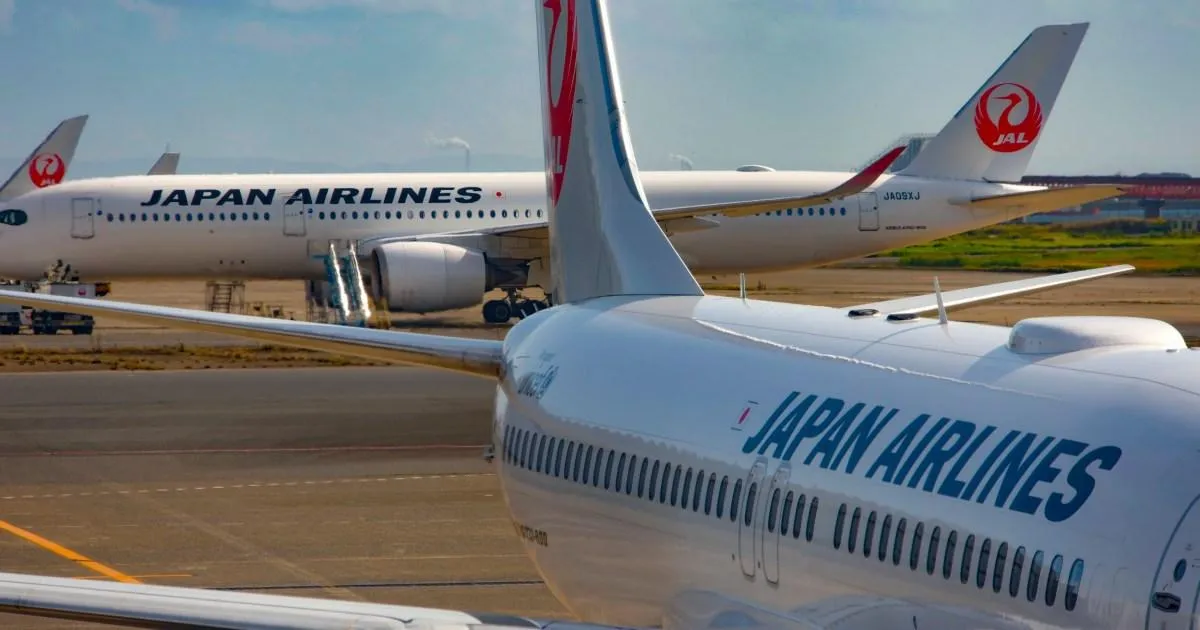
It began as an utterly ordinary Monday morning at Fukuoka airport, the kind of day when ground crews move through their routines with practiced ease, ticking off checklists and preparing aircraft for the next leg of their journeys. Japan Air Commuter flight was due to depart for Kagoshima, a short hop across the Kyushu region, and passengers were likely settling into their seats, stowing hand luggage and thinking about their travel plans. Then, in the most unexpected place imaginable, a mechanic spotted something that did not belong. Under the carpet of the aircraft, curled in the shadows and measuring about 40 centimeters long, was a snake. Not a thick, intimidating python or a brightly colored coral species, but a slim, non-venomous reptile that had, somehow, managed to sneak aboard. There was no hissing, no dramatic rattling, just a silent presence beneath the cabin floor. That single discovery threw the airport into a state of controlled chaos. The flight was promptly cancelled, passengers were told to disembark, and an air of disbelief settled over the scene. How, everyone wondered, did a snake get onto an airplane without anyone noticing? It was a question that would stump airline staff, wildlife experts and passengers alike, and it turned an otherwise forgettable travel day into a bizarre tale that would be told for years.
The aftermath of the discovery was neither quick nor simple. Once the snake was found, the decision to cancel the flight was almost automatic, but the real challenge began after the cabin was cleared. According to reports from Kyodo News, a wildlife control expert was called in to conduct a thorough search, and for the next 24 hours the aircraft became an unlikely crime scene. The search was exhaustive, with inspectors checking every conceivable hiding spot: under seats, behind panels, in overhead compartments, in the lavatory, and along the wiring and lighting fixtures that snake through an aircraft’s interior like metal veins. The little reptile had seemingly vanished, adding a layer of tension and absurdity to the situation. Passengers were left scrambling to rebook their journeys, some losing valuable time and others simply marveling at the absurdity of the delay. Japan Airlines, for its part, issued a heartfelt apology, acknowledging the inconvenience caused by the day’s strange events. “As far as we can determine, there has never been a case of a snake getting into the cabin,” the airline said in a statement. It was a remarkable admission, made even more remarkable by the sheer weirdness of the scenario. For the passengers involved, the cancellation was no doubt frustrating, but there was also something almost comical about the idea of a tiny, harmless snake single-handedly grounding a modern jetliner.
Where did the snake come from? That was the question on everyone’s mind, and it remained annoyingly unanswered even after the hunt concluded. Experts eventually determined that the creature was likely wild and completely harmless, but that only deepened the mystery. Snakes do not simply walk onto airplanes. They require a path, a way in, a chance, and yet this particular snake had somehow found a route through the airport’s security perimeter, past the ground crew, into the aircraft’s cabin and beneath the carpet without being detected. It might have slithered aboard during an earlier flight from Izumo, remaining hidden during the landing in Fukuoka and quietly waiting until the next departure. It might have crept in through an open door during a maintenance or catering stop. Or it might have hitchhiked in the luggage or equipment of an unsuspecting passenger or crew member. The total lack of any prior incident made the episode all the more puzzling. Japan Airlines was clearly baffled, and the wildlife experts were not far behind. It was an odd little intrusion of the natural world into the hyper-managed, security-conscious world of modern aviation, a reminder that even the most carefully controlled environments are not entirely immune to the whims of nature.
This was not, however, the first time that a snake had turned up in an aviation setting, and comparing those earlier incidents only added to the strangeness of the story. In 2019, a 20-year-old man accidentally transported a snake from Florida to Maui after it slithered into his rucksack during an outdoor excursion. He had no idea that he had brought a guest along until he arrived at his rental property in Pukalani and discovered a 30-centimeter black racer snake slithering through his belongings. The young traveler had essentially provided free international transport to a reptile that had no passport and no ticket, and the revelation was met with a mixture of shock and amused disbelief. Then there was the 2022 AirAsia flight that had to be rerouted after passengers spotted a pale yellow snake lounging along a lighting panel above their heads. The crew acted quickly, but the flight’s diversion turned a routine journey into an anxiety-filled ordeal for everyone on board. Each of these incidents shared the same fundamental absurdity: a creature that has no business being inside an aircraft somehow ends up there, and humans are left to deal with the consequences. In this latest case, the snake’s minuscule size and harmless nature somehow made the whole affair more charming than frightening, although the 24-hour search and flight cancellation gave it a serious edge.
For aviation authorities and airport biosecurity teams, a snake on a plane is more than a comedic footnote; it is a reminder of the constant battle to keep aircraft free of all manner of unwanted biological stowaways. Snakes can hide in wheel wells, cargo holds, catering carts, air conditioning units, and even the folds of passengers’ clothing. They can survive surprisingly long trips in dark, cramped spaces, and their cold-blooded metabolism allows them to survive without food or water for extended periods. In tropical and subtropical regions, where snakes are common, airports have to take extra precautions, inspecting aircraft and nearby areas for any signs of reptile activity. The Fukuoka incident may have been the first of its kind for Japan Airlines, but it was not entirely outside the realm of possibility for people who study wildlife and aviation. There was also the faint possibility, raised elsewhere in the reporting, that the snake had simply made its way into the cabin from the surrounding environment. Fukuoka is a bustling city, but the airport is still surrounded by green spaces and waterways, and snakes are not uncommon in the area. Whatever the explanation, the episode highlighted just how difficult it is to keep a sterile boundary between the natural world and the metal birds that carry so many people through the sky.
In the end, the saga of the stowaway snake is one of those stories that makes people shake their heads and smile. It is a reminder that no matter how advanced our technology, how sophisticated our security systems, or how carefully we plan our days, nature has a way of slipping through the cracks. For the passengers whose flight was disrupted, the experience was probably inconvenient and perhaps a little unsettling, but it was also something to tell friends and family about for years to come. The airline, after all the chaos, could do little more than apologize and hope that the strange event would soon be forgotten. The snake itself, once caught, was no doubt returned to the wild, free to slither through grass and soil instead of aircraft carpet. The mystery of how it boarded the plane may never be fully solved, and perhaps that is part of what makes the story so endearing. In a world where so much is predictable and controlled, a tiny, harmless snake can still ground a jet, baffle an airline, and capture the imagination of people halfway across the globe. It might be a minor news item, but it carries a gentle lesson: stay alert, keep your luggage zipped, and never assume that the wild is completely shut out. The next time you board a plane and glance at the floor beneath your feet, you might just think of a 40-centimeter serpent that wanted to see the sky too, even if it never had a boarding pass.