
A Quiet Street, a Loud Bang, and a Barber Who Ran Toward Danger
Wangaratta, a peaceful city in northeastern Victoria, is the kind of place where life moves at a familiar, unhurried pace. It is a community of wide streets, local shops, and friendly faces, where people still greet one another by name and news travels quickly through word of mouth. On Monday afternoon, however, that quiet rhythm was shattered in an instant. At 3:35pm, outside the office of independent MP Helen Haines on Murphy Street, a white Toyota Land Cruiser struck the 65-year-old politician as she stood near the boot of her own car. The impact was sudden and brutal, sending shockwaves through a community that would soon learn it was not an accident but an alleged attack. Helen Haines, a former nurse and midwife who has represented the electorate of Indi since 2019, suffered critical injuries to her lower body and was rushed to hospital, where she underwent surgery overnight. By Tuesday, the devastating truth had emerged: she had lost one of her legs. Yet in the immediate aftermath of the horror, a different story began to unfold—one of courage, instinct, and the extraordinary decency of an ordinary person. Ricky Jefferies, a local barber whose shop sits just next to Haines’ office, heard what he described as a “loud bang” and sprinted out onto the street without a second thought. He pulled the alleged driver from the vehicle, took a knife from the man’s pocket, and threw it away, holding the scene until police arrived. In a moment of chaos, Jefferies became an accidental hero—though he would later insist, with characteristic humility, that he was simply someone who happened to be in the right place at the right time.
A Brutal Act, a Swift Response, and a Community Left Reeling
The details of the incident that emerged over the following hours painted a disturbing picture of premeditation and violence. According to early investigations, the driver of the white Land Cruiser appeared to perform a U-turn before striking Haines as she was loading or unloading items from the boot of her car. It was a deliberate act, police suggested, not a tragic mistake. The attack took place in broad daylight, on a busy street, in a town where political violence is almost unimaginable. Police were on the scene within seconds of the first calls coming through, and bystanders had already intervened, tackling the man as he reportedly attempted to exit the vehicle. Brendan Nugent, a 43-year-old man from the nearby town of Tarrawingee, was arrested at the scene and later charged in connection with the attack. He was taken into custody without further incident, but the questions around his alleged actions only grew. Authorities provided no motive for the attack, and the investigation was widened to include multiple agencies, including counterterrorism units. While the involvement of such specialised teams does not necessarily mean the attack was terror-related, it underscored the seriousness with which authorities were treating the case. For the people of Wangaratta, the news was a jolt of disbelief. This was not the kind of thing that happened in their town. This was not the kind of thing that happened to Helen, a woman many had come to know not just as a politician but as a friend, a former health worker, and a tireless advocate for her community. As police cordoned off the street and forensic teams combed the scene, residents gathered in small groups, trying to make sense of a senseless act.
The Barber Who Refused to Be Called a Hero
Amid the fear and confusion, one name emerged as a beacon of ordinary bravery: Ricky Jefferies. The barber, whose shop is situated directly next to Haines’ office, had been working an ordinary Monday afternoon when he heard the crash. “It was crazy, I just ran out the front to see what was happening,” he told reporters the following day. What he saw was a scene of chaos and danger. The alleged attacker was still in or near the vehicle, and Jefferies did not know what he might be capable of. Acting on instinct, he pulled the man from the car, and in doing so, noticed something that made his blood run cold. “He did have a knife,” Jefferies said. “He didn’t pull it out. I just wasn’t comfortable with his movements, and so I basically just took it out of his pocket and threw it away.” It was an act of quick thinking that may well have prevented further tragedy. Prime Minister Anthony Albanese was among the first to praise Jefferies, calling him a hero in a public statement. But the barber, whose modest shop might normally draw little attention, seemed uncomfortable with the label. “I don’t think I’m a hero. I think that I just was a person who had an opportunity to intervene in a safe-ish sort of way,” he said, according to the BBC. His words were striking in their simplicity, a reminder that heroism often looks less like a movie scene and more like a neighbour running outside to help. The community, however, saw it differently. To them, Jefferies was the man who ran toward danger when others might have frozen, who acted when every second counted, and who perhaps gave Helen Haines the chance to survive.
A Life of Service and a Family’s Gratitude
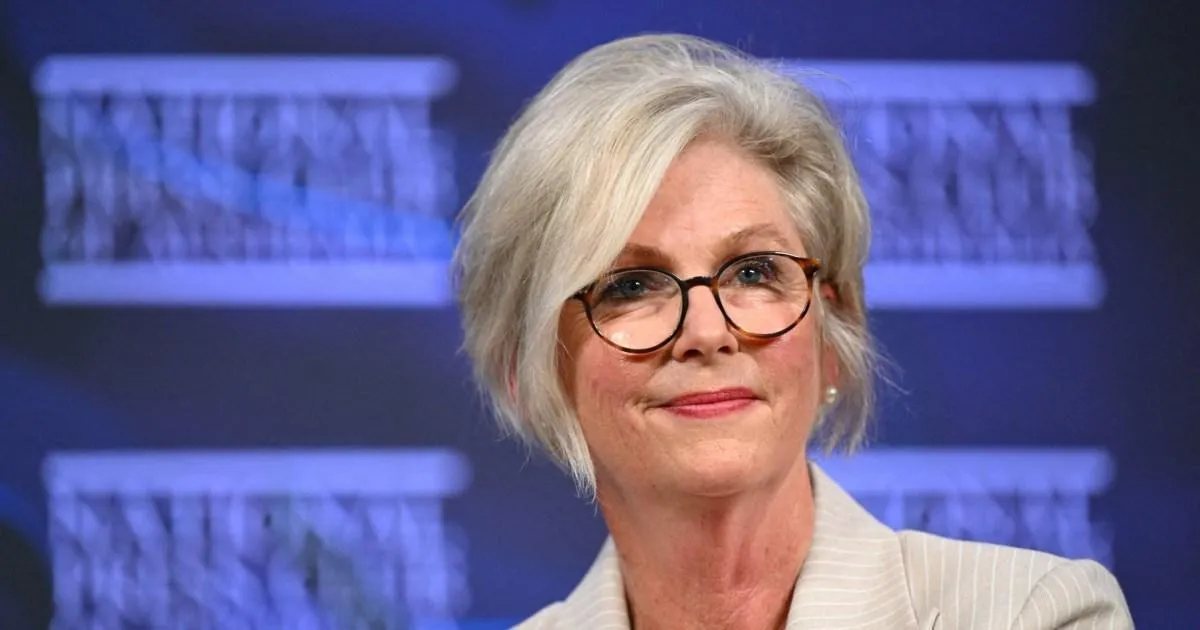
Helen Haines is not the kind of politician who keeps her distance from the people she represents. Before entering Parliament, she worked as a nurse and midwife, dedicating years of her life to caring for others. In 2019, she was elected as the independent member for Indi, a vast electorate in northeastern Victoria that includes the cities of Wodonga, Wangaratta, and Benalla. She quickly earned a reputation as a diligent, compassionate, and fiercely independent representative—someone who put her community first and her party allegiances second. She was known for her calm voice, her evidence-based approach, and her genuine love for the region she called home. It is why the attack on her felt so personal to so many. She was not just a politician in a suit; she was Helen, the woman who could be seen at local markets, at community events, and in the corridors of power fighting for rural voices. In the wake of the attack, her family released a statement thanking the “swift assistance of bystanders” and the emergency services who responded with such speed. They also asked for privacy as they gathered around her bedside. Haines remained in critical condition after undergoing surgery overnight, and the news that she had lost a leg was met with an outpouring of grief and support from across the political spectrum. Colleagues from all parties set aside their differences to express their shock and send their best wishes. In Wangaratta, flowers began to appear outside her office, placed by residents who wanted to show that their community stood with her, just as she had always stood with them.
The Suspect’s Family Speaks: Shock, Devastation, and a Friendship Strained
As the investigation continued, another layer of tragedy emerged—one that spoke to the tangled and deeply human nature of the case. Brendan Nugent’s father, Rod Nugent, and Rod’s partner, Christine Cunningham, released a statement that added a complex and heartbreaking dimension to the story. In it, they revealed a personal connection to the victim that made the attack all the more baffling. “Helen has been our friend for more than 20 years and what happened to her yesterday is devastating and unfathomable,” they said. “All of our love and all of our thoughts are with Helen and her family and friends.” The words hung in the air like a weight. Here was the family of the accused, speaking not with anger or defiance but with sorrow and bewilderment, acknowledging a decades-long friendship with the woman who had been so brutally harmed. They also extended their thanks to the members of the local community and police who came to Haines’ aid after what they themselves described as “the shocking and horrific crime.” “We will be assisting Victoria Police in any way we can,” they added. It was a statement that offered no excuses and no explanations, only a profound sense of grief and a recognition that something terrible and inexplicable had occurred. For those who knew both families, the news was especially difficult to comprehend. How could a man whose family had called Helen Haines a friend for more than twenty years become the central figure in such a violent attack? The question hung over the investigation, unanswered. Police continued to examine the evidence, speak with witnesses, and piece together the events leading up to the moment on Murphy Street. But no motive had been established, and the silence only deepened the sense of collective mourning.
Questions Without Answers, and a Community’s Quiet Resolve
In the days following the attack, Wangaratta found itself at the centre of a national conversation about violence, politics, and the safety of public figures. The involvement of counterterrorism authorities in the investigation added an unsettling layer to an already disturbing story. But for the people who knew Helen Haines best, the focus was not on the politics but on the person. They remembered her as a dedicated public servant, a former nurse who had spent her career caring for others, and a woman of great warmth and resilience. They spoke of her humour, her intelligence, and her unwavering commitment to doing what was right, even when it was not popular. The road ahead will be long and difficult. Haines faces months of rehabilitation and the profound challenge of adjusting to the loss of a leg. Her family, her friends, and her constituents will be there to support her every step of the way. In the meantime, questions remain. Why did this happen? Was it a random act of violence, a targeted attack, or the product of a mind in distress? The authorities are working to find answers, but some truths may never fully come to light. What is certain is that a woman who devoted her life to serving others was struck down in the middle of an ordinary day, in a town that believed itself safe from such horrors. But so too is it certain that in the darkest moment, a local barber ran out of his shop without hesitation, and bystanders came together to stop a threat and protect a life. In the end, that is the story that will define this tragedy—not the hate or the violence, but the love, the courage, and the quiet resolve of a community that refuses to be broken. Helen Haines is still here. And her community is standing beside her.