

The Fear in the Sky: A Routine Flight Turned Suddenly Terrifying
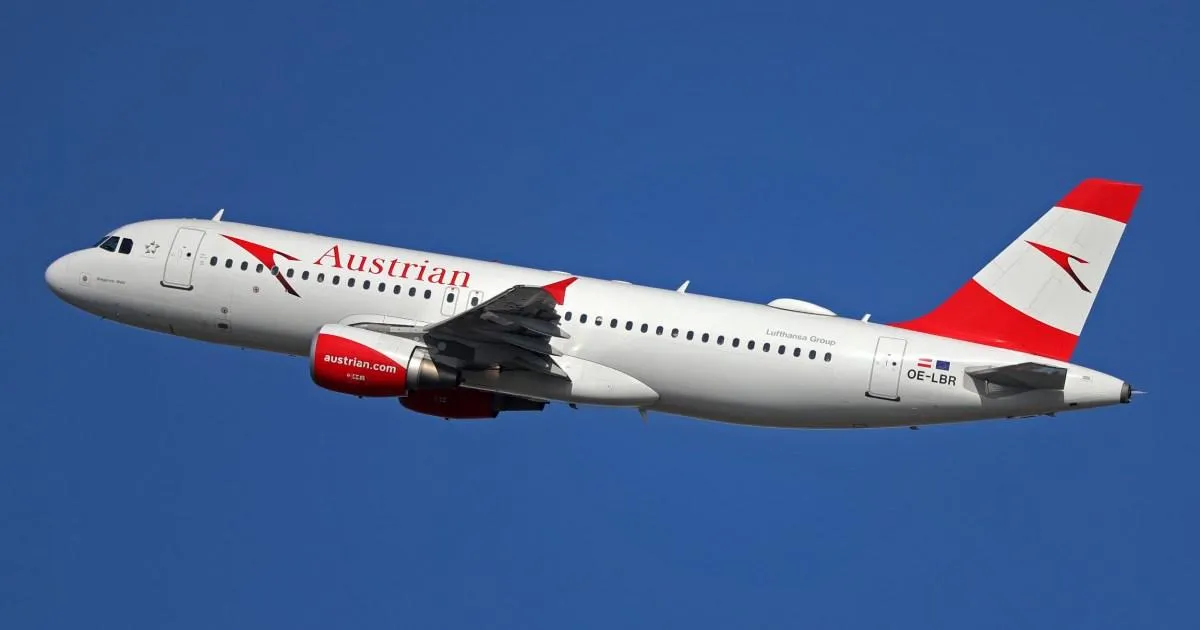
At first, it was just another evening flight, the kind that thousands of people take every day without a second thought. Austrian Airlines flight OS82 had departed from Tel Aviv’s Ben Gurion Airport on Sunday evening, carrying 51 passengers and six crew members on a routine journey to Vienna, Austria. Among those on board was a group of young people heading to speak at the United Nations—a delegation made up of promising, hopeful individuals, probably excited about the opportunity ahead, perhaps reviewing notes or chatting quietly in the cabin as the Airbus A320 climbed into the darkening Mediterranean sky. The flight rose to a cruising altitude of 38,000 feet, and everything seemed normal. The seatbelt signs were off, the cabin crew began serving refreshments, and passengers settled in for what should have been a peaceful few hours. But more than two hours into the journey, as the aircraft crossed into Romanian airspace, something went terribly wrong. The pilots made a quiet but urgent declaration of a general emergency, a distress signal that immediately alerted air traffic controllers to an unfolding crisis. Without explanation to the passengers at first, the plane changed course, turning away from Vienna and heading instead toward the Bulgarian capital, Sofia. And then came the sight that no traveler ever wants to see outside the window: a Bulgarian Air Force MiG-29 fighter jet, roaring alongside the commercial airliner, ready to protect it from an unthinkable threat. For anyone on board, that moment must have been dizzying with fear—the realization that this was no ordinary diversion, but an airborne emergency with potentially deadly stakes.
Inside the cabin, the mood shifted from casual calm to quiet dread. The crew had been trained to keep passengers composed, and they did their best, but the tension was palpable. Rumors began to circulate among the passengers: something suspicious had been found on the plane; there were reports of a bomb. One passenger later told Ynet that they had been informed about an anonymous bomb threat made against the flight. Another account mentioned a suspicious object discovered aboard. The young delegates, who had boarded the plane with hopes of addressing the international community, now found themselves trapped in a nightmare, suspended thousands of feet above the ground with nowhere to go. Some passengers clutched the hand of a stranger next to them. Others quietly prayed, hoping that the fighter jet outside was a shield rather than a sign that danger was imminent. Flight attendants, physically exhausted and internally terrified, continued to perform their duties with professional calm, delivering instructions and trying to reassure anxious travelers. The captain’s voice over the intercom was steady, but his words were carefully chosen—there was a security issue, an emergency landing was necessary, everything would be okay. But nothing felt okay. The silence in the cabin was interrupted only by muffled sobs and whispered conversations. Outside, the MiG-29 stayed close, a menacing yet reassuring presence, a reminder that the world was watching and doing everything possible to keep the plane and its passengers safe. For those on board, time seemed to stretch into an endless, agonizing limbo.
On the ground, Bulgarian authorities moved with striking speed and precision. The flight had just entered Romanian airspace when the emergency was declared, and the decision was made to divert to Sofia, which was the nearest suitable airport. The Bulgarian Ministry of Transport later confirmed that the crew had reported receiving a bomb threat and made the immediate decision to land. According to ministry officials, a Bulgarian Air Force fighter jet was scrambled to escort the aircraft until it touched down safely at Sofia Airport. An operational task force was quickly assembled, and emergency services were placed on standby. When the Airbus A320 finally descended toward the runway, the scene on the ground was one of controlled chaos: police vehicles, ambulances, fire engines, and security personnel all waiting in anticipation. The landing itself was smooth, a testimony to the skill of the pilots who had managed to bring the aircraft down safely under extraordinary pressure. As the plane rolled to a stop, passengers were likely overwhelmed with a mix of relief and lingering anxiety. They had survived the landing, but the ordeal was far from over. They were told to remain in their seats while armed security teams came aboard, and the atmosphere inside the cabin remained tense. The aircraft was then completely searched, luggage was examined, and every corner of the plane was inspected for explosives. The passengers were eventually disembarked and led to a safe area, where they waited in confusion, exhaustion, and uncertainty, not knowing whether they would be able to continue their journey or whether a hidden threat had been waiting all along.
Austrian Airlines later released a statement confirming the seriousness of the situation. “A threat was made against flight OS82,” the airline said, though it offered no further details about the nature of the threat. The airline also stated that the aircraft, passengers, and crew were all thoroughly searched, and ultimately “no threat was identified.” For the passengers, this news must have been profoundly bittersweet. On one hand, there was no bomb, no explosive device, no waiting attacker—the danger was a false alarm, or at least a threat that was never realized. On the other hand, they had been put through a terrifying ordeal, forced to confront their own mortality at 38,000 feet, without knowing if they would ever see their loved ones again. The anonymous report, whatever its origin, had turned an ordinary flight into a crisis, disrupted the lives of dozens of people, and triggered a military response involving a fighter jet and an emergency landing in a foreign country. Yet despite the fear, the airline confirmed that the flight later continued its journey from Sofia to Vienna with all passengers back on board. This detail is remarkable in itself. It takes a certain kind of courage to re-board the same airplane that had just been the subject of a bomb threat, to fasten your seatbelt and look out the window at the same sky that once felt so terrifying. But the passengers did it, perhaps driven by exhaustion, perhaps by the desire to simply go home, or perhaps by a quiet faith in the crew that had already brought them safely through one brush with disaster.
This incident did not happen in a vacuum. The aviation industry remains on high alert following the attempted hijacking of a Flydubai flight the previous month, a terrifying event that was thwarted by a hero pilot and quick-thinking passengers. That attempted hijacking was a stark reminder that commercial aircraft can still be targets, and that the unthinkable can happen in the seemingly safest of settings. For the passengers of flight OS82, the memory of that recent event probably made their ordeal even harder to bear. When the captain announced the emergency, their minds might have flashed to that other flight, imagining what could happen next—a struggle in the cockpit, a desperate attempt to regain control, a catastrophe. But this time, the threat never materialized. There was no bomb, no hijacker, no violent struggle. Yet the psychological trauma remains real. For the young delegates on their way to the United Nations, the journey to Vienna will always be remembered not as a triumphant step toward their future, but as a night of terror above the clouds. For the other passengers, the flight will remain a scarred memory, a reminder that every time we board a plane, we are placing our lives in the hands of pilots, security systems, and a vast network of professionals who work to keep us safe. The incident also underscores the immense pressure on airlines and governments to treat every threat seriously. Even a false alarm costs millions, disrupts schedules, and tests the nerves of everyone involved, but the alternative is unthinkable. In an era of heightened global anxiety, security response must be fast, aggressive, and thorough.
In the end, no explosive was found, no attacker was apprehended, and no one was physically harmed. But the emotional impact of that night will linger for a long time. The flight from Tel Aviv to Vienna became a temporary stage for human vulnerability, resilience, and the instinct to survive. It was a reminder that safety is never guaranteed, that the ordinary routines of life can be overturned in an instant, and that the calm blue sky can suddenly become a theater of fear. The pilots who declared the emergency and landed the plane safely deserve immense gratitude. The cabin crew who maintained order in the face of chaos deserve recognition. The Bulgarian authorities and the fighter jet pilots who escorted the aircraft demonstrated the power of international cooperation and rapid response. And the passengers, especially the young delegates with dreams of addressing the United Nations, showed a remarkable willingness to continue their journey even after such a terrifying interruption. As the flight eventually touched down in Vienna, long after the sun had set and the crisis had ended, the passengers walked off the plane as different people—shaken, weary, but alive. They were greeted not by flashing emergency lights, but by the quiet familiarity of a late-night airport, where the world had returned to its normal pace. It is easy to dismiss what happened as a bomb scare that was nothing in the end. But for those who lived through it, it was everything. It was a night when the world stood still, when every sound and shadow seemed threatening, and when the simple act of landing safely became the greatest gift imaginable. And that is the story that will remain with them forever—not the fear itself, but the resilience they found within it, and the quiet miracle of walking away from the sky with their lives intact.