
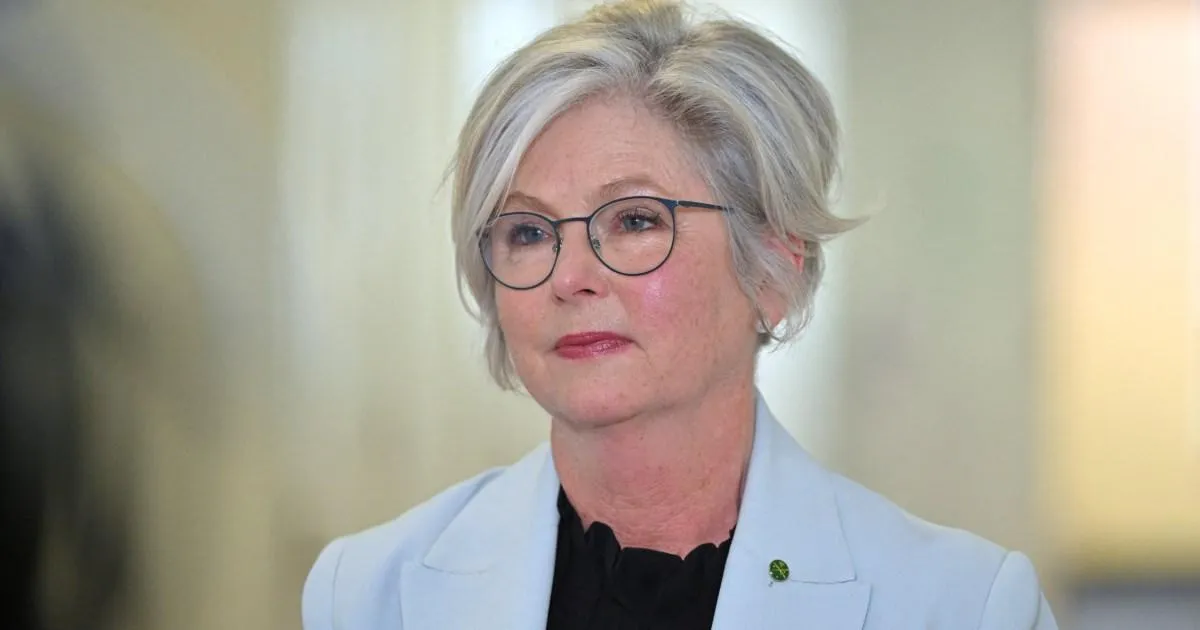
On an otherwise ordinary afternoon, the quiet country rhythm of Wangaratta, a regional city in northeast Victoria, was shattered in an instant. Murphy Street, the kind of road that usually carries locals between errands and familiar faces, became the scene of a terrifying and violent incident that no one could have anticipated. At approximately 3.35pm local time, Helen Haines, the 65-year-old independent MP for the federal electorate of Indi, was outside her office when a white Toyota Land Cruiser allegedly struck her. The impact was so severe that she was pinned between vehicles. A witness who happened to be nearby described the moment to the ABC’s 7.30 program, recalling a loud bang followed by the horrifying sight of a woman trapped between two cars. It was one of those moments when time seems to slow down, when ordinary people are suddenly forced to respond to an emergency that feels impossible to process. Haines suffered critical lower body injuries, and early reports suggested that she may lose one or both of her legs. For a woman who had dedicated her working life to serving a region she loves, the sheer brutality of the attack was almost too much for the community to absorb. The street outside her office, a place where constituents had come to speak with their MP, was quickly sealed off. Police arrived, along with paramedics, and the quiet street was transformed into a crime scene. As news of the incident spread, shockwaves rippled through Wangaratta and far beyond. Neighbours, staff members, and political colleagues were left stunned, struggling to understand how violence could strike so close to home. At this stage, the motive, if any, remains unclear. But the emotional impact was immediate and profound, and an entire community began to hold its breath.
Helen Haines is not the kind of politician who seeks the spotlight. In an era where politics is often defined by confrontation and loud argument, Haines has carved out a different kind of public life. Since being elected as the independent member for Indi in 2019, she has become known for her quiet determination, her respectful manner, and her unwavering commitment to the people she represents. Indi is a large, rural electorate that hugs the border of Victoria and New South Wales, and Haines has always understood that representing such a community means being present, being accessible, and being willing to listen. She has been described as a well-loved member of her community, a woman of integrity who treats everyone with respect. Those qualities were reflected in the outpouring of concern that followed her injury. Her family, clearly shaken, released a short statement thanking the swift assistance of bystanders, the dedicated health workers who came to her aid, and the police who responded. They asked for privacy, saying that no further comment would be made at that time, and ended with a simple and deeply human plea: “Please keep Helen in your thoughts.” That request touched people across the country. As Haines remained in hospital, the full extent of her injuries was still being assessed. The possibility that she might lose one or both legs was a devastating thought, not just because of the physical pain involved, but because Haines is known for her energy, her tireless campaigning, and her constant presence in the community. The idea of her being confined and suffering was difficult for those who know her to bear. Her staff, who had worked alongside her day after day, were said to be devastated. In the face of such uncertainty, all anyone could do was wait, hope, and send their support to a woman who had given so much of herself to others.
The aftermath of the incident raised difficult questions not only about violence but about the safety of public figures in Australia. A 43-year-old man from Tarrawingee, a small nearby town, was arrested at the scene. According to police reports, he had been travelling in the white Toyota Land Cruiser and exited the vehicle after the collision. But before officers could intervene, bystanders had already acted. In a moment of extraordinary bravery, ordinary members of the public tackled the man and held him until police arrived. Their quick thinking and courage may have prevented further harm, and it was a reminder that even in moments of chaos, there are people willing to put themselves at risk to protect others. Police later confirmed that a knife was found inside the vehicle. The discovery only deepened the sense of unease. Was this a random act? Was it targeted? Was there a plan? Authorities said the motive, if any, remained unclear, but the presence of a weapon suggested that the situation could have been even more tragic. The man was taken into custody, and the investigation continued. For the community, the arrest brought some measure of relief, but it did little to calm the emotions stirred by the attack. People were left to wonder what could have led to such an event, and whether the attack was connected to Haines’s role as a politician, her public advocacy, or something else entirely. In a town like Wangaratta, where violence of this kind is rare, the incident felt deeply unsettling. The fact that someone had been willing to use a car as a weapon and had apparently been in possession of a knife raised alarms about the dark possibilities of the day. But amidst the fear and confusion, there was also gratitude—gratitude for the bystanders whose instinct was to help, for the emergency workers who responded with professionalism, and for the fact that Haines was still alive.
Political leaders, often divided by party lines, came together in a rare moment of unity and compassion. Australian Prime Minister Anthony Albanese addressed the incident directly, calling it an attack and stressing that it was not an accident. He spoke about Haines with warmth and respect, describing her as a well-loved member of her community and someone of integrity. “There’s a reason why Helen Haines is so loved and admired,” he said. “She’s someone of integrity. She’s someone who treats everyone with respect. And she’s someone who is a beacon of light for that community there in northern Victoria.” His words reflected the feelings of many, not only in her electorate but across the country. In a political landscape that can feel increasingly divided, Haines has been something of a bridge builder, someone who listens to different perspectives and works across party lines in the interests of her constituents. Opposition leader Angus Taylor, head of the Liberal Party, also expressed his grief, saying he was deeply saddened and distressed by the incident. The fact that leaders from opposing sides of politics could agree so readily on Haines’s value said a great deal about the kind of person she is. She was not a politician who sought to divide; she sought to represent. She was not driven by partisan loyalty; she was driven by a sense of duty to the people who elected her. That is why the attack felt like an attack on the community itself. It was a strike against someone who embodied the idea that politics could be honest, decent, and grounded in the real lives of ordinary people. Her colleagues on both sides of the aisle were shaken, and many took to social media to share their shock and prayers. In the hours after the incident, there was a collective understanding that something important had been threatened, and that the values Haines represented—kindness, integrity, and service—needed to be defended.
Haines’s career has been built on those values for many years. Before entering federal parliament, she had already established herself as a committed advocate for rural communities. She became the independent MP for Indi in 2019, continuing a tradition of independent representation in the electorate, and she quickly gained a reputation as a fierce campaigner for issues that mattered locally. One of the causes she became known for was the fight for an independent body to investigate corruption in public life. She fought fiercely for a national anti-corruption commission, a cause that won her admirers far beyond her own electorate. In a time when trust in political institutions has often been low, Haines stood out as someone who believed that accountability and transparency were not optional extras but essential parts of democracy. She also championed regional health services, education, and infrastructure, understanding that rural communities often need a strong voice to ensure they are not forgotten. She was scheduled to appear on ABC Afternoon Briefing on the day of the attack. The host of the program later revealed that Haines’s team had sent a message saying, “There’s been something very serious that’s happened. She cannot come on.” It was a chilling notification that something had gone terribly wrong. For those who knew her schedule, the contrast between her planned day and the reality of what unfolded was impossible to ignore. One moment she was preparing for a media appearance, the next she was fighting for her life. The incident also prompted conversations about the safety of elected representatives and the increasingly hostile environment in which public figures sometimes operate. Haines had never been the kind of person to build walls around herself; she was approachable, visible, and engaged. That accessibility was part of what made her loved. But it also meant she was vulnerable.
In the days and weeks ahead, the community of Wangaratta will have to come to terms with what happened. Healing will not come quickly. The image of a beloved MP pinned between cars on a familiar street is not something that will easily fade. But if there is any comfort to be found, it is in the way people responded. The bystanders who rushed to help, the health workers who fought to save her, the police who acted with professionalism, and the ordinary citizens who offered their thoughts and prayers all demonstrated the strength of human compassion. Haines has spent her career showing that kindness and respect can form the foundation of public life, and now she is receiving the same in return. Her family has asked for privacy, and they deserve it. They have also asked everyone to keep Helen in their thoughts, and people across Australia have answered that call. There will be many difficult days ahead for Haines, for her loved ones, and for her team. There will be surgeries, recoveries, and long hours of uncertainty. But if anyone can face those challenges with resilience, it is a woman who has spent her life standing up for others. The road will not be easy, and the physical and emotional scars may take a long time to heal. Yet the hope is that she will never have to face it alone. Her community stands with her. Her colleagues stand with her. And a country that has been reminded of the importance of decency in public life is holding her close, hoping for a full recovery and a future where she can once again walk the streets of Wangaratta, greeting the people she has always served with a warm smile and a strong voice.