

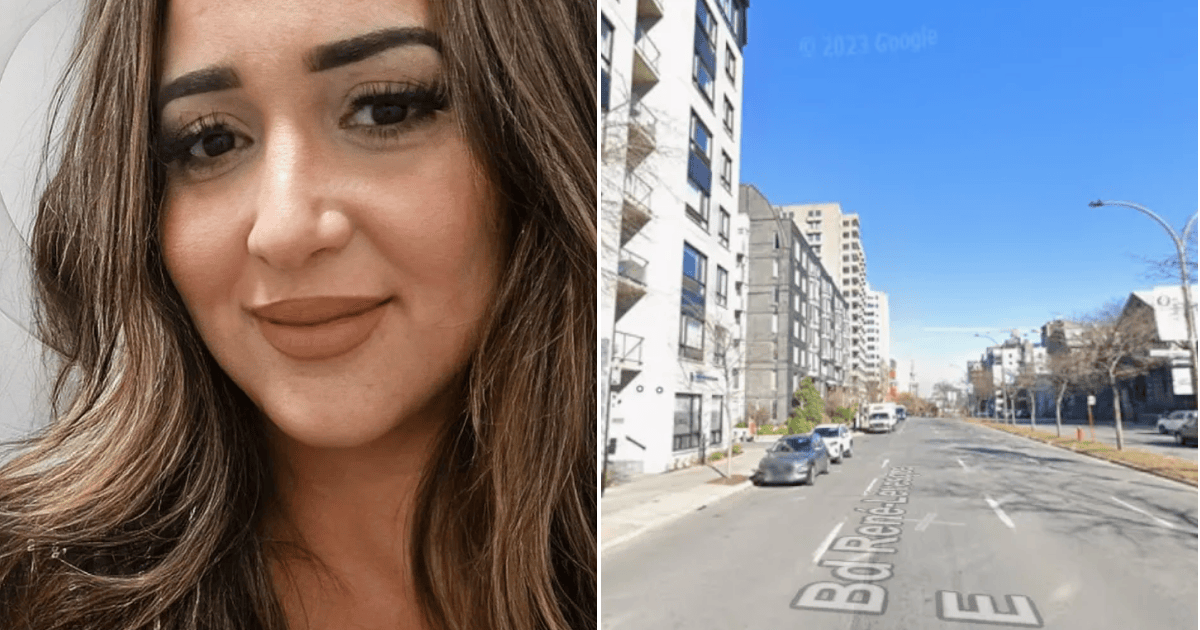
Leila Ben Salem’s life ended on an ordinary day, in an ordinary setting, while she was doing something millions of people do every day: sitting in front of a computer during a virtual meeting. She was at home, in the Ville-Marie borough of Montreal, connected to colleagues through a screen, likely discussing work, listening, perhaps smiling or taking notes. Nothing about that moment suggested danger. But while she was on that call, something terrible happened. Her colleagues, who were sharing that digital space with her, were suddenly confronted with the incomprehensible. It remains unclear exactly what they saw or heard, but the aftermath led to a request for a wellness check. When police arrived at her apartment on September 22, they found the 45-year-old dead. The shock of that discovery rippled outward, first through her workplace, then through the city, and eventually across the country. Leila was not a public figure. She was not famous. She was a public servant, an employee of the Canada Revenue Agency, someone who had dedicated her working life to serving Canadians in a quiet, behind-the-scenes way. She was also a daughter, a friend, a colleague, a human being with dreams and routines and people who loved her. The very mundaneness of her death scene is what makes it so haunting. She was not in a dangerous neighborhood or a volatile situation. She was in her own home, a place that should feel safe, participating in the kind of remote meeting that has become a staple of modern life. The fact that violence found her there, in that seemingly protected space, is a reminder of how fragile life can be and how quickly everything can change.
In the days following her death, investigators began piecing together what happened. Their work led to an arrest, and on the other side of that arrest stood a man whose name was previously unknown in connection with the tragedy: Youcef Moussaoui. The 33-year-old was taken into custody last Thursday after a warrant was issued. He has been charged with first-degree murder in the death of Leila Ben Salem. Moussaoui appeared in a Montreal courtroom via video link last Friday, a standard procedure but one that carries its own weight, the image of a person on a screen, accused of a devastating crime, his face visible to the court and, through the media, to the public. He did not enter a plea during that appearance, and his next court date is scheduled for December 21. What exactly led to Leila’s death remains unclear. Police have stated that the murder was not related to domestic violence, which complicates easy narratives and leaves many questions unanswered. Was this a random act? A dispute between acquaintances? A case of mistaken identity? The public does not yet know. Authorities have said that evidence gathered during the criminal investigation, including the alleged motive, will be made public as legal proceedings continue. For now, there is only the bare structure of the case: a woman is dead, a man is charged, and a community is left waiting for the truth. Moussaoui does not have a criminal record in Quebec, a detail that offers no comfort and perhaps only deepens the sense of bewilderment. How does someone with no prior history of violence become the central figure in a homicide investigation? That question will likely be explored in court. In the meantime, Leila’s death is recorded as the 19th homicide in Montreal this year, a statistic that reduces a life to a number but also stands as a sobering reminder of the toll violence takes on a city.
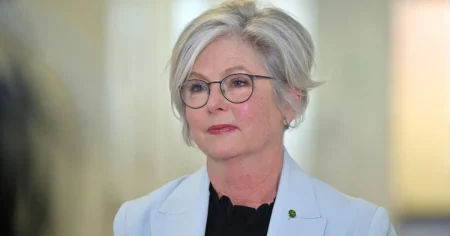
The outpouring of grief and tribute that followed Leila’s death revealed how much she meant to those around her, especially in her professional community. The Canada Revenue Agency, where she worked, expressed its condolences, as did the Union of Taxation Employees, the organization representing workers in that field. These official statements can sometimes feel formulaic, but in this case they carried genuine emotional weight because the loss was so sudden and so shocking. Several members of the Canadian government also offered tributes, including Prime Minister Mark Carney, who spoke not only about Leila’s death but about the life she had lived. He described her as a valued member of the Canada Revenue Agency, dedicated to serving Canadians, and noted that she was actively doing that work at the time of the assault. Those words matter because they remind us that Leila was not merely a victim. She was a person who showed up, who contributed, who took part in the collective effort of public service. Carney also promised that the government would do everything possible to ensure that the perpetrator of what he called a shameful crime pays the full price. Conservative Leader Pierre Poilievre echoed those sentiments, calling Leila a treasured member of the public service who had tragically lost her life. He extended condolences on behalf of his party to her family and loved ones. For those who had worked alongside Leila, these tributes may have offered some measure of validation, a public acknowledgment that her life mattered and that her death was not just a personal tragedy but a collective loss. Still, there is no forgetting that her colleagues were the ones who first sensed that something was wrong, who may have witnessed the horror unfold in real time through a video feed. They will carry that memory with them, along with the grief of having lost someone they knew, respected, and perhaps cared about deeply. The workplace will never feel quite the same.
Leila’s death did not occur in a vacuum. It came just days after another shocking crime, one that also captured the nation’s attention and left people struggling to understand. In Mobile, Alabama, 47-year-old Thomas Steele was arrested and charged with two counts of murder after the bodies of Christy Deloach, 65, and 85-year-old Dora Boone were found at their home. The details were horrifying: the two women had been decapitated, allegedly by Steele, who was related to them. The grim discovery was made after Steele’s aunt called 911, telling dispatchers that her nephew, whom she described as bipolar, had begun doing bizarre things after coming off his medication. According to reports, she said he had given away his phone and his car, behavior that was clearly out of character and alarming. The call for help came too late to prevent the tragedy. Steele was taken into custody, and his mugshot showed him wearing a disturbing grin, an image that circulated widely and added another layer of unease to an already disturbing story. He appeared in court late last week and will likely undergo medical evaluation to determine whether he is mentally fit to stand trial. The case raises deeply uncomfortable questions about mental illness, family responsibility, and the limits of intervention. Steele’s aunt recognized that something was wrong and reached out to authorities, but even that desperate act was not enough to save two lives. The tragedy in Alabama and the tragedy in Montreal are separated by thousands of miles and different circumstances, but they share a common thread: sudden, shocking violence that leaves families shattered and communities searching for answers. In both cases, the accused are human beings whose lives had intersected with the victims in ways that are still being unraveled. And in both cases, there are no easy explanations.
When violence strikes without warning, there is a natural human impulse to search for meaning, to find a story that makes the senselessness bearable. We want to know why. We want to assign blame, understand motive, and create a narrative that allows us to say, with some confidence, that this could have been prevented or that justice will be done. But sometimes the truth is messy. Sometimes mental illness plays a role, as it appears to in the Alabama case. Sometimes the motive is obscure, as it seems to be in the killing of Leila Ben Salem. And sometimes the justice system itself moves slowly, which can be frustrating for those who are grieving and desperate for closure. Leila’s family, her friends, and her colleagues are now in a painful limbo. They have lost someone they love, and they must wait for the legal process to unfold, attending hearings and reading news reports, hoping for answers but knowing that an explanation will not bring her back. The same is true for the families of Christy Deloach and Dora Boone, who have lost two beloved women in a way that defies understanding. It is important, at moments like this, to step back and remember that behind every headline is a cluster of human stories. Leila Ben Salem was not simply a homicide statistic or a name in a news article. She was a person with a life that had depth and texture. She had likely dreams of the future, small joys, daily struggles, relationships that defined her. The fact that she was killed while working from home adds a particular poignancy because it speaks to the way so many of us live now: balancing professional responsibilities and private life in the same physical space, often alone with only a camera and a microphone for company. That isolation can be a source of vulnerability, and her death is a chilling reminder of that.
As the months ahead unfold, the courts will do their work. Youcef Moussaoui will return to court in December, and evidence will be presented. Thomas Steele will face the legal consequences of his alleged actions, with mental health evaluations likely playing a significant role in the proceedings. In both cases, judges, lawyers, and juries will be tasked with determining accountability, and they will be expected to do so with fairness and dignity. But for the rest of us, the meaning of these tragedies extends beyond the courtroom. We can honor Leila Ben Salem by remembering her humanity, by acknowledging the quiet contributions of public servants like her, and by recommitting ourselves to creating a world where people are safer, where mental health crises are taken seriously, and where violence is not the tragic endpoint of a downward spiral. We can hold space for grief and also for hope, knowing that even in the darkest moments, communities can come together to support one another. We can offer condolences to the people who loved Leila, to her coworkers who will always remember that fateful video meeting, and to the families of Christy Deloach and Dora Boone, whose loss is equally devastating. And we can reflect on the fragility of life, how quickly an ordinary day can turn into a tragedy, and how important it is to treasure the people we have while they are still here. Justice may bring accountability, but it cannot undo what has been done. What remains is memory, resilience, and the shared determination to learn something from horror. Leila Ben Salem deserved to live out her life in peace, serving Canadians and enjoying the quiet pleasures of home. She was denied that chance. But she will not be forgotten. Her name, her face, and the story of her life will endure in the hearts of those who knew her, and in the collective memory of a country that mourns her loss.