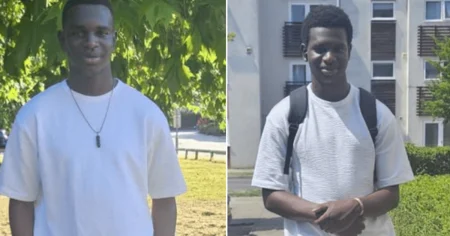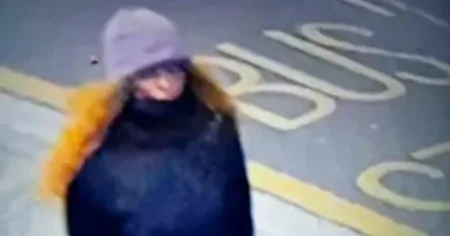
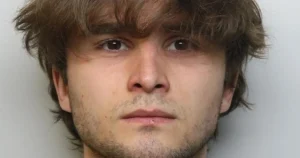

At twenty-one, Jamie Collins was on the threshold of everything. A robotics student at UWE Bristol, he was about to finish his degree and return home to Swansea, carrying with him the kind of promise that makes a family proud and a community hopeful. He was described by those who loved him as a caring young man, deeply passionate about equality, someone whose “unapologetic inclusivity” would later be called his legacy. On the evening of April 8, that future was destroyed in an act of violence so calculated that prosecutors described it as a “carefully planned and cold-blooded execution.” In the alleyway beside the house he shared with his housemate Zack Coughlan on Cleve Road in Filton, South Gloucestershire, Jamie was ambushed by a figure dressed entirely in black and wearing a mask. Coughlan, also 23 and also a final-year robotics student, had waited in hiding for Jamie to appear. He then stabbed Jamie repeatedly, leaving him dying in the garden of the home they shared. The attack was captured on CCTV, and in one of the most chilling details of the case, Coughlan later showed that footage to police as though he were an innocent bystander trying to help. By about 6pm, Jamie was alone and dying, while Coughlan cycled away on his housemate’s bike. Jamie was just two pieces of coursework away from graduating, two steps from finishing his degree and returning to Swansea. The sheer cruelty of that timing, the narrowness of the gap between life and the future he had worked toward, makes the loss feel even more senseless. This was not a sudden argument or a moment of madness; it was a premeditated ambush by someone who knew exactly where Jamie would be, someone who had shared his home and his daily rhythms. In that sense, the murder was also a profound betrayal of trust, one that would ripple through the lives of everyone who knew Jamie.
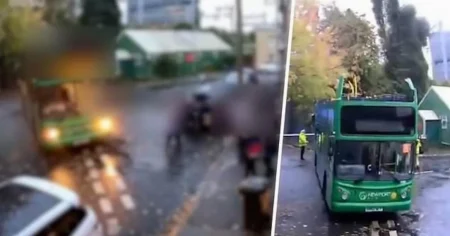
Even more sickening than the murder itself was the performance that followed. After leaving Jamie bleeding in the rear garden, Coughlan cycled away on Jamie’s bike, eventually abandoning it at a retail park and buying a change of clothes. His bloodstained clothes were then stuffed into bags, weighed down with bricks, and thrown into a duck pond roughly a mile and a half from the scene. By 9pm, he was back at the shared house, popping a pizza in the oven before settling in for an evening of gaming with friends. It is almost impossible to reconcile that image—a young man playing video games, acting as if nothing had happened—with the fact that his housemate was lying dead in the garden. At around 2am, Coughlan called 999 and pretended he had just discovered Jamie’s body in the rear garden. He played the role of the shocked, grieving housemate so convincingly that police initially treated him as a witness rather than a suspect. Jamie’s family even asked officers whether Zack was okay, because of how completely he had deceived everyone. That act of fake concern continued in the days after the murder. Coughlan told a university friend that he wanted to organise a memorial for Jamie, speaking as though Jamie had been his close friend rather than the person he had ambushed and killed. CCTV captured the moment he cycled away on Mr Collins’s bike, and every detail of his cover-up—the mask, the black clothing, the weighted bags, the false phone call—reveals a man trying to control a situation he must have known would eventually unravel. The pizza, the gaming, the performative worry: these were not the actions of someone in shock but of someone attempting to bury the truth beneath an ordinary, normal evening. It was a grotesque parody of everyday student life, and it added an extra layer of pain to the family’s grief.
Detectives, though, were not fooled for long. Although Coughlan was initially treated as a witness, forensic evidence quickly began to tell a different story. His blood was found on Jamie’s bike, the very bike he had used to flee the scene. His mobile phone data matched the killer’s movements through the evening, placing him at the right places at the right times. And when police recovered the weighted bags from the duck pond, the clothes inside were found to contain Jamie’s blood and Coughlan’s DNA. Piece by piece, the mask of innocence began to slip. Coughlan had first denied the murder charge, forcing the case toward trial, but in a significant development he eventually changed his plea to guilty. That change came after Mr Justice Linden ruled that a partial defence of manslaughter by reason of loss of control could not be left to the jury to consider as part of the murder charge deliberations. The ruling is important because it strips away any suggestion that this was a crime of passion or a tragic lapse of judgment. The evidence showed that Coughlan had dressed in all black, put on a mask, and waited in hiding for Jamie to come home. That is not the behaviour of someone who lost control in the heat of the moment; it is the behaviour of someone who had planned exactly what he intended to do. The prosecution’s phrase “carefully planned and cold-blooded execution” was not exaggeration but accurate description. Loss of control is a defence that exists for cases where someone acts under sudden and overwhelming provocation, but nothing in the facts suggested Jamie provoked anything. He was simply returning to his own home, to the place where he should have been safest. The guilty plea may have spared the family the ordeal of a full trial, but it came only after months of denial and deception. Those months were not just a legal procedure; they were months in which Jamie’s family had to carry the weight of losing him while also watching the person responsible hide behind a not guilty plea.
For Jamie’s family, the cruelty of the crime was made even worse by the deception. In a statement that was painful to read, they said: “Our family has been sickened that Zack Coughlan pretended to help Jamie when in fact he is responsible for killing him. We even felt sympathy for Zack at the start, and asked police if he was okay, because of how he had initially deceived everyone.” Those words reveal a generosity of spirit that is almost impossible to comprehend. Even in the midst of their own devastating loss, they were worried about the young man who shared a house with their son, wondering if he was all right. That kindness was exploited in the worst possible way. Coughlan did not just take Jamie’s life; he manipulated Jamie’s family’s compassion and used it as a shield. The statement goes on to describe Jamie as a “caring young man” who was deeply passionate about equality, adding that “his unapologetic inclusivity will be his legacy for all of us.” These are not words chosen lightly. They speak to a person who saw the world not as a competition but as a community, someone who believed in fairness and belonging. At just 21, Jamie had already developed a moral outlook that many people never reach. He was about to finish his robotics degree, a challenging course that demands intelligence and dedication. He had hopes, plans, a future in Swansea. He was two pieces of coursework away from graduating, a detail that makes the loss feel almost unbearably close. The family’s grief is not just for the years Jamie will never have, but for the way he died—alone in a garden, at the hands of someone he had lived with, while that person ate pizza and played video games. To have felt sympathy for one’s son’s killer, to have asked if he was okay, and then to learn the truth is a betrayal that will haunt them forever. And yet, in their statement, they chose to focus on Jamie’s legacy, not on revenge. That is a remarkable act of grace, and it is a measure of the person Jamie was and the family he came from.
Beyond the legal narrative and the horror of the cover-up, there is the human story of two students sharing a £300,000 three-bedroom house in Filton. Jamie and Zack were both in their final year of robotics at UWE Bristol. Both were young men on the edge of adult life, with coursework, deadlines, and dreams. They were not enemies in the public eye; they were housemates, people who lived under the same roof and moved through the same spaces every day. They probably talked about exams, made coffee in the same kitchen, walked through the same alleyway on their way in and out. That familiarity is what makes the murder so deeply unsettling. Jamie trusted the environment of his home. He had no reason to believe that the person he lived with was waiting in the dark, dressed in black, wearing a mask, with a knife. The house on Cleve Road was owned by Coughlan, which may have given him a sense of control over the space, but it was also Jamie’s home, a place where he should have been safe. The attack in the alleyway, followed by Jamie dying in the garden, turned that safety into a crime scene. The contrast between the mundane details of the evening—a pizza in the oven, a group of friends gaming—and the reality of what had just happened in the garden is almost too much to process. It is natural for people to want to make sense of violence, to find a reason or a pattern. But here, the pattern only deepens the tragedy. A young man with a passion for equality, someone who included others without apology, was killed by someone who excluded him from humanity in the most absolute way. The house that had once buzzed with the ordinary energy of student life became a place of grief, secrecy, and falsehood. Even the offer to organise a memorial, which might have seemed like a kind gesture, became another layer of deceit. Jamie’s family will now have to live with these images for the rest of their lives. They will work to remember him as he was—warm, inclusive, brilliant—rather than as the victim of a carefully planned execution. But the place where he died, the street where he lived, and the university community that knew him will all carry the weight of what happened that April evening.
Tomorrow morning, at Bristol Crown Court, Zack Coughlan will be sentenced. For Jamie’s family, the word “sentence” can never capture the scale of what they have lost. No legal ruling can bring Jamie back, erase the image of him dying in the garden, or undo the betrayal of a housemate who pretended to help while being the one who killed him. But the guilty plea matters. It matters because it means the truth cannot be disputed. It matters because the law, through Mr Justice Linden’s ruling, has rejected any attempt to soften the crime or to reframe it as a loss of control. The prosecution’s description of a “carefully planned and cold-blooded execution” will stand as the official understanding of what happened, and there is a kind of justice in that. Jamie’s family, in their statement, have made clear that their focus is on his legacy. They want him to be remembered as a caring young man, deeply passionate about equality, whose unapologetic inclusivity continues to be a lesson for all of us. That is a far more powerful memorial than any court verdict. There is a bitter irony in the fact that both Jamie and Coughlan were robotics students, both studying to build the future. Jamie’s future, though, seems to have been one of connection and compassion. He was two pieces of coursework away from graduation, two steps from returning to Swansea, two steps from the life he had worked so hard to create. That life was taken from him by someone he lived with, someone he may have considered a friend. In the end, this story is not about the details of the crime or the legal proceedings. It is about a mother and father who will never see their son graduate, who will never watch him build his career, who will never hear his voice again. It is about a university community mourning one of its own. And it is about the rest of us, reminded that kindness and inclusivity are not weaknesses but strengths, and that the people we choose to surround ourselves with can either nurture those values or destroy them. As the sentence is passed, Jamie’s family will carry forward the only thing that cannot be taken from them: his legacy. And they will do so with the same grace, dignity, and unapologetic inclusivity that defined their son.