


Prince Harry, Duke of Sussex, has spent most of his life learning to live in the shadow of a crown, but in a candid and unexpectedly tender interview with GQ magazine, he has done something far more vulnerable than reveal another secret or settle an old score: he has admitted, in plain and unhurried words, that he still wants to reconcile with his father, King Charles, and his older brother, Prince William. At forty-two, with decades of grief, duty, rebellion, and reflection written into his face, Harry is not trying to pretend the wounds aren’t there. He is not dressing them up with royal diplomacy or hiding behind vague notions of moving forward. Instead, he sits with the reality of a fractured family and chooses to reach toward it anyway. “Some people don’t want it to work out. I want it to work out,” he told GQ. “With everything else that’s going on in the world, the most important thing is to reconcile. That’s the key point.” These are simple words, but they carry an enormous weight for a man whose family ruptures have been broadcast across every headline, opinion column, and documentary for years. For so long, the public has watched the brothers go from devoted companions at their mother’s funeral to distant figures standing at opposite ends of a royal gathering. Every glance, every seating plan, every carefully worded statement has been pulled apart. But Harry’s plea cuts through all the noise and lands on something universal: reconciliation is not about pretending the past didn’t happen. It is about choosing connection in spite of the pain, about being willing to say, “I still want you in my life.” He didn’t frame his father or brother as enemies. He didn’t demand apologies or lay out conditions. He simply described a “broken relationship” that he personally wants to heal. That distinction matters. It suggests that even now, after memoirs, interviews, and public fallouts, he still holds space for them in his heart. The interview feels less like a bombshell than an olive branch, offered quietly and without fanfare. And because it comes at a moment when the whole world feels fragile, his words remind us that even a prince can feel lonely, can grieve, and can still hope for another chance.
Harry also acknowledged something that many people are too afraid to say: yes, he grieves. “Of course” he grieves being estranged from William, the brother with whom he once shared the most intimate experience of childhood loss. There is something deeply human about that admission. We often expect public figures to compartmentalize, to move on, to act as if the pain doesn’t exist. Royalty, in particular, has long been associated with emotional restraint, with the stiff upper lip, with the idea that private feelings should never intrude on public duty. But Harry refuses to hide. He says that broken relationships between siblings, between children and parents, is one of the most relatable issues he hears about when he talks to people. “There’s siblings disagreements. Broken relationships between kids and their parents. That continues to come with me the whole time with people I speak to,” he explained. In other words, his personal pain has become a mirror for others. People approach him, see their own estranged families in his story, and feel safe enough to confide in him. He is not alone in this; perhaps neither are they. That is a powerful thing for a royal to admit. It transforms his sorrow from something isolated and strange into a bridge between him and the rest of the world. It also suggests that Harry, often described as emotional and impulsive, is actually doing serious emotional labor. He is listening to other people’s stories of separation and regret, carrying them with him, and recognizing that his family drama is not just a story for the tabloids. It is an illustration of what so many families face: the slow drift, the silence, the unreturned phone calls, the hope that someone will finally be brave enough to say “I want to work it out.” By saying those words himself, Harry is doing more than making headlines. He is offering a script to anyone who has ever been estranged from someone they love. He is showing what it looks like to leave the door open, to be willing to try again even when you’re not sure it will work. The grief is still there. So is the intention. And that matters, because healing does not always begin with a grand gesture. Often it begins with a sentence spoken in a quiet interview, in a casual shirt and suede Chelsea boots, about the ache hiding behind a royal title.
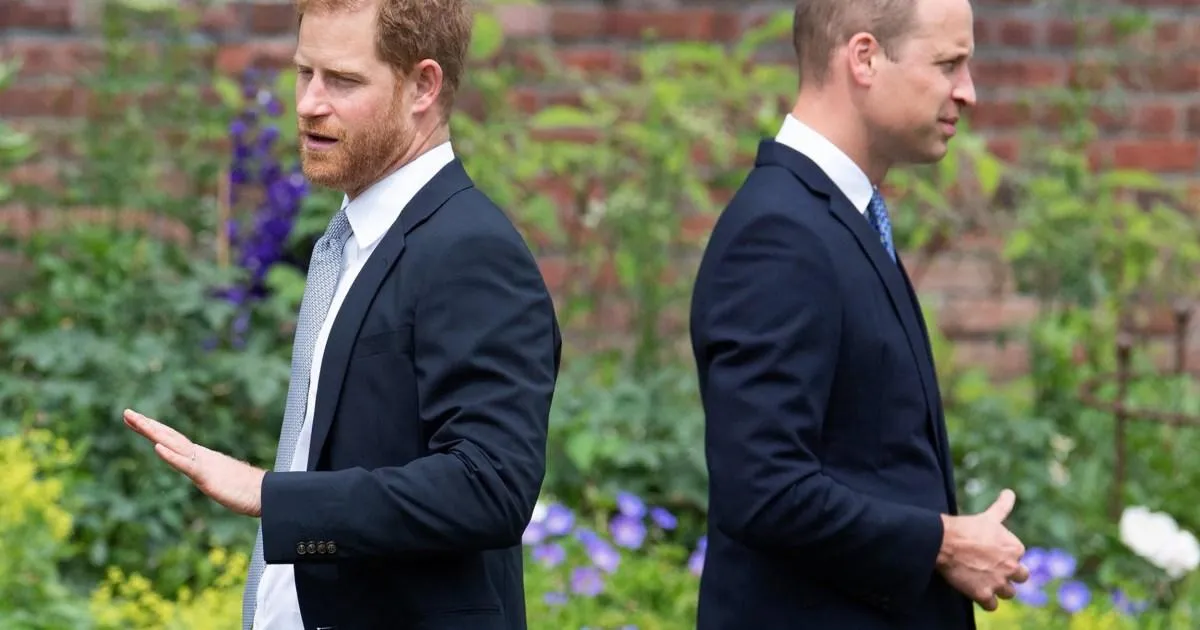
The history of Harry and William’s relationship is a story of shared loss and diverging paths. In 2019, Harry first acknowledged that a rift existed, and from that moment on, public appearances of the two brothers together became increasingly rare. There were moments, though, that sparked hope. In July 2021, the brothers appeared side by side at Kensington Palace’s Sunken Garden for the unveiling of a statue of their mother, Princess Diana. They spoke to each other; they stood close; they seemed, at least for a moment, to remember that they were on the same side once. It was a poignant image: two sons honoring the mother they lost, trying to find common ground in her memory. Many hoped that Diana’s statue might become the beginning of a new chapter, a shared project that could draw them back together. A little more than a year later, in September 2022, they walked side by side at Queen Elizabeth’s funeral. Again, the world watched, looking for signs of old warmth, for shared grief, for the bond that once seemed unbreakable. Two brothers, dressed in black, following their grandmother’s coffin, carrying the weight of a family legacy. It felt almost impossible to imagine that they could not see each other’s pain. Yet hope was dashed in May 2023, at the coronation of King Charles III. The brothers remained distant, and the physical and emotional space between them seemed impossible to ignore. Harry sat in the abbey without a visible role, without his brother beside him, while William stood close to their father, the new King. The image became a symbol of a family fractured, not just by duty but by something deeper. It was not about titles or protocol. It was about two men who had grown up in the same palace, lost the same mother, and somehow ended up on opposite sides of an invisible wall. The timeline reveals something important: reconciliation is not a single event, but a long and messy process with setbacks. Every glimmer of hope has been followed by another reminder of how complicated this family is. Yet Harry is not saying those moments meant nothing. He is saying he still wants the story to end differently. The past is not necessarily a prediction. It is a context, a starting point, a reminder of what was once there. And in that context, his current words feel both significant and fragile.
To understand why the rift has been so stubborn, it is necessary to look at the enormous public airings of private pain. Harry and Meghan stepped back from royal duties, moved to California, and then spoke publicly about their experiences, first in a widely watched 2021 interview with Oprah Winfrey, then in a Netflix documentary, and finally in Harry’s 2023 memoir, Spare. The book, titled after his position as the “spare” to William’s “heir,” did not hold back. It detailed the lasting impact of Princess Diana’s death on his childhood and mental health. It explored his complicated relationship with William, from the closeness they once shared to the growing suspicion and distance that followed. It offered a frank look at his father’s marriage to Queen Camilla and the tensions that shaped Harry’s perception of the royal system. It also told the story of his marriage to Meghan, the press scrutiny they faced, and their decision to build a new life in Montecito. For the royal family, these revelations felt like an earthquake. For readers, they were a rare glimpse into a world that usually hides its emotions behind formality and ceremony. But public storytelling has consequences. It can make reconciliation harder, because every word is read, interpreted, and sometimes weaponized. Family members may feel attacked, exposed, or misunderstood. The very act of telling your side of the story can create new wounds even as it heals your own. Harry may have found catharsis in Spare; he may have felt that his truth was finally told. But it also placed a magnifying glass over every divide, and after each public airing, the distance between him and his family seemed to grow. Yet he has not turned away from the possibility of repair. He is aware of how his story has been received, and still he says he wants to work it out. That takes courage. It would be easier to write them off, to stay in California, to move forward without looking back. Instead, Harry keeps living with the contradiction: the desire to speak his truth and the desire to be loved by the people he grew up with. That is not a royal dilemma. It is a human one. And it may be the most honest thing he has ever said.
The latest chapter in this ongoing story adds new weight to Harry’s words. Just weeks before the GQ interview, Harry and Meghan moved back to the UK with their children, Prince Archie and Princess Lilibet, ahead of the children starting school in England. This is not the act of a man who has abandoned hope. It is a decision to root his family closer to the world of his father and brother, at least for a time. It suggests a desire for continuity, for British traditions, for the chance to let his children know a wider family than the one he has created with Meghan. According to reports, William and Harry are believed not to have met since the Sussexes’ return, and the distance between the brothers remains real. But something else happened: Charles is understood to have reunited with Harry, Meghan, and the children at Highgrove House this summer during their UK trip. That small detail matters. A father saw his son, his daughter-in-law, and his grandchildren. It was not a public celebration, not an official statement, not a carefully choreographed photo opportunity. It was a meeting at a private country home, a chance to be human together away from the cameras. For a family that has lived so much of its life in public, such quiet moments may be the only places where healing can begin. It is easy to focus on the absence of William, and there is real pain in that absence. But the presence of Charles at Highgrove is a reminder that there is still a relationship to build on, still a thread to pull. The UK move also means that Archie and Lilibet are growing up with some connection to their British heritage, to grandparents and cousins, even if those relationships are complicated. Harry’s investment in reconciliation is not just about his own childhood wounds. It is about the next generation. It is about giving his children a chance to know their father’s family, and about breaking a cycle of estrangement that has haunted him for too long. He is not waiting for a perfect apology or a flawless reunion. He is willing to keep returning, to keep saying the words, to keep standing at the door and watching for it to open.
In the end, Prince Harry’s interview is not just royal news. It is a lesson in human fragility and hope. We all know what it is like to have a loved one who won’t meet our eyes, a phone call we keep meaning to make, a grudge we can’t quite release. Harry has shown that even with the weight of history, media scrutiny, and personal betrayal, he is willing to say he wants to reconcile. He doesn’t pretend that things can go back to the way they were. He doesn’t pretend that he hasn’t caused pain or that his family hasn’t hurt him. He simply says that reconciliation is the key point, not winning, not being right, not revenge. That is a mature and deeply human position. It recognizes that family isn’t something you can simply resign from; it lives in your bones, in shared memories, in the way you grieve and the way you celebrate. The world around us is full of division, and when someone with a global platform speaks about reconciliation, it resonates far beyond the palace walls. Harry is saying what many want to say but are too afraid to admit: I know we are broken, and I still love you enough to try. Whether his father and brother are ready to meet him halfway is unclear. There will likely be more silences, more awkward encounters, more headlines. But the door, at least from Harry’s side, is open. He has not given up. There is something beautiful in that stubbornness. It takes a lifetime to understand a family, and no amount of fame or wealth can make it easy. But the willingness to begin again, to speak the words “I want it to work out,” is often the most powerful step a person can take. For Harry, and for all of us who have loved and lost in complicated ways, that step is worth taking. And maybe, someday, the father and brother he still misses will decide to take it with him.