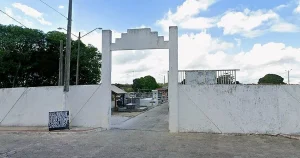

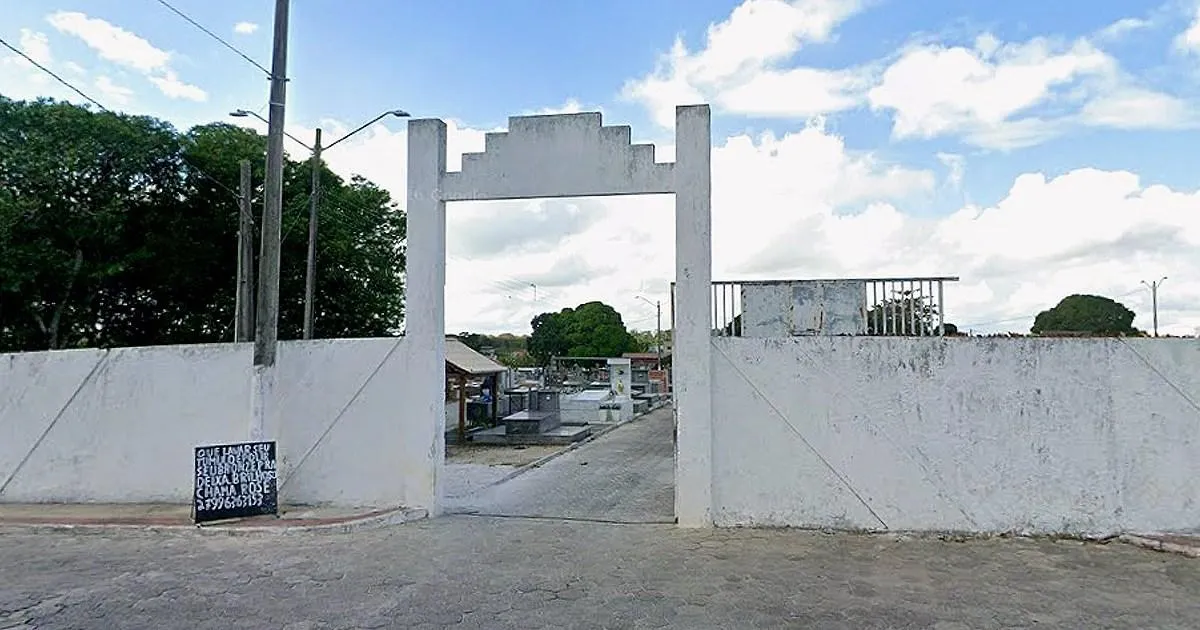
In the quiet, sunlit hours of a Brazilian afternoon, a man set out for a cemetery carrying the weight of two separate griefs. He had come to São José Municipal Cemetery in Linhares, a city in the northern reaches of Espírito Santo, roughly 400 miles north of Rio de Janeiro, to attend the burial of a friend who had been killed in a traffic accident the day before. It was already a difficult day, a day of sorrow and final goodbyes, but before he joined the mourners gathering for that friend’s service, he paused at an older, deeper loss. He wanted to visit his father’s grave first. It was a small act of remembrance, a detour born of love, the kind of quiet moment that countless people have experienced in cemeteries around the world. He parked his motorbike, walked over to the place where his father was laid to rest, and sat down on the headstone, perhaps to rest, perhaps to pray, perhaps simply to be close to the man who had raised him. No one could have foreseen that this moment of reflection would become the last act of his life. The stone beneath him, weathered by time and the elements, suddenly gave way. In an instant, the ground opened and he plunged into the hole below, swallowed by the very place that was meant to hold the dead. The accident was so sudden, so silent and so improbable that the rest of the world only learned of it when a loud noise drew other visitors to the scene.
Those visitors came running toward the sound, not knowing what they would find. What they discovered was a scene so strange and tragic that it seemed almost impossible to process. A man lay at the bottom of a grave, having fallen through a headstone that had crumbled under his weight. The grave was his father’s, and the fall had been fatal. The witnesses immediately raised the alarm and called for an ambulance, but despite the urgency of their response, there was nothing that could be done. The man was pronounced dead at the scene, just after 2:30 in the afternoon. The news spread quickly through the small community, leaving a sense of shock and disbelief in its wake. How could a man go to a cemetery to grieve, to honor his father and say goodbye to a friend, and end up losing his own life in such a freakish and heart-wrenching way? There was no violence, no crime, no long illness. There was just a moment of carelessness, a worn piece of stone, and the cruel randomness of fate. The irony was almost too much to bear: he had come to mourn, and in doing so, he became the one being mourned. The same cemetery that was supposed to host the burial of his friend was now the site of his own tragic death, and the family who had already been preparing for one funeral would now have to prepare for another.
The man who died was believed to be around 40 years old. He has not yet been formally named, but local residents identified him as the husband of a woman who works for the Linhares city council. That detail, small as it may seem, made the tragedy feel even more personal to the community. He was not just an unnamed victim in a news report. He was someone’s partner, someone’s son, someone’s friend, someone who had a daily life, a home, a family who loved him. A gravedigger named Nazare Bravin, who was working at the cemetery at the time, later described what he had seen. He said the man arrived and asked where the friend’s burial would take place. Then he parked his motorbike and walked to the spot where his father was buried. That was the last time he was seen alive. The gravedigger’s account added a layer of haunting detail to the tragedy, because it showed how ordinary and deliberate the man’s actions were. There was no rushing, no carelessness in his choices. He had planned to attend his friend’s burial, and he took a moment beforehand to visit his father’s grave. It was a gesture of loyalty and love, a way of honoring two important people in his life on the same difficult day. That such a thoughtful act should end in such a devastating accident is a reminder that sometimes life changes in an instant, with no warning and no explanation.
In the aftermath of the incident, the Linhares City Council issued a statement expressing its sorrow and offering support to the family and friends of the victim. “We regret the incident that occurred yesterday afternoon at São José Cemetery in the Interlagos neighborhood and express our solidarity with the family and friends at this time of grief,” the statement read. The council also confirmed that the team working inside the cemetery had called the Samu ambulance service and the fire brigade, but that despite their efforts to save the man, he tragically passed away. The statement went on to acknowledge that the incident came at a particularly sensitive time of year. With the approach of the All Souls’ Day holiday, a deeply significant occasion in Brazil when families traditionally visit cemeteries to clean and decorate the graves of their loved ones, there was an expectation of increased activity in the municipal cemeteries. The council used the opportunity to emphasize the importance of taking extra care during these visits, and it reminded residents that while the municipality is responsible for the administration and maintenance of the public spaces in the cemeteries, the cleaning, washing and maintenance of individual tombs and graves are the responsibility of the families themselves. It was a practical piece of advice delivered in the shadow of a terrible tragedy, a reminder that even in places of peace and memory, there are hidden dangers.
Cemeteries have always been places where the living and the dead exist side by side, where grief is measured in stone and flowers and quiet footsteps. In Brazil, the approach of All Souls’ Day, known as Finados, transforms these spaces into vibrant and emotional landscapes. Families arrive with buckets, brushes and flowers, scrubbing tombstones, polishing plaques, and leaving offerings of candles and photographs. It is a time of collective memory, a day when the dead are brought back into the lives of the living through ritual and remembrance. The tragedy at São José Cemetery unfolded in the days leading up to this sacred holiday, adding an extra layer of sorrow to an already emotional season. The man who died had been preparing, in his own way, to honor the dead. He had lost a friend in a sudden and violent traffic accident. He had lost his father at some earlier time, a loss that clearly still weighed on him. And in trying to hold both of those losses in his heart at the same time, he was killed in a way that no one could have anticipated. It is impossible not to think about the fragility of life in moments like this. We walk through the world assuming we have time, assuming that the ground beneath our feet is solid, assuming that our loved ones will be safe. And then, without warning, the ground gives way.
The death of this man, still unnamed and still unexplained in many ways, is a profound reminder of how little control we have over the circumstances of our lives. He went to a cemetery to grieve, and he became a source of grief for others. He went to pay his respects, and he became the subject of a police investigation and a municipal statement. He went to say goodbye, and he never got the chance to say hello to anyone again. The community of Linhares is left to make sense of a tragedy that makes no sense at all. They will gather for the funeral of the friend who died in the traffic accident, and then they will gather again for the funeral of the man who died at his father’s grave. They will hug the widow, the woman who works for the city council, and they will struggle to find words that can possibly comfort her. They will remember the gravedigger who saw him one last time, the visitors who heard the noise, the paramedics who arrived too late. And perhaps, in the quiet days that follow, they will be a little more careful when they visit their own loved ones’ graves, a little more aware of the stones beneath their feet, a little more grateful for the time they have with the people they love. In the end, that is all any of us can do. We can mourn the ones we have lost, hold on to the ones we still have, and try to live with the knowledge that life is fragile, unpredictable and impossibly precious. The man who died at São José Cemetery did not expect to die that afternoon. But his death, tragic as it was, reminds us all to expect the unexpected, to cherish the ordinary, and to never take a single moment for granted.