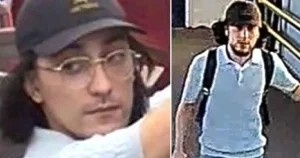


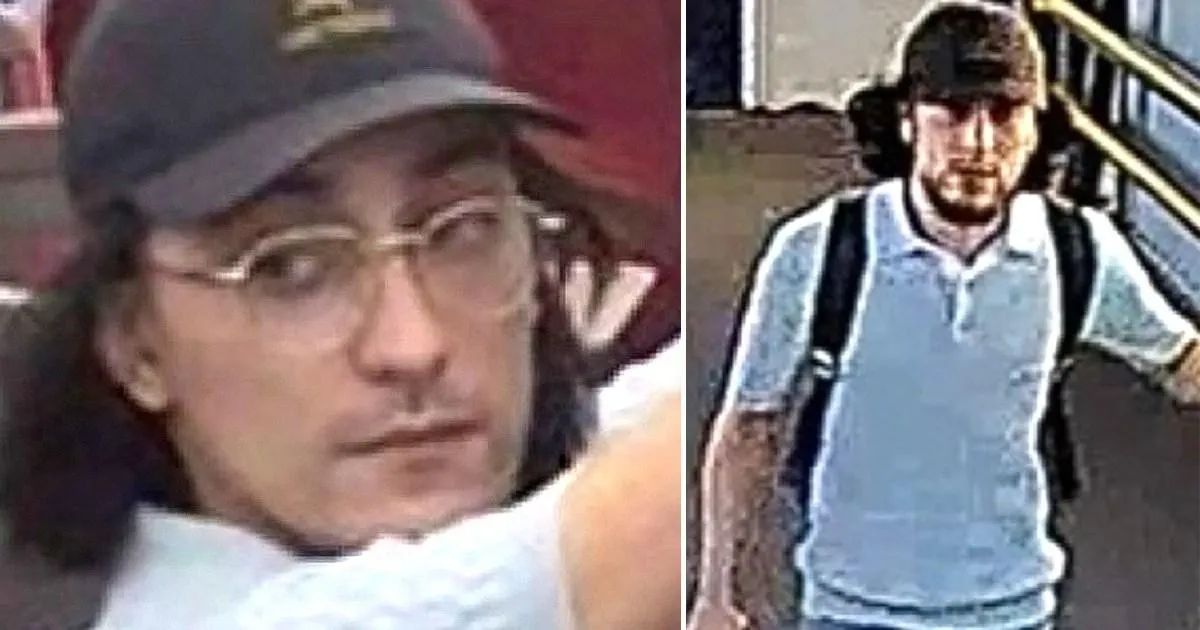
It was late on the evening of July 8 when a traveller boarded a train at London King’s Cross, settling into her seat for what should have been an ordinary journey home. She placed her suitcase on the luggage rack above, perhaps giving it little more than a passing glance as she reached for her phone or a book. The train pulled out of the station, winding its way north through the darkening landscape. Somewhere along the route, in the quiet space between carriages, a man spotted that suitcase and decided to take it. By the time the woman reached her destination and stood up to collect her belongings, the case was gone. What made the loss so devastating was not just the inconvenience, but the value of what was inside. The suitcase contained belongings worth £30,000, a figure that suggests items of real importance, perhaps expensive electronics, designer goods, or irreplaceable personal possessions. British Transport Police have now released images of a man they want to speak to in connection with this theft and a series of similar high-value luggage thefts on trains in and out of London. The photo, captured by CCTV, shows a man whose identity remains unknown but whose movements may hold the key to solving several distressing crimes.
The theft itself is a stark reminder of how vulnerable passengers can be, even in the relatively safe and controlled environment of a train. The woman likely did everything right, keeping her suitcase in sight, or at least within the carriage, yet in the split second she looked away, someone else’s hands were on her property. CCTV later showed the man calmly getting off the train at Peterborough with the suitcase in his possession. For the victim, the moment of realisation must have been sickening, a rush of disbelief followed by the sinking knowledge that the items she had packed with such care were now in the hands of a stranger. It is not just the monetary worth that cuts so deeply. As British Transport Police Constable Chris Pepper explained, luggage theft can be “very upsetting and distressing for victims.” Suitcases, he noted, contain not only items of significant financial value, but in some instances, hugely sentimental value. A family heirloom slipped into a side pocket, a favourite jacket bought on a special trip, a notebook filled with memories, these are the things that cannot be replaced by insurance money or a new purchase. The emotional toll of losing them can last long after the paperwork is filed and the investigation concludes.
This particular case is not an isolated incident. Police are treating the theft as part of a wider pattern, a series of linked offences that have been happening on rail services in and out of the capital. The man in the CCTV images is believed to be connected to more than one of these thefts, which is why investigators are so eager to trace him. In their appeal, police have released two images, one a clear shot of his face and another showing him in the context of his surroundings. They believe he “may have vital information” that could assist the ongoing investigation. Constable Pepper stressed that enquiries into these linked offences have been extensive, and that officers are determined to “leave no stone unturned to secure justice for victims.” But they need the public’s help. Somewhere, someone will recognise this man. He might be a neighbour, a colleague, a familiar face on a regular commuting route, or even a family member. It is often the smallest detail, a shared post on social media, a conversation overheard in a pub, that can break a case open.
The problem of luggage theft on Britain’s railways is far bigger than any single incident, and the statistics paint a concerning picture. According to a report by MoneySuperMarket, British Transport Police recorded 1,812 bag thefts on UK trains and at stations last year, a rise of nearly 30% since 2023. London’s major stations are particularly badly affected, with King’s Cross topping the list. In 2025, 177 bags were stolen at King’s Cross, followed by St Pancras with 140 and Euston with 88. These are the great transport hubs of the capital, places where thousands of passengers pass through every hour, many of them carrying luggage, many of them distracted by timetables, ticket gates, and the general chaos of travel. For a thief, these stations are perfect hunting grounds. The crowds provide cover, the constant movement creates confusion, and the sheer number of bags means that one more unattended suitcase is unlikely to raise suspicion. Thieves can blend in as ordinary travellers, boarding and alighting at busy stops, and disappearing into the crowd before anyone notices a bag is missing.
In response to this growing problem, police have been cracking down on criminal gangs that target passengers. Those efforts appear to be having some effect, with numbers dropping by 15% this year. But the fight is far from over. The reduction is encouraging, but it does not help the woman who lost her £30,000 suitcase, nor the countless others who have had their journeys ruined by a moment of theft. Officers remain committed to tackling the issue, but they cannot do it alone. Public awareness is crucial. Passengers can protect themselves by keeping their luggage close, avoiding placing bags in overhead racks far away from their seats, and staying alert to anyone acting suspiciously. At the same time, the public can assist investigations by coming forward with information. The appeal in this case is a direct request for that kind of help. Whether it is a sighting of the man in the images, a tip about his whereabouts, or even just a vague recollection of seeing him on a train, every piece of information could be valuable. Police are urging anyone with knowledge to come forward, not only to solve this case but to prevent future victims from suffering the same loss.
At its heart, this story is about more than stolen suitcases. It is about the trust we place in the spaces we share, the assumption that our belongings will still be there when we turn around, and the profound sense of violation that comes when that trust is broken. The victim in this case did nothing wrong. She simply took a train, like millions of people do every day, and expected to arrive with everything she brought. Instead, she walked away empty-handed, left to piece together not just the contents of a suitcase but the sense of security that was taken along with it. British Transport Police are appealing to the public to help identify the man in the photographs. He may look ordinary, perhaps unmemorable, but someone knows who he is. The images are clear, and the need is urgent. If you recognise him, or if you have any information about the thefts, contact police. It might feel like a small act, a quick phone call or an anonymous message, but for the victim it could mean the difference between closure and an endless unanswered question. No one should have to lose their treasured possessions in the blink of an eye, and no one should have to watch the person who took them walk free. This is a chance for the community to step up, to look at the face in the photograph, and to help bring a little justice to a stranger’s ruined journey.