


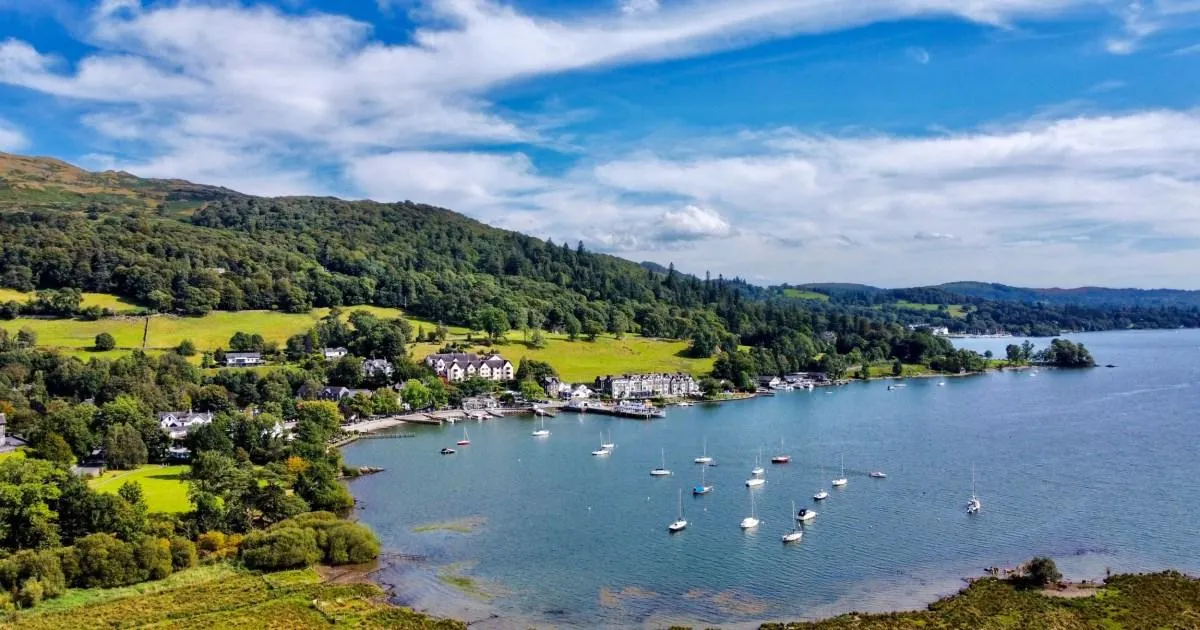
In the heart of England’s Lake District, where emerald fells rise like sleeping giants and the water mirrors an ever-changing sky, lies Windermere — a ribbon of liquid silver that has inspired poets, dreamers, and day-trippers for generations. Every year, nearly 18 million visitors flock to its shores, making it one of the most beloved and heavily footfalled natural wonders in the United Kingdom. Yet beneath its serene and picturesque surface, a hidden crisis is unfolding. The lake, which holds around 300 billion litres of water and takes up to nine months for a single drop to journey from its northern tip to its southern outflow, is being slowly suffocated by pollution. During the warmer months, ugly green algal blooms spread across parts of its surface, a lurid testament to the nutrient-rich wastewater that has been allowed to flow into its depths. These blooms not only ruin the view and the experience for swimmers and boaters but also pose a serious threat to the lake’s delicate ecosystem, depleting oxygen and harming fish and plant life. Windermere is the very heart of the Lake District, a Unesco World Heritage site, and the local economy depends heavily on the millions of tourists who come to marvel at its beauty. From the stone causeways of Bowness to the quiet coves near Ambleside, the lake has always been a place of escape and renewal. But the very popularity that makes it so vibrant also puts it under enormous pressure. Every storm descends on the region, and with it, the threat of raw sewage overflows from aging infrastructure. It is not just an environmental issue; it is a human one, affecting the health of anglers, the enjoyment of families, and the livelihoods of those who run hotels, cafés, and boating companies. The green scum that appears on the water is not just an eyesore — it is a warning sign, a distress signal from a body of water that has given us so much. Now, a monumental £3.6 billion proposal has been put forward that could change the lake’s fortune forever: a twelve-mile tunnel, bored deep beneath the ground, designed to carry sewage away from Windermere and put an end to the contamination once and for all. But this ambitious, perhaps audacious, project is far from guaranteed. It demands not only an immense financial investment and years of engineering work, but also a collective decision about what we truly value in our natural landscapes — and how we are willing to sacrifice, pay, and act to protect them for generations yet to come.
The plan, known as Only Rainwater into Windermere, or ORiW, is backed by United Utilities, the water company responsible for the region, and supported by environmental campaigners who have long called for urgent action. It is not merely a single tunnel, but an entire reimagining of how wastewater is handled in this area. Under the proposals, up to 86 miles of new sewage infrastructure would be constructed, including a single, modern wastewater treatment works connected by a four-metre-wide tunnel that would stretch up to twelve miles. The aim is twofold: to stop raw sewage overflows from dumping untreated waste directly into the lake during storms, and to eliminate the discharge of treated wastewater, which still contains nutrients such as nitrogen and phosphorus. These nutrients are the primary food source for the algal blooms that have become an increasingly frequent and distressing sight on Windermere’s surface. The scheme would also, for the first time, connect around 12,800 people who currently rely on septic tanks or other inadequate systems to the main sewage network, providing a safer and more reliable method of waste disposal. For many of these individuals, living in beautiful but remote communities, the transition to a modern sewage system will be life-changing. No longer will they have to worry about maintaining septic tanks that can overflow, or rely on older, less efficient treatment methods. They will be, quite literally, connected to a cleaner future, and their waste will be dealt with in a way that protects the lake they love. The treated water would be carried away from the lake entirely, with two potential destinations: it could be released into the River Leven, which flows out of the lake and eventually into the sea, or piped further to the Irish Sea near Ulverston. This is not a quick fix; it is a long-term transformation, with United Utilities chief executive Louise Beardmore describing it as a “100 year solution for this lake.” Indeed, the sheer scale of the thinking reflects a growing recognition that incremental, five-year investment cycles are ill-suited to healing a landscape that has been degraded over decades. As Beardmore herself acknowledged, the usual approach of doing a bit, going away, and coming back to do a bit more is no longer acceptable when the lake’s future is at stake. Instead, ORiW represents a bold, multi-generational commitment to restoring Windermere to a state of health that it has not enjoyed for many years. It also represents a shift in attitude: from treating water as a disposable resource to respecting it as a precious, living system that is intrinsically linked to the land and all who inhabit it. The tunnelling work itself will be a remarkable feat of engineering, requiring careful planning to avoid disrupting the fragile landscape above, but if it succeeds, the invisible infrastructure will allow the surface beauty to shine undisturbed.
The price tag for this immense undertaking is just as staggering as its engineering: £3.6 billion. That is a sum that would be difficult for any single region to bear alone, and the question of who should foot the bill has already become a source of contention. The proposal outlines two distinct funding options. The first would place the burden squarely on United Utilities customers in the North West, adding up to £3.17 to their monthly water bills, depending on the chosen route for the tunnel and treatment works. This would mean that local households and businesses — many of whom are already struggling with the cost of living — would be asked to pay significantly more for a solution that benefits the entire nation. For a family living beside the lake, an extra £3 a month might mean forgoing a takeaway or stretching the grocery budget a little further. It is a direct, tangible cost that comes on top of years of water bill increases across the country. The second option, championed by the Love Windermere group, which represents local businesses and residents, argues that Windermere is a national treasure and should be funded accordingly. They propose spreading the cost across all water customers in England, which would add just 35 pence to everyone’s monthly bill. That is barely the price of a small chocolate bar — a tiny levy that most people would hardly notice, but multiplied by millions of households, it would raise the necessary billions. Nigel Wilkinson, a member of the group, articulated this view passionately: “We believe Windermere is of such national significance and international significance that it is justifiable to treat this as a national asset and fund it accordingly.” It is a persuasive argument — after all, the Lake District belongs to everyone, and the millions of visitors who enjoy its beauty each year come from all corners of the globe. Yet the prospect of higher bills, however small, is never popular, and politicians will be wary of imposing any additional costs on households. And there is a deeper debate: should the polluter pay, or the public? United Utilities, as the company responsible for the sewage system, has a clear responsibility, but its profits are not large enough to fund such a colossal project without passing costs on to customers. The government will have to weigh these options carefully, balancing fairness, practicality, and the long-term health of the lake against the short-term financial pain for consumers. No decision has been made, and the uncertainty itself is a source of anxiety for those who care deeply about Windermere’s fate.
For environmentalists, the announcement of the ORiW plan has been met with cautious optimism. Matt Staniek, a prominent campaigner who has spent years documenting the pollution and pushing for action, called the proposal a “milestone.” He was careful, however, to temper his enthusiasm with a clear-eyed warning. “For me this is a plan on a piece of paper. It is not definitive action and that’s what I want to see,” he said. “This is the beginning, and the end of this is the moment that sewage stops entering Windermere.” His words capture a frustration that many feel: after decades of neglect, promises and small-scale fixes, there is a deep skepticism that yet another grand scheme will actually be delivered. The problem of sewage pollution in Britain’s rivers and lakes is not unique to Windermere; across the country, water companies have come under fire for discharging raw sewage into waterways, often with government approval. But Windermere has become a symbol of the broader crisis, a place where the consequences of inaction are visible to millions of eyes. The algal blooms that periodically turn parts of the lake gaudy green are not just an aesthetic blight; they are a sign of an ecosystem in distress. When these blooms die and decompose, they consume oxygen in the water, creating dead zones where fish and other aquatic life cannot survive. The idea that such a beloved landscape could be slowly dying, unseen beneath its shimmering surface, is a powerful call to action. Campaigners like Staniek are determined that this moment must not be wasted. They are watching closely to see whether the government will greenlight the project, whether funding will be secured, and whether the construction will truly begin. They know that infrastructure of this scale takes years to build, and that even if all goes smoothly, it will be a long time before the lake can breathe freely again. But the very fact that a plan exists, and that the people who fought for it are being listened to, is a small victory in itself — a sign that public pressure can make a difference, and that the tides of change are slowly turning. It also speaks to the determination of ordinary individuals who, armed only with a mobile phone and a passion for nature, can force giant corporations and governments to pay attention. Staniek and his followers have photographed the pollution, shared it on social media, and turned a local issue into a national outcry. That kind of persistence is exactly what will be needed to see this project through from paper to reality.
The next step lies in the hands of the government, which must decide whether the ORiW proposals merit further development and whether the staggering £3.6 billion price tag can be justified. A spokesperson for the Department for Environment, Food and Rural Affairs acknowledged the public’s determination to protect “this iconic lake,” but stressed that further work was needed to assess alternative options before any decision could be reached. This is a typical refrain, and it raises a crucial point: while the tunnel plan is bold and comprehensive, it is not the only conceivable solution. There may be other, less expensive ways to reduce nutrient levels, such as wetland restoration, better agricultural practices, or changes to the phosphorus content in washing detergents. The report itself presumably considers some of these alternatives, but the government’s insistence on further study suggests that the path to approval is anything but straightforward. Part of the challenge is that Windermere is not just a beautiful lake; it is a vital economic engine for the region, supporting tourism, recreation, and local businesses. The visitors who come to sail, swim, hike, and simply sit by its shores spend millions of pounds each year, sustaining jobs and communities. If the lake becomes increasingly polluted, those visitors may start to stay away, and the economic consequences would be devastating. At the same time, the costs of the proposed solution are enormous, and the benefits are largely intangible — clean water, a healthy ecosystem, a preserved landscape for future generations. How do we put a price on that? The debate over funding is ultimately a debate about our values. It asks us whether we are willing to pay a little more — either as local customers or as a nation — to safeguard a place that enriches our lives in ways that cannot be measured in monetary terms. The government’s decision, when it finally comes, will set a powerful precedent for how we approach environmental restoration in the face of climate change and ecological degradation. It will be a test of whether we can think beyond five-year electoral cycles and invest in the long-term health of the natural world. We must also consider the message we send to other regions facing similar crises: will we only protect places that are famous enough to make the headlines, or can we learn to value all of our natural resources, humble and hidden as they may be? The answer will be written in the fine print of the government’s decision and the budgets they choose to approve.
As the debate over the future of Windermere unfolds, it is worth pausing to consider what this lake means to us all. It is a place where families build sandcastles on its shores, where couples row across its waters at sunset, and where children first learn to sail. It has inspired some of England’s greatest writers, from Wordsworth to Beatrix Potter, and its beauty is woven into the national identity. The proposal to build a tunnel to protect it is not just an engineering project; it is a statement of intent, a confession that we have let our love for this place coexist with a careless neglect of its wellbeing. And yet, the simple fact that such a solution is being seriously considered is a cause for hope. It shows that we are beginning to recognize the fragility of the natural world, and that we are willing to contemplate bold, costly measures to repair the damage we have done. But a plan on paper is not enough. The journey from conception to completion will be long, and many obstacles lie ahead — funding, political will, regulatory approvals, and the sheer difficulty of building a massive tunnel through ancient rock. There will be delays, cost overruns, and compromises. That is the nature of such undertakings. But if we are sincere in our desire to preserve Windermere, we must be prepared to see this through, to hold our leaders accountable, and to accept that true stewardship demands more than just admiration from a distance. We must be willing to pay — not just in money, but in patience, resolve, and a willingness to make choices that prioritize the health of the planet over short-term convenience. In the end, the story of Lake Windermere is the story of our own relationship with the Earth: we have the power to harm it, but we also have the power to heal it. The tunnel may be a symbol of that power, but it is only a symbol until we make it real. And the real work begins now, with the decisions we make, the voices we raise, and the future we choose to build for this extraordinary slice of the world. Let us not look back in regret at all the times we did too little, too late. Let us instead look forward with the courage to say that this beautiful lake, and all the life it shelters, is worth every penny, every effort, and every sacrifice we can muster. That is the only way to ensure that Windermere remains not just a memory of what was, but a living, breathing testament to what we can achieve when we act as guardians of the earth.