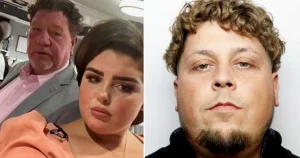


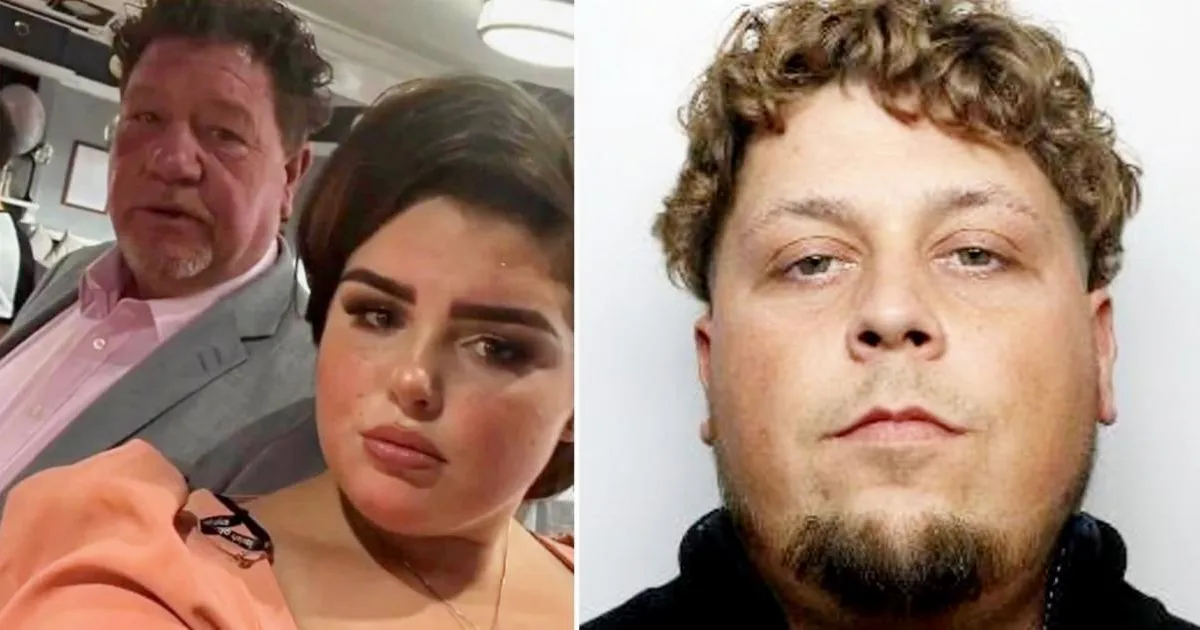
Jason Gaskin was not a statistic. He was a 53-year-old father of five, a grandfather, a general metal dealer, and a man who, according to everyone who knew him, “lit up every room he was in.” In the South Yorkshire community of Balby, Doncaster, he was a familiar and beloved presence, someone always ready with a kind word or a laugh. On the evening of October 29, 2023, he did what countless people do on weekends: he went out with friends to a Halloween party at Park Social Working Men’s Club. He was in good spirits, looking forward to music, dancing, and the easy camaraderie of a night out. The day before, he had FaceTimed his 15-year-old daughter Maria, who was getting ready for her own evening. He told her, “You scrub up well our lass,” then said he loved her very much and hoped she had a nice night. Those were the last words she would ever hear from him. By the early hours of the morning, Jason was lying unconscious on a street, the victim of a devastating one-punch attack. Emergency services tried their best, but he died at the scene, leaving behind five children, grandchildren, a former wife, and a community shattered by disbelief. This was not a man who looked for trouble; he hated conflict and altercations. But on that Halloween night, two men, Jake Wells, 28, and James Neeson, 50, ended his life in a moment of senseless violence. The grief that followed was not just a private family tragedy, but a public wound, and the quest for justice would bring only more pain.
The attack itself was captured on CCTV, and the footage told a devastating story. Jason had been sitting at a table when Neeson’s wife danced nearby. There was a verbal confrontation, though Jason never laid a finger on anyone. According to his daughter, the video showed him walking away, clearly trying to avoid trouble. But Neeson came up behind him and landed two quick punches to the side of his head. The confrontation then moved outside, onto the neighbouring street, where a small group followed. Wells was among them. He threw a single punch to the side of Jason’s head, knocking him unconscious instantly. Jason fell backward, his head hitting the hard ground with a force that caused a fatal injury. He was found in the early hours of the morning, unconscious and alone, and despite the desperate efforts of paramedics, he never regained consciousness. The sheer suddenness of it all is almost impossible to comprehend. One moment, a man was at a party, perhaps slightly annoyed by an awkward exchange; the next moment, he was fighting for his life on the pavement. The violence was completely disproportionate, a response that no reasonable person could justify. And to make matters worse, Neeson tried to cover it up. After the attack, he disconnected the club’s CCTV and hid the hard drives containing the incriminating footage in the loft space of the venue. South Yorkshire Police, however, were diligent and recovered the hard drives, unearthing the truth. The footage was used in court, but for Jason’s family, it was yet another painful reminder of the senselessness of it all.
For Maria, the news came like a thunderbolt. Her older sister arrived to pick her up and, without warning, told her that their dad had died. At first, Maria thought it was a lie. She had only spoken to him the day before, and he had been full of life and love, teasing her and reassuring her from a distance. The denial was a shield, but it crumbled quickly. She was just 15 years old, at an age when a girl still needs her father’s guidance, his pride, his steady presence at birthdays and milestones. Instead, she had to learn details of a violent death, watch a trial, and confront the reality that the two men responsible had been walking free on bail throughout the entire investigation and court process. “Out free to live as if nothing happened, yet I had to live with the fact I had lost my dad,” she said, her words carrying the weight of years of anger and grief. The slow, grinding machinery of justice meant that the family had to relive the trauma over and over again, sitting in courtrooms, listening to legal arguments, and seeing the faces of the men who took their father away. Jason’s widow, Charmaine, from whom he had been separated at the time of his death, read a victim impact statement to the court. She described him as “larger than life,” a man known and loved throughout the community. Everyone had a story to tell about Jason, she said. But now, those stories had become memories, and the future they had imagined together, even from a distance, had been stolen. Maria’s grief was compounded by the feeling that the world was moving on while her family was frozen in pain.
The sentencing at Sheffield Crown Court was delivered yesterday, and for the Gaskin family, it felt like a second blow. Jake Wells pleaded guilty to manslaughter and was jailed for four years and nine months. James Neeson, who had been involved in the initial assault and then attempted to destroy evidence, was originally sentenced to 12 months for assault occasioning actual bodily harm and perverting the course of justice. But because Neeson was himself assaulted outside the court, his sentence was reduced to nine months. Nine months. For a man whose actions contributed to the death of a beloved father and grandfather, and who then deliberately hid the evidence, nine months in prison was, to Maria, almost beyond comprehension. She, now 18, did not hold back her fury. “A person who was involved in someone losing their life only gets nine months’ imprisonment – that is ridiculous,” she said. “Even four years for causing my dad’s death is not acceptable. I have read shoplifters and drug runners get more time. I have no words.” Her outrage is not just the hyperbole of a grieving daughter; it reflects a genuine sense of injustice that many families feel when sentences seem to undervalue the lives lost. How can a few years in prison ever compare to the decades of life Jason was denied? How can a reduced sentence for Neeson be justified by the assault he suffered when he himself showed no remorse for the life he helped destroy? The arithmetic of the courts felt cold and cruel. For Maria, the legal system had failed not only her father, but also every child who now has to grow up without a parent because of a single, reckless punch.
Detective Inspector Adam Watkinson of South Yorkshire Police’s Major Crime Unit summed up the gravity of the case: “This was a devastating attack which led to the death of a much-loved father, grandfather, and husband. Neeson’s attempt to cover up his and Wells’ involvement in Jason’s death showed a total lack of remorse and accountability.” Those words echo in the minds of the family and the community. The cover-up was not just an attempt to escape justice; it was a sign of callousness, a willingness to let a dying man lie in the street and to hide the truth from everyone. There was no frantic call for help, no moment of horror at what had been done. Instead, there was a cold and calculated effort to erase the evidence. That, in many ways, is even more heartbreaking than the punch itself. It reveals a profound absence of basic human decency. Jason was not an enemy to these men; he was just a man at a party who had an exchange with a woman. He tried to walk away. But he was followed, attacked, and left to die. The ripple effects of that night extend far beyond the Gaskin family. The community of Balby lost a friend, a neighbour, a familiar face. Working men’s clubs exist to bring people together, to create a sense of belonging, and to offer a place of safety. On that Halloween night, that safety was shattered. And for the men responsible, their own families now face the consequences of their actions, but they will one day be released. Jason will never come back. His daughters will never hear his voice again. His grandchildren will only know him through photographs and stories.
And yet, in the midst of all this sorrow, there is a resilience that refuses to be extinguished. Maria is no longer a helpless teenager; she is a young woman who has found her voice, determined to speak out not just for her father, but for every family torn apart by one-punch violence. She remembers the man, not the victim. She remembers his warmth, his humour, his hatred of conflict, his love for his children. She remembers that last FaceTime call, the way he called her “our lass,” the way he told her to have a nice night. Those memories are hers forever, and no court decision can take them away. The justice system may have disappointed her, but she has not let go of her father’s legacy. In sharing her story, she has humanised the headlines, turning a crime report into a portrait of a man who was deeply loved. Her call is not for revenge, but for accountability and change. She wants society to understand that a single punch is not just a moment of violence; it is the end of a life, the shattering of a family, and the beginning of a lifelong burden for those left behind. The sentences may be short, but the grief is infinite. Jason Gaskin should still be here, laughing, hugging his children, making a room brighter just by walking into it. Since he cannot be, his family will carry him forward. They will keep his memory alive in every story, every tear, every act of kindness done in his name. The verdict has been delivered, but for the Gaskin family, the fight for real justice, and for a world where such tragedies are prevented, is far from over. They will continue to speak, to remember, and to love him always.