

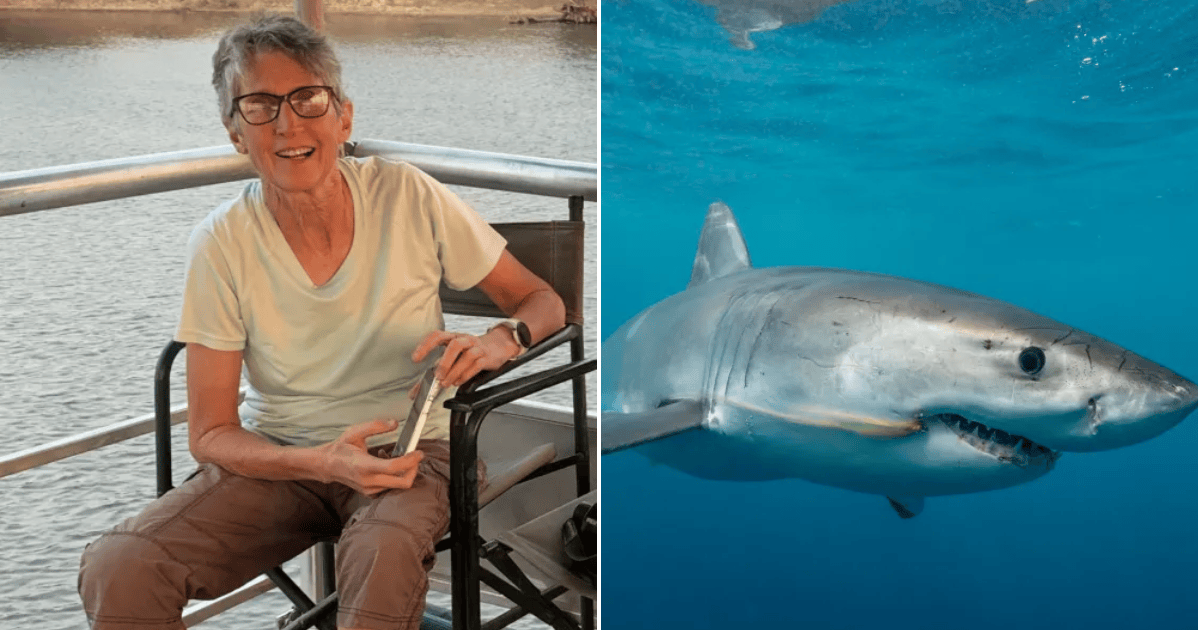
Janine Lochrenberg had always felt at home in the ocean. The 65-year-old retired nuclear radiographer and musician was not the kind of swimmer who dipped a toe in the water and called it a day. She was strong, confident, and deeply drawn to the open sea—so much so that on Tuesday morning she joined her local open-water swimming club for their regular session at Orient Beach in KuGompo City, formerly known as East London, in South Africa. It was a morning like many others, filled with the familiar rhythm of swimmers preparing to go out together, the easy chatter of friends, and the anticipation of the cold, clean water that Janine loved. But within moments, that ordinary morning was shattered when a shark attacked her. Janine became the first person in South Africa to be killed by a shark this year, a stark and heartbreaking milestone that has sent shockwaves far beyond the small group of swimmers who witnessed the attack. For those who knew her, the loss is almost too difficult to process, not only because it happened so suddenly, but because Janine had such a deep and joyful connection to the very place where she died. Her swimming club later described the ocean as her happy place, the place where she found her joy, and where so many of them had been fortunate enough to share special moments with her. That memory now carries a bittersweet weight. She was a woman of many gifts—a career in nuclear radiography that demanded precision and calm under pressure, and a life in music that brought warmth and creativity to everyone around her. Friends remember her beautiful smile and her gentle kindness. Perhaps the most heartbreaking detail is that Janine knew the risks. Her sister Margot later said that Janine had loved the water so much despite knowing that sharks were present in the region. She swam anyway, trusting in the ocean, in her own ability, and in the small precautions she and her friends had adopted. That trust was broken in the most violent way imaginable, and her death has left a silence in the water that will be felt for a long time.
Details of the attack have begun to emerge from witnesses, and they paint a harrowing picture. Janine was swimming with her group, close enough that the others could hear her, when the shark struck. There would have been little warning—perhaps a sudden disturbance in the water, a flash of movement, a second of confusion before pain exploded. Witnesses said she suffered severe bites to her thigh and upper arm, injuries that were immediately life-threatening. Her screams pierced the morning air, a sound that those nearby will likely never forget. The other swimmers rushed toward her, driven by instinct and love rather than fear for their own safety. They managed to bring her back toward the shore, desperate to get her out of the water and onto solid ground where help could reach her. Among the group was a medic, who immediately began trying to save her life. Despite the frantic efforts, despite the courage of the swimmers who risked their own safety to pull her from the surf, Janine was pronounced dead at the scene. The helplessness of that moment—the feeling of doing everything possible and still losing someone—is something that will stay with the group for a very long time. In the chaos, there must have been confusion and disbelief. One moment they were all swimming together, enjoying the ocean they loved; the next, they were fighting for their friend’s life on the sand. The emotional toll of such an event is immense, and it is a burden now carried by everyone who was there that morning. They will replay the seconds over and over, wondering if anything could have been done differently, even as they know the answer is probably not. They will also remember the courage of the swimmers who moved toward danger instead of away from it, and the medic who tried so hard. In the midst of tragedy, there was heroism, and that is part of the story too.
Perhaps one of the most disturbing aspects of the tragedy is that Janine was not unprotected. Fellow swimmer Mike Loewe told News24 that the group were all wearing magnetic shark repellent bands on their feet, and Janine had one on as well. The revelation has raised uncomfortable questions for the open-water swimming community, who had placed their trust in these devices as a measure of safety. If a shark could attack someone wearing a repellent, what else could be done? Loewe described the group as a very close community who loved open-ocean swimming, and said the attack was a great shock. His words reflect a broader sense of vulnerability among swimmers who have long accepted the risks of sharing the ocean with sharks. They know they are visitors in a wild environment, but they have also built their lives around the joy of swimming in it. The attack has shattered that fragile sense of security. It is one thing to know, intellectually, that sharks live in the ocean; it is another to witness a friend struck down in front of you, despite every precaution. The swimmers who were there will now have to live with that memory, and the community as a whole will have to reckon with the reality that no repellent or routine can guarantee safety. For now, there are no easy answers. There is only grief, and the difficult process of trying to understand what happened. But in the midst of that grief, there is also a determination not to let fear erase the joy that open-water swimming has brought them. The ocean is still wild, still beautiful, still worth loving—even if it can also be cruel. Janine understood that better than most. She lived her life with her eyes open, accepting danger as the price of passion. That does not make her death any less heartbreaking, but it does mean she would not want others to stay out of the water forever out of fear.
In the immediate aftermath, the focus shifted to safety and investigation. Orient Beach was closed to the public as a precaution, and nearby Eastern Beach was also closed, clearing the water of swimmers and surfers while authorities tried to piece together the events. Luzuko Buku, a municipality spokesperson, told SABC that the closures were necessary to allow investigators to do their work. “We are deeply saddened by this tragic incident that has happened here at our Orient Beach, where a swimmer, a recreational swimmer, was attacked clearly by a shark, and certainly they lost their life,” Buku said. He added that they were conducting their own investigations to really ascertain what happened. Such official statements, delivered calmly, can sometimes obscure the human reality behind the words. But the grief in Buku’s voice was palpable, and his message reflected the shock of an entire city. East London has not seen a fatal shark attack in decades, and the sudden presence of death in the water has made the ocean feel different. The closed beaches stood empty on Tuesday, a stark symbol of loss. Swimmers who normally would have been in the water stayed away. Parents thought twice about letting their children near the shore. The beach, once a place of leisure and joy, became a place of mourning. For the local open-water community, the closure was more than an administrative step; it was a pause in a way of life. They will wait for answers, but they also know that some questions may never be fully answered. Why did this shark attack? Was it a case of mistaken identity? Was there something in the water that triggered it? The investigation will look at all possibilities, but the outcome will not bring Janine back. What it can do is help prevent a future tragedy, and perhaps restore some sense of safety to those who choose to return to the sea. Until then, the beaches remain closed, and the ocean waits.
In the hours after Janine’s death, tributes began pouring in. The East London Open Water Swimming Group, of which she was a member, shared a heartfelt message on Facebook that captured the spirit of the woman they had lost. “The ocean was Janine’s happy place. It was where she found her joy, and where so many of us were fortunate enough to share special moments with her,” the post read. “We will remember her beautiful smile, her gentle kindness, and the quiet but meaningful presence she brought to our swimming family.” Those words have been echoed by friends and family, who remember Janine not just as a victim of a shark attack, but as a vibrant, intelligent, and caring person. Her sister Margot said that Janine had loved the water so much, even though she knew the risks. That love was not naive; it was a choice. She understood that the ocean was not a swimming pool, and she accepted its dangers because the rewards were so great. Her partner, Barbara Briceland, described Janine as a good swimmer who often swam far out into the breakers, unafraid of the power of the sea. Barbara remembered her as highly intelligent, full of fun, kind in a quiet way, thoughtful, and well-loved, with a deep love of life. The two had been looking forward to retirement together, and they were about to leave for a three-week road trip. That trip will never happen now. Instead of packing the car and setting off on an adventure, Barbara is planning a funeral. The cruel irony of the timing is almost unbearable, and it has made the loss feel even more senseless. Yet even in her grief, Barbara seemed determined to honor Janine’s spirit by remembering her the way she truly was: a woman who lived fully, loved deeply, and refused to be defined by fear. That is perhaps the most fitting tribute of all.
South Africa is one of the world’s great destinations for shark enthusiasts, with great white sharks drawing tourists from everywhere. They are among the ocean’s most magnificent and misunderstood creatures, and shark tourism has become a significant part of the coastal economy. Yet fatal shark attacks in South Africa are comparatively rare. According to records from the local municipality, the last shark-related death in the city occurred in 1997, and the most recent reported attack before Tuesday was in 2023. That does not diminish the danger—or the grief—but it does put the attack in perspective. The ocean is a wild place, and encounters with sharks are a risk that swimmers accept every time they enter the water. For Janine, that risk was worth taking. She died doing something she loved, surrounded by a swimming family that adored her, in the place she called her happy place. That may offer little comfort to those who loved her, but it is a truth that those who knew her keep returning to. She was not a victim in the passive sense; she was an active participant in a life she had built with intention and joy. The beach where she died has been closed, but eventually it will reopen. Swimmers will return to the water, because that is what they do. The memory of Janine Lochrenberg will remain with them, a reminder of both the beauty and the danger of the sea. There will be moments of fear on future mornings, when the water is dark or the sealife seems too close. There will be instinctive pauses before entering the surf. But there will also be the memory of a woman who loved the ocean with her whole heart, and who showed others how to do the same. As her swimming group said, she brought a quiet but meaningful presence to their family. That presence will not be forgotten. Janine may be gone, but the joy she found in the water—and the love she shared with so many—is now part of the ocean itself.